

Magazine
From Sabich Shop to Spiritual Journey: The Inspiring Story of Chef Itay Aricha
How a Jerusalem food entrepreneur blended faith, creativity, and culinary passion to build a thriving business, inspire thousands online, and discover purpose through belief and perseverance
- Moriah Luz
- | Updated
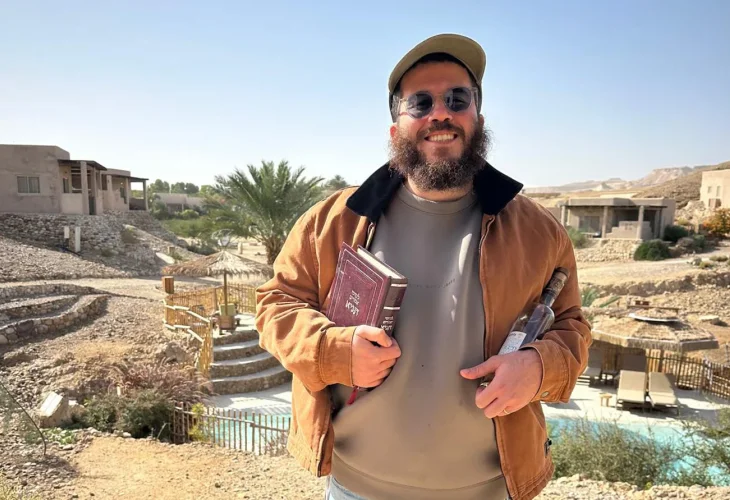
The conversation with Itay Aricha takes place after he has put his four children to bed. “It was quite an event,” he sighs with a smile, as he prepares dinner for himself and his wife. When I ask him to share a little about himself and where he fits on the religious spectrum, he answers honestly: “I truly don’t know. I think it’s one of the hardest questions. It’s occupied me a lot, and the people who know me, too. Today I’m trying to stop defining who I am and focus on how I serve God, and how to become a more positive, faithful person.”
For twelve years, Aricha has been the owner of a sabich shop in Jerusalem’s Mahane Yehuda Market, and he is widely known for the recipes he shares online. What many of his followers do not necessarily realize is that behind the energetic presence is a personal story that is both surprising and deeply human.
“What Do I Have to Do with Rabbis?”
Aricha, 36, was born in Jerusalem to a nonreligious family. “We made Kiddush and fasted on Yom Kippur, but it was more something we did along the way,” he says. One of his childhood memories captures that atmosphere perfectly: a family trip to Italy during Passover, where they bought pizza. When he pointed out that it was Passover and Jews do not eat chametz, the response was innocent and matter of fact: “Here it’s outside of Israel, so it’s not a problem.”
His entry into the culinary world began at age seventeen, when he worked as a waiter in an event hall. While serving the dishes, he discovered that he was far more drawn to the kitchen than to the dining room. When he asked to join the cooking staff, the response was a shrug. “The chef told me, ‘Just know that in the kitchen the pay isn’t the same.’ I told him I was willing to accept the ‘decree,’ and that’s where it began.”
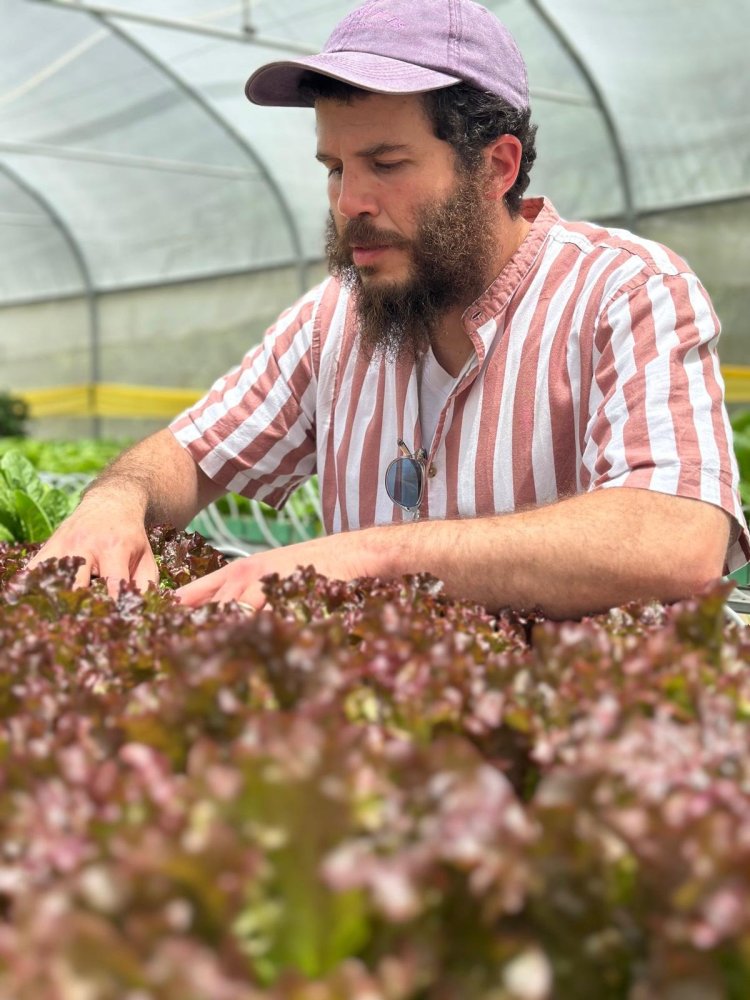 Itay Aricha
During his military service, he met observant Jews up close for the first time, yet he felt their world had nothing to do with his. “For me, there was no such reality as Shabbat without the beach with friends.” At the same time, he continued developing his cooking skills, working in the field throughout his service. After the army, he set out to fulfill a dream: opening his own food business. He planned everything carefully, down to the smallest details, but ran into an unexpected obstacle. For a full year, he searched without success for the right location.
“One day a friend suggested I come with him to Nahar Shalom Yeshiva,” he recalls. “He said Rabbi Aharon Toutian sits there, and I should ask for a blessing.” Aricha rejected the idea immediately. “I told him, what do I have to do with blessings, and what do I have to do with rabbis? Tell him to leave me alone. It’s not for me.”
But as the months passed and nothing moved forward, he decided to try anyway. He arrived at the yeshiva on the yahrzeit of the renowned kabbalist Rabbi Mordechai Sharabi.
“Your Moment Will Come”
Rabbi Toutian greeted him warmly, blessed him to find a good shop, and invited him to join the evening prayer. Aricha refused at first, but gave in after some gentle persuasion. “I was wearing shorts, with long messy hair. I prayed in the wrong direction and basically read the whole siddur,” he laughs. At a yeshiva of kabbalists, the prayer is long and rich with intentions and mystical focus, and Aricha, unfamiliar with that world, struggled with the pace and length. “When the prayer ended, I ran out of there,” he says.
Three weeks later, Chanukah arrived. One night Aricha dreamed of a kabbalist wearing a white fez, lighting a Chanukah candle with him. “It was the same figure I had seen in the picture at the yahrzeit, Rabbi Mordechai Sharabi,” he says. “I woke up shaken. From that day on, I felt like my soul was being polished. Suddenly I wanted to come closer. I felt as though Rabbi Sharabi grabbed me and said: ‘Come, your place is here.’”

He began visiting the yeshiva regularly, attending a weekly Torah class, and eventually started keeping Shabbat, strengthening step by step. Through it all, the search for a shop continued. “Every time an idea came up, I would go to Rabbi Aharon. He would ask: ‘Give me the street name and the address, and I’ll check for you.’ Then he would tell me: ‘No, there’s no mazal there. Don’t worry. Your moment will come.’”
After several months, he was offered a closed spice shop in Mahane Yehuda. “The moment I walked in, I felt this is it.” With the rabbi’s blessing, he signed a lease that has been extended again and again, for twelve years and counting.
Building a Business, Building Faith
The early years were not easy. Aricha found himself working sixteen and sometimes seventeen hours a day. “Once I met Rabbi Menachem Cohen, a chassidic Jew from Nachlaot, and I said: ‘Rabbi, can you bless me? I feel like the business isn’t moving, and I’m missing workers.’ He asked me: ‘Do you pray Shacharit with a minyan?’ When I said not yet, he told me: ‘Take on Shacharit with a minyan.’”
It sounded almost impossible in the crushing reality of his schedule, but he accepted another step forward.

Aricha speaks candidly about the gap between spiritual inspiration and everyday demands. “It’s not simple to finish work at midnight and go pray Maariv. There are days when it really takes self sacrifice. Even Erev Pesach is challenging: kashering and cleaning the sabich shop. Especially because during those years I got married and had a home and family waiting for me.”
Another challenge came when life did not unfold the way he expected. “Sometimes you feel: why is this happening to me? Why isn’t the livelihood flowing more? I’m returning, I’m serving God, what’s going on? Slowly I began to understand: I’m not doing anyone a favor. You’re doing yourself a favor. And to truly absorb that, you need daily work on faith. That’s what carries me, and I try to strengthen myself in it.”
His return to Torah observance also reshaped the culinary world he loves. “At first I thought kashrut would limit me,” he says. “With years and experience, I realized it doesn’t hold me back at all. In my past I tasted everything. Yes, there are non kosher foods with unique flavors, but I don’t feel that’s what I’m missing in life. You can express creativity within kashrut, too.”
“Geshmak of Shabbat”
About a year and a half ago, Aricha decided to upload a recipe for herring, the classic Jewish staple, in a new variation. The first video did not perform well. He did not give up. He filmed the recipe again, improved the visuals, and posted it under the title: “New Series: Geshmak of Shabbat.”
When I ask him what “geshmak” means, he smiles. “Geshmak means delight in Yiddish.”
Within twenty four hours, he opened his phone and discovered the video had reached 250,000 views and drew a wave of enthusiastic responses. The positive feedback pushed him to upload another Shabbat video, which reached 2.5 million views.
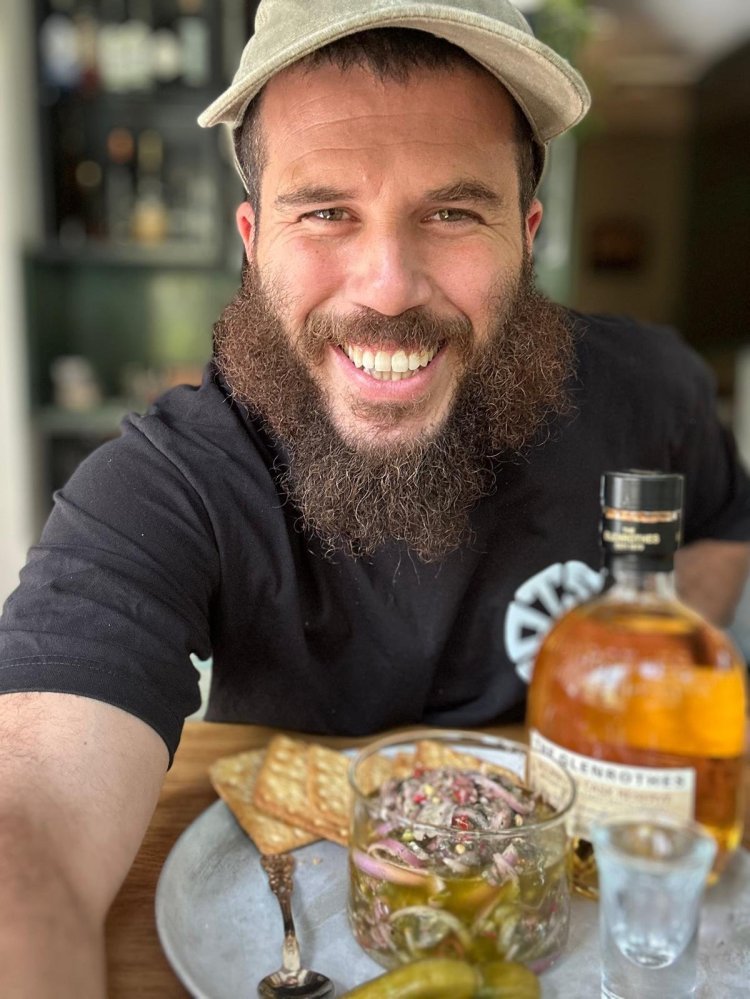
Aricha realized he had found something that resonated. “I understood there was a sign here that I should continue.” About sixty episodes have been published so far. “Most of the messages are very good. People write to me: ‘We watch your Geshmak of Shabbat and your food, and it makes us want to come closer.’”
Today, hundreds of thousands follow him, including many who are, in his words, “completely secular.” “They follow me online, watch, enjoy, and genuinely get excited. In my eyes, there’s Kiddush Hashem here.”
Why Kiddush Hashem?
“Because you show people a combination they didn’t know,” he explains. “It makes them ask: how does this religious guy with a beard have such style in food and culinary creativity?” He adds that he aims his content toward high level cooking. “I bring something modern, and at the same time I make sure to say a blessing in the video. I’m not ashamed to create and I’m not ashamed to bless. I show both at once.”
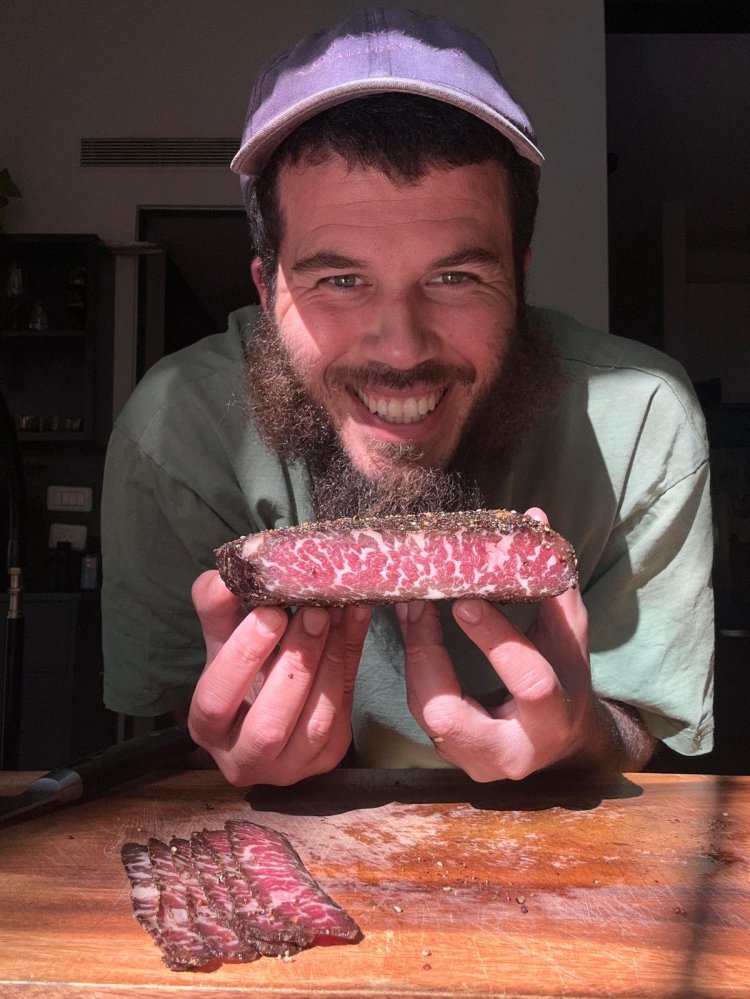
Learning to Trust Through Setbacks
Aricha does not shy away from speaking about professional lows. One of them came when he opened an additional branch in Tel Aviv, hoping to grow Sabich Aricha into a chain. The branch closed after a short period.
Do financial upheavals shake faith?
“You can choose whether to feel sorry for yourself or to grow stronger from what happened,” he says after a moment of thought. “When I closed in Tel Aviv, I had a lot of questions. Why did this happen to me? What is going on? How did the rabbi bless me and it still didn’t work? From that place, I had to choose whether to sink or to learn and strengthen my faith. Faith is not only when it’s comfortable and fun.”
He pauses, then adds quietly: “I believe what happened was for my good. I chose the best location, did all the checks, and had amazing partners. And still, everything is precise. What’s the reason it fell apart? Sometimes you understand there is no reason you can point to. It is simply the will of God.”
Are all the recipes your own inventions, and where do the ideas come from?
“Completely. One hundred percent,” he says. “How do you invent recipes? I’ll share with you that many times, when the ideas run out, I simply pray for an idea. Maybe it sounds ridiculous,” he adds with a half apology.
“Right now I need to upload another episode of Geshmak of Shabbat. We reached episode sixty, and I feel like I’ve already done everything. I mixed herring with every kind of sauce and every kind of onion. Last week I dried a jalapeño pepper in the oven for five hours. What else can I invent?”
And then he describes it in the simplest way. Ideas appear out of nowhere. “Sometimes they come to me in the shower, and I write the outline on the steam on the mirror. I pray and ask: ‘Hashem, give me an idea.’ And the amazing thing is, when you’re connected to the Infinite, there is no end to the recipes.”
He smiles, not triumphantly, but almost with humility. “I don’t think too highly of myself. I just try. I try to truly connect, not just as a slogan.”

