 עברית
עברית

World News
British Museum Removes ‘Palestine’ From Ancient Displays After Complaint
Institution updates Egyptian and Phoenician galleries, replaces “Palestinian descent” with “Canaanite descent,” and begins wider terminology review
- Brian Racer
- |Updated
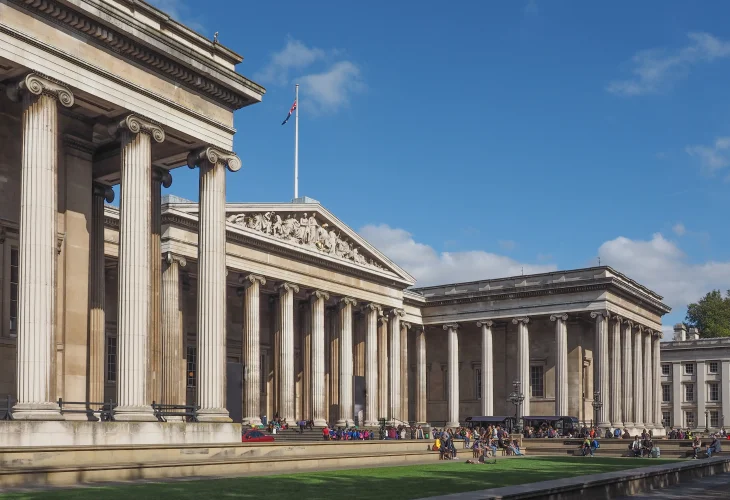 British Museum in London (Shutterstock)
The British Museum in London has removed the word “Palestine” from several displays in its ancient Middle East galleries after receiving a formal complaint that the term was being used inaccurately to describe periods thousands of years before it existed.
The changes follow a letter from UK Lawyers for Israel, which argued that applying the name “Palestine” to ancient civilizations created a misleading impression of historical continuity.
The British Museum, founded in 1753, is one of the world’s most influential cultural institutions and houses millions of artifacts spanning ancient civilizations, including Egypt, Assyria, Babylon, Greece, Rome and the Land of Israel. Its labeling decisions shape how millions of visitors understand history. The institution has frequently faced international controversy over ownership and historical framing of artifacts taken during the British Empire.
Maps and information panels in the museum’s Egyptian gallery had labeled parts of the eastern Mediterranean coast as “Palestine,” including an exhibit covering 1700–1500 BC that described the Hyksos people as being of “Palestinian descent.” That wording has now been changed to “Canaanite descent.”
A map of Egypt’s New Kingdom period that previously referred to Egyptian dominance “in Palestine” was also revised. Displays relating to the Phoenician civilization were similarly updated.
In its letter to museum director Nicholas Cullinan, UK Lawyers for Israel wrote: “Applying a single name – Palestine – retrospectively to the entire region, across thousands of years, erases historical changes and creates a false impression of continuity.”
The group added: “It also has the compounding effect of erasing the Kingdoms of Israel and of Judea, which emerged from around 1000 BC, and of re-framing the origins of the Israelites and Jewish people as erroneously stemming from Palestine. The chosen terminology in the items described above implies the existence of an ancient and continuous region called Palestine.”
The museum responded through an official spokesperson. “For the Middle East galleries for maps showing ancient cultural regions, the term ‘Canaan’ is relevant for the southern Levant in the later second millennium BC,” the spokesperson said.
The spokesperson added: “We use the UN terminology on maps that show modern boundaries, for example Gaza, West Bank, Israel, Jordan, and refer to ‘Palestinian’ as a cultural or ethnographic identifier where appropriate.”
Historically, the region has been known by multiple names across different eras. Ancient texts from around 1500 BC refer to Canaan and the Canaanite people. A 1200 BC Egyptian inscription includes one of the earliest references to Israel. Assyrian sources later mention Judah. The historian Herodotus is believed to have used the term Palestine in the fifth century BC, and it later appeared in Roman and Byzantine usage.
According to reports, some of the revised panels have already been installed. The museum is reviewing additional displays on a case-by-case basis as part of a broader master plan for redisplay. Further changes are expected in the coming years.


