

Magazine
From Professional Soccer to Torah Life: The Inspiring Journey of Idan Tal
Former Israeli football star Idan Tal shares his path from international sports success to faith, education, and personal growth, revealing how Shabbat, belief, and Jewish identity reshaped his life and mission
- Moriah Luz
- | Updated
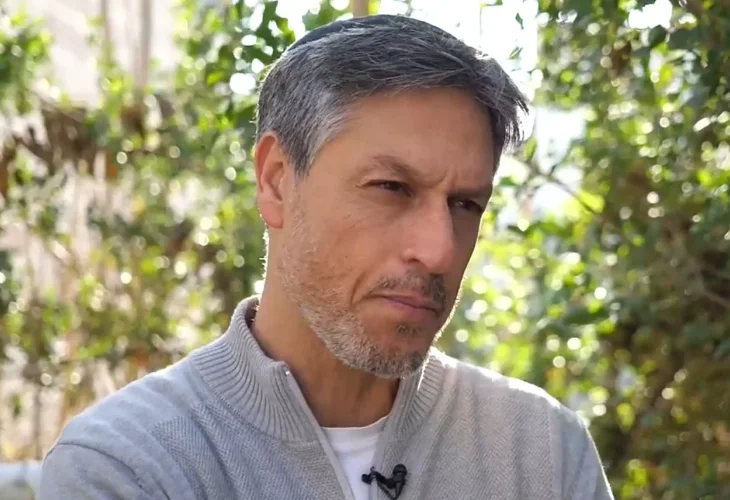 Idan Tal
One of the most surreal moments in the life of former soccer player Idan Tal happened in England. At the time, he was playing in Liverpool for one of the country’s most successful football clubs, living there with his wife, who was pregnant with their first child. The first signs of labor arrived just as Tal was supposed to leave for a match. He informed the team that this time, the game would take place without him.
They entered the hospital as strangers, surrounded by unfamiliar languages and faces. During the delivery, the midwife detected fetal distress, and three doctors rushed into the room, taking his wife into emergency surgery. Tal watched the overwhelming scene alone, without a close family member by his side. In those years he was still far from a life of Torah observance, and when I ask who one turns to in such a moment of crisis, he replies simply: “Even a Jew who does not keep Torah and mitzvot always knows there is a Creator of the world, and that is who you turn to when trouble comes.”
“God Helped Me”
For twenty years Tal was a professional soccer player. His career is filled with teams that sought him out, along with trophies and championships he won along the way. Yet he does not speak much about those achievements. For the past fourteen years, Tal has been Torah observant, and he now looks back at the victories that once thrilled fans with a sense of humility.
Today he is fifty years old, married, and a father of four. Professionally, he teaches physical education at a yeshiva high school, coaches youth soccer, and, as he puts it, “mostly works on strengthening their self confidence.” Expressions like “Baruch Hashem (Thank God)” and “Be’ezrat Hashem (With God’s help)” have become a natural part of his vocabulary.
He grew up in a traditional family, the middle child of three siblings. He speaks warmly about his parents: “They were wonderful parents who took good care of us. They gave me every opportunity to succeed in soccer.” He was familiar with Jewish holidays, and his family would make Kiddush and share a Shabbat meal together, though, as he explains, “it was not full observance as our ancestors taught.”
Tal was drawn into the world of soccer at a young age, becoming a professional player by the age of eleven. “It was my youthful love, the field where I invested myself and persevered, maybe even too much,” he says with a smile. “God helped me, even if today I understand that it was not entirely aligned with the path of Judaism. But the help always came from Him.”
You played professional soccer for twenty years. Which achievement stands out most to you?
“God blessed me with many achievements,” he answers.
Still, which one impressed you the most?
“When He sent me abroad. That is where the real professional world of soccer exists. Anyone who truly wants to understand the sport knows that Europe is where you find that level of professionalism.” He adds that joining a foreign club also improves a player’s financial standing. “There is a journey with many ups and downs, and it requires personal sacrifice, especially from a family perspective. Determination and persistence are everything, much like, in a different sense, learning Torah.”
You represented Israel in international matches. Did you feel it was a mission?
“It is well known that playing for the national team is not about money. If there is no financial gain, then one thing remains: you want to represent your country with pride and show that it excels in what you represent.”
Yet today, he says, he sees the issue from a different perspective. “As a Torah observant Jew, one thing deeply troubles me: no one considers the fact that national team games are scheduled on Shabbat and holidays. Other religions receive accommodation, while we Jews often do not even ask for it. That, in my opinion, is the real problem.”
He believes the issue stems from a lack of understanding of Judaism and its importance. “The leadership of the football association and the Minister of Sports should address it, but for years nothing has changed.” He also notes that religious representatives in government rarely push the matter. “There are many problems to solve, but this is about uplifting many people, so it should also be a priority.”
You speak passionately about Shabbat today, but until fourteen years ago you lived very differently. What brought about your return to faith?
“There was no single trigger,” he explains. “It was a collection of moments that came together. At a certain point I felt disconnected from what I was doing. I paused and recalculated my path.”
Did you search elsewhere before turning to Judaism?
“The word ‘search’ is not accurate. I always knew I was Jewish. I just wanted to understand what that meant, something I had been missing. It is unfortunate that in our schools we are not always proud enough of our Judaism. It is a model for the world.”
His first step toward reconnecting was through prayer. He credits his wife, who quietly supported him throughout the process while undergoing her own spiritual journey. By the time Tal began keeping mitzvot, his eldest son was already thirteen, and his youngest had just been born.
How did your older children respond to your change?
“Sometimes they choose the path they already knew, and sometimes they join me, for example on Shabbat,” he says. “It is important to me that nothing comes from pressure or obligation. We explain what we believe is right, but the choice remains theirs.” He emphasizes that he avoids preaching to others, including colleagues.
Granting his children full freedom of choice was a lesson he learned early in his journey. “Just because I was going through a process did not mean everyone had to follow me immediately. In hindsight, it was wise not to turn the whole house upside down.”
He speaks about his children with warmth: “They did not grow up this way, so everything is still a process. One day it may happen. My youngest was born into a Torah life, so it is different for him. But if one child becomes observant, it does not make them better than the others. They simply grew up differently.”
Looking Back to Move Forward
For the past twelve years Tal has worked in education. With a modest smile he says he never planned to enter the field. “God sent me messengers. A friend from synagogue asked if I would like to teach. I said I was not from the education world, but I could try. From there, the students themselves did the rest.”
As a youth soccer coach, he carries a clear philosophy: “Soccer is competitive, but when working with youth the first priority must be education. Anyone who cannot truly connect with children should not be coaching. Winning cannot come at the expense of character.”
In closing, I ask whether recent tragedies have changed his faith perspective.
“Our roots are not defined by what happens today,” he answers thoughtfully. “To understand our roots we must look back at our ancestors and our history. If we survived Egypt and the Holocaust and still exist today, it shows that someone is guiding the world. Without Him, we would have disappeared long ago.
“We face challenges because we are meant to grow, especially in strengthening our connection to Torah and mitzvot. I do not believe empty slogans about unity are enough. The real work lies in deepening our connection to Judaism, because that is where the answer truly lies.”

