

Magazine
He is My Hands, and I am His Eyes: The Story of Yosef Chaim and Inbar Ben-David
After years of waiting, adoption journeys and physical challenges, this remarkable couple built a life of resilience, family and hope while empowering others with disabilities
- Moriah Luz
- | Updated
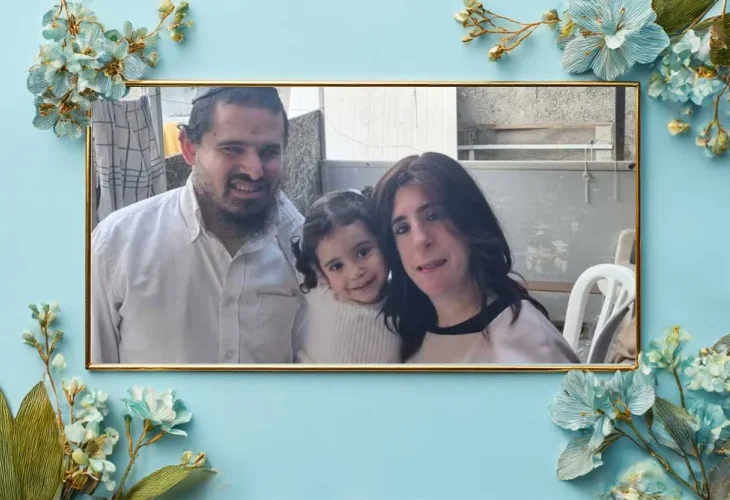 Ben-David family
In the living room of Yosef Chaim and Inbar Ben David, the silence speaks louder than words. There is mutual respect between them and the patience of people who learned how to wait. They waited three years for one another until they received the green light to marry, and for eleven years now they have been building their private home together, despite the physical challenges they face.
“Only God Decides Who Will Live”
During the first nine months of her life, Inbar had no mother’s arms to hold her. She lay in a hospital crib, cared for by devoted nurses who rotated at the end of each shift. “When my biological mother was eight months pregnant, she was told the fetus had an unclear limb defect,” she begins. Inbar was born with a physical disability affecting the length of her arms and legs. Her parents, unable to cope with the difference, signed foster care papers and left her in the hospital, where she remained for months. “They told me I was a spoiled baby, and there was only one nurse I agreed to eat with. Without her, I wouldn’t eat,” she laughs.
One day, a woman named Miriam Mizrachi arrived at the hospital with her twelve year old daughter. “The Mizrachi family decided they wanted to adopt a child. They were taken into the nursery and told, ‘Choose whichever baby you want.’ The girl looked around, pointed at me, and said, ‘I want her.’” Inbar was tiny, weighing just three kilograms. The medical staff tried to discourage them and directed them toward other babies, explaining that she was weak and probably would not survive long. “Then my adoptive mother told them, ‘Neither you nor I decide who will live. Only God decides.’”
The baby joined the Mizrachi family, which already had eight biological children. “Most of them were already married, except for the twelve year old sister,” Inbar clarifies. She was not the only child adopted into the family. Later, three additional siblings joined them — children who had been abandoned as toddlers and lived with significant physical disabilities such as CP.
Do you feel any sense of missing a parental figure during those early months?
“I don’t know how I would have felt if I had grown up differently,” she smiles. “Thank God I reached a warm and loving family, and in my opinion they made up for those nine months. Today, the Mizrachi family is my family in every way. I call them Mom and Dad, and my daughter calls them Grandma and Grandpa.”
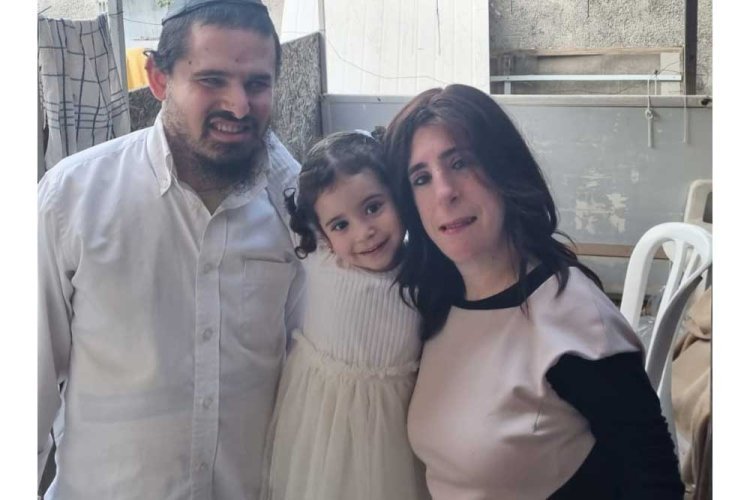 Ben David Family
“I Try to Be Sensitive to Others”
Yosef Chaim went through his own life journey. Born prematurely in the sixth month of pregnancy, far earlier than expected, his early birth affected his eyesight. He grew up in the United States, and at the age of eight his family immigrated to Israel, where he experienced a difficult childhood.
“I suffered from bullying and violence at school,” he shares openly. “There was no proper guidance for teachers or students on how to treat a blind child. Kids constantly touched my belongings and my Braille machine. During school trips I didn’t understand what was happening around me, and in general I felt unappreciated, like I was invisible.” He explains that textbooks were not adapted to his needs or were printed late in the school year, preventing him from fully participating in class.
What gave you the strength to go to school every day?
“Honestly? I didn’t have a choice.”
Do you feel those difficult years shaped something in you?
“Mostly sensitivity toward others and an understanding of pain. Many educators work with children but don’t truly understand them emotionally. Because of what I went through, I understand that distress deeply and try to be sensitive and feel others’ pain together with them.”
Yosef Chaim didn’t stop at the lessons he learned personally. A few years ago, he wrote a comprehensive guidebook on blindness. “I realized there was no Hebrew guide explaining what it means to be blind. I wrote from my personal experience and tried to make it accessible and enjoyable to read. I added some halachot related to blindness at the end, though that’s less my field.”
The book opens a window into the world of the visually impaired and provides guidance that was missing in his own environment. “I received very warm feedback. People said the book opened a new perspective for them. I hope they also apply what they learned.”
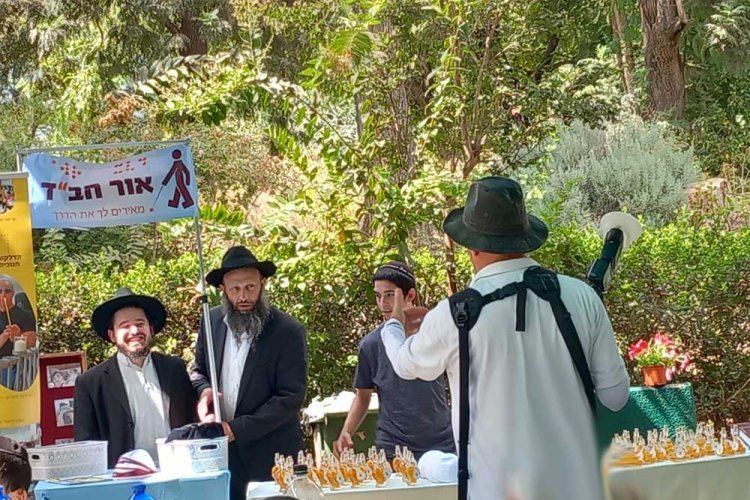 Yosef Chaim in action
Do you still feel anger toward the children or the educational staff?
“Not anymore. About five years ago I met those same kids. They apologized, and we talked about everything. They understood they were wrong. Today, things in schools are better.”
“I Don’t Need People to Pity Me”
Social struggles were not foreign to Inbar either. She also endured teasing and a sense of being unwanted because of her disability. When she entered high school, she formed her first deep friendship with a classmate who shared her desk. “For the first time, I felt I had a real friend who saw me as Inbar, not as someone pitiful who needed help. I’m independent, I do my best, and I don’t need pity.” Their strong friendship continues to this day, twenty years later.
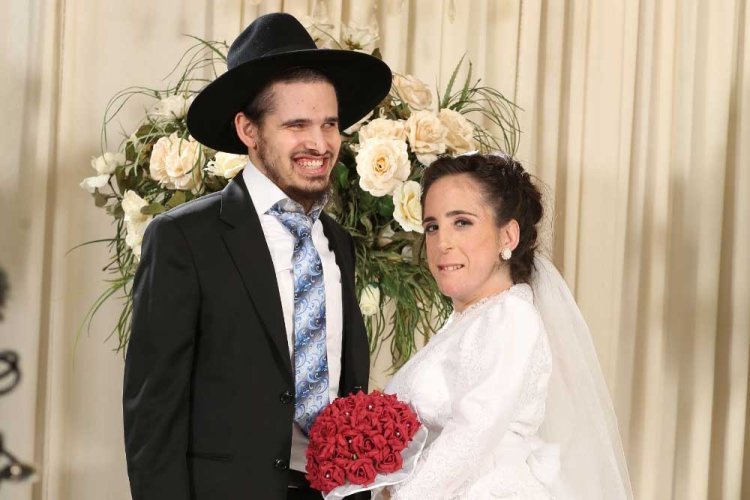 Yosef Chaim and Inbar at their wedding. Photography - Avidan Avraham
Did classmates know about your background?
“Yes, and some of the teasing in elementary school was about that.” Because she was legally classified as a foster child, she retained her biological family name, which appeared on school lists. “My biological last name was complicated, and the girls would laugh whenever teachers struggled to pronounce it.” When she entered high school, she asked the administration to use her adoptive surname publicly, while keeping the legal name only on official forms.
At nineteen, a matchmaker called her adoptive mother and suggested a twenty three year old man named Yosef Chaim Ben David. “We met twice, and both of us felt there would be a third meeting. Then one evening my mother received a call saying the young man and his family wanted to stop the process. We didn’t understand why.”
After deeper inquiry, they learned that there were concerns from Yosef Chaim’s extended family about possible genetic issues because of her disability. “His mother was worried my heart would break if the tests weren’t good,” Inbar says.
The medical checks dragged on for months. Meanwhile, each continued dating others. At some point Inbar told her mother she did not want to meet anyone else. “I wanted to wait for their answer. If they ultimately didn’t want me, I would accept it.”
Three years later, she unexpectedly met Yosef Chaim’s mother at an event. “She saw me and immediately warmed to me,” Inbar laughs. “She asked that we meet again.” The decision to marry followed quickly, and their wedding was joyful and emotional.
How do you manage your home practically?
“Before the wedding someone told me: ‘He can be your hands, and you can be his eyes.’ That’s exactly how we function. If I need something from a high shelf, I guide him and we work together.” Yosef Chaim adds, “There are things that are harder for Inbar and easier for me, like peeling vegetables. I also make sure the house stays tidy and everything is in its place.”
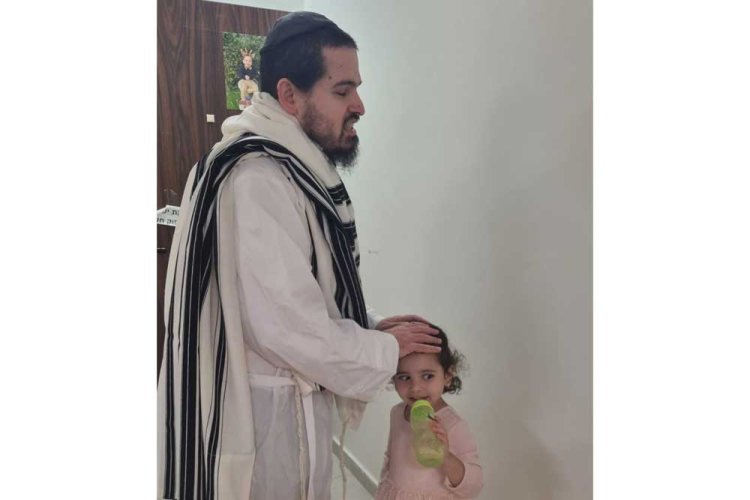 Yosef Chaim blesses his daughter with the 'Birkat HaBanim' on the eve of Yom Kippur
How do you manage that without sight?
“Through touch. Over the years I’ve learned the layout of the house and know where everything belongs.”
Four years ago, a friend from Kfar Chabad, Tzvi Litman, approached Yosef Chaim with an idea to establish an organization making Judaism accessible to the visually impaired. The initiative, called “Or Chabad,” connects visually impaired individuals with local synagogues, provides Jewish materials such as matzah for Pesach, and organizes events like Chanukah gatherings and Chassidic farbrengens.
They also created a quiet WhatsApp group where Yosef Chaim sends a weekly short voice message called “A Sweet Taste for Shabbat,” along with holiday related halachot.
“I Accept My Disability With Love”
After their marriage, Yosef Chaim and Inbar waited seven and a half years for children. Just before beginning fertility treatments, Inbar discovered she was pregnant during Passover. Their daughter, Chana Leah, now three years old, was born healthy. “She’s smart and talented,” Yosef Chaim says proudly. Inbar shares that as a toddler, Chana Leah would grab Yosef Chaim’s white cane and pretend she was going shopping, happily helping guide her father together with her mother.
Today, their main challenge is finding stable employment suited to their abilities. Yosef Chaim studied transcription and typing, while Inbar trained as a medical secretary and later turned to graphic design, working from home.
Do periods of prolonged struggle raise questions toward God?
“I accept my blindness completely,” Yosef Chaim answers. “My question isn’t ‘Where is God?’ but ‘Where are people?’ It’s about how society treats us.” Inbar adds, “We don’t understand heavenly calculations. Yes, there are challenges, but I don’t complain about why I was created this way. I accept my disability with love.”
What are your dreams moving forward?
“To stay healthy and build a big family, God willing,” Inbar says. Yosef Chaim nods and adds, “My personal dream is to help more people learn how to relate properly to the blind, especially parents of blind children, and give them tools to help their children succeed in life.”

