

Magazine
The Open Door: Returning to a Grandmother’s Wartime Home
Ronit Friedman always knew her grandmother’s survival was extraordinary. An open door in Krakow returned her to a family story hidden for eighty years.
- Michal Arieli
- | Updated
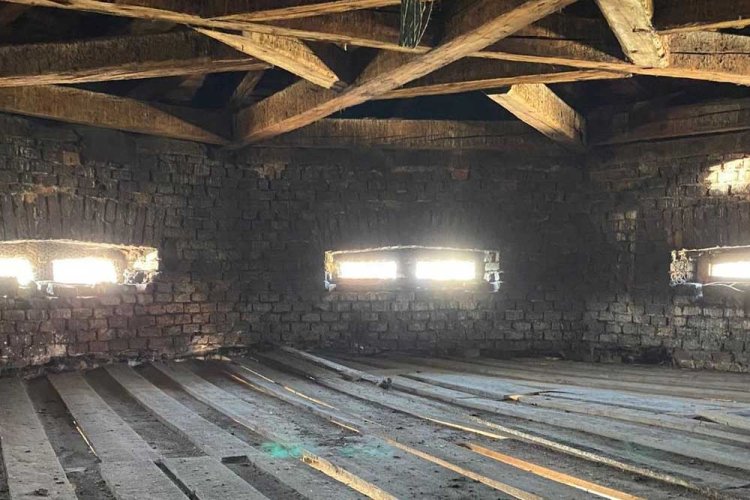
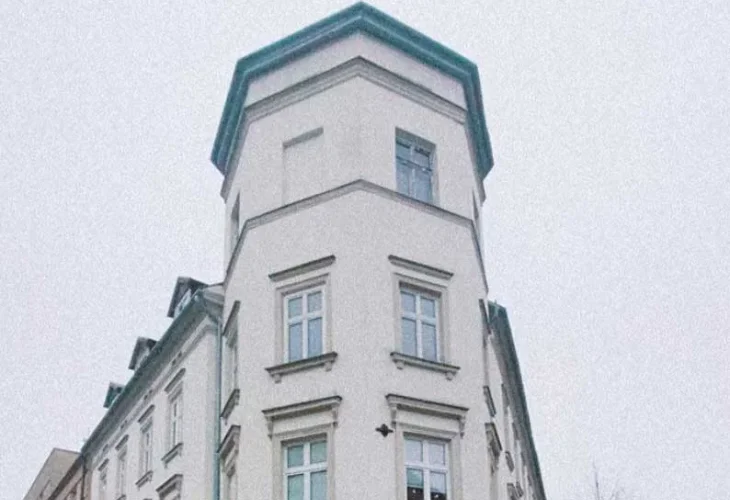 "Grandma’s building", with the attic where the family hid
Nothing prepared Ronit Friedman for the sight that awaited her in Krakow.
She had come for a short visit, and as she passed her grandmother’s building, the same one where her grandmother had lived about eighty years earlier during the war, she noticed something unusual.
The door was open.
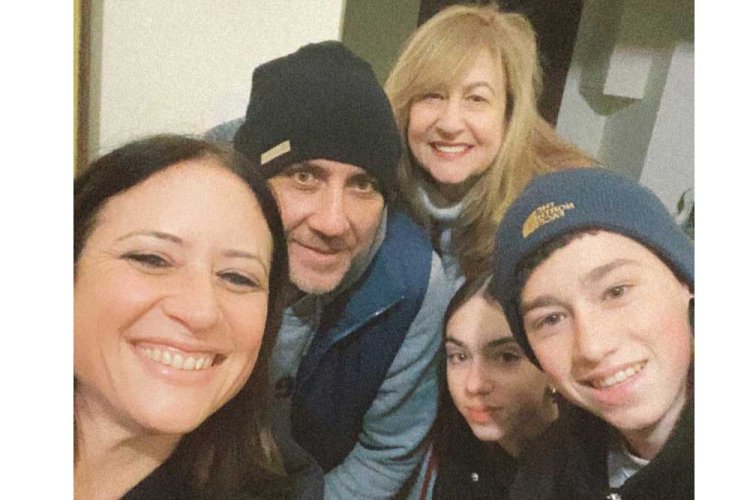 Ronit and her children outside the grandmother’s home.
A Door That Had Always Been Closed
“I always knew that Grandma Lucy grew up in Krakow, and I knew exactly which building she lived in,” Ronit says. “Over the years, I happened to be in the area a few times. I would always come by, stand outside, and look at the building closely. But it was always closed and locked. Just a quiet greeting from days long gone.”
She never imagined that one day she would walk inside.
Nothing prepared her for the moment she stepped through the door of her grandmother’s childhood home for the very first time, or for what she would discover there.
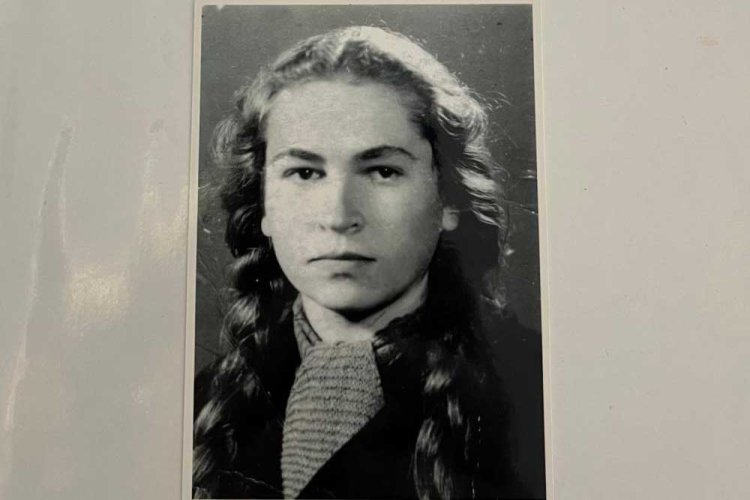 Grandma Lucy as a young woman
 Wartime Survival Against All Odds
Ronit is a third generation descendant of Holocaust survivors. She grew up near her grandmother in Brooklyn, New York, and was deeply connected to her family.
“Grandma rarely spoke about the Holocaust,” she explains. “But even without many details, we understood that her survival story was miraculous and highly unusual.”
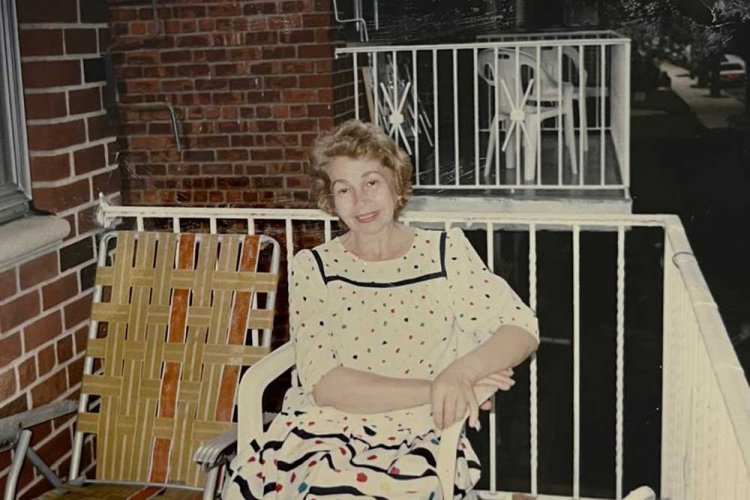 Grandma Lucy on the balcony of her Brooklyn apartment
Before the war, Krakow was home to approximately sixty thousand Jews. After the war, only about three thousand remained. Grandma Lucy survived together with her entire immediate family, her parents and her two brothers. None of them were deported to the camps.
“How did they survive?” Ronit asks.
Her grandmother was blonde and fair and did not have what was considered a typically Jewish appearance. Her mother used a connection with a local priest and hid her in a church. Grandma’s father and two brothers hid in an attic, while her mother, an exceptionally brave woman, presented herself as mute and without religion. She went out into the streets at enormous personal risk to obtain food for the family.
Nothing about this story was simple. Yet the entire family survived the war and even remained in their apartment, never being forced into the ghetto. Ronit notes that she is not aware of any other precedent like this in Krakow.
A Childhood Shaped by Quiet Strength
After the war, Grandma Lucy moved to the United States and started a family. Ronit was born there.
“I grew up right next door to my grandmother, surrounded by many Jewish Holocaust survivors,” Ronit recalls. “Grandma almost never spoke about what she went through, but she always repeated one sentence to us: ‘Be nice. Smile.’ That was her signature line.”
For years, Ronit felt drawn to the building in Krakow. “It is a piece of our family history,” she says. “In recent years, my husband and I happened to travel to Poland several times. Each time, we would drive past the building, get out of the car, touch the walls, look around, and take photos.”
But the real surprise came only a few years ago.
The Day Everything Opened
“My husband was invited on a work trip to Krakow, and I decided to join him,” Ronit says. “Of course, we passed by Grandma’s building again. But this time, the door was open.”
This was unprecedented. Every relative who had visited the building over the past twenty years had always found it locked.
They went inside and climbed to the floor where Grandma Lucy had lived. There, the surprises continued.
Inside the apartment, they encountered a Polish construction worker. Communication was difficult. He did not speak English, and they relied on a translation app to explain that Ronit’s grandmother had hidden in this apartment during the war.
The worker listened and then said something unexpected.
“A few years ago, when we began renovating the building, we found a box with documents in the attic. Maybe it’s connected to you.”
When Ronit expressed interest, he explained that the building owner was responsible and that he would connect them.
 Grandma Lucy's apartment. “With the wide window she always told us about.”
The Box in the Attic
“Even before seeing the documents, I knew they were ours,” Ronit says. “I knew the family story well. I remembered that my great grandfather hid in the attic with his children. I immediately understood that the documents were probably hidden there too.”
That same evening, Ronit contacted the building owner. He turned out to be Jewish and had received the property after proving that it belonged to his family during World War Two.
What amazed Ronit most was that the contractor had safeguarded the documents all those years. Once it became clear that they belonged to her family, he handed them over.
About eighty years after the war, a large box filled with family documents returned to their descendants.
Traces of a Hidden Life
Inside the box were Hebrew school certificates, marriage documents, and even work permits.
“This surprised us,” Ronit explains. “We always believed that my great grandfather was in hiding the entire time. Now it became clear that for part of the war he held work permits and apparently went out to work, returning afterward to the hiding place.”
Memory That Lives On
To this day, Ronit and her family remain in contact with the building owner and with other Jewish co owners of apartments in the building, all of whom hold ownership rights dating back to the wartime period.
“Three years have passed,” Ronit says. “Whenever my husband or I are in Krakow, they let us stay in the apartment complex, part of which is rented to tourists. I recently brought my children as well. They slept in the same building where their great grandmother survived the war.”
For Ronit, this experience made the Holocaust tangible in a deeply personal way. “It is no longer distant history. It is part of who we are.”
Preserving the Past
When asked what she did with the documents, Ronit answers without hesitation.
“We brought everything to Yad Vashem. There was never any question. Some of the papers were scorched and crumbling. It was clear that only there would they be properly protected, preserved, and honored.”
Closing Thoughts
Sometimes history does not remain sealed in archives or museums. Sometimes it waits quietly behind a closed door, in an attic, or in a box hidden for decades, until the moment arrives for it to return to those who carry it forward. For Ronit and her children, stepping into that building was not only a journey into the past, but a living bridge between generations, reminding them that survival, memory, and identity are woven together, and that even after eighty years, stories still find their way home.

