

Behind the News
Without Formal Annexation, Israel Is Redefining Control in Judea and Samaria
Land registration resumes for the first time since 1967 as new planning moves deepen administrative authority in the territory
- Brian Racer
- | Updated
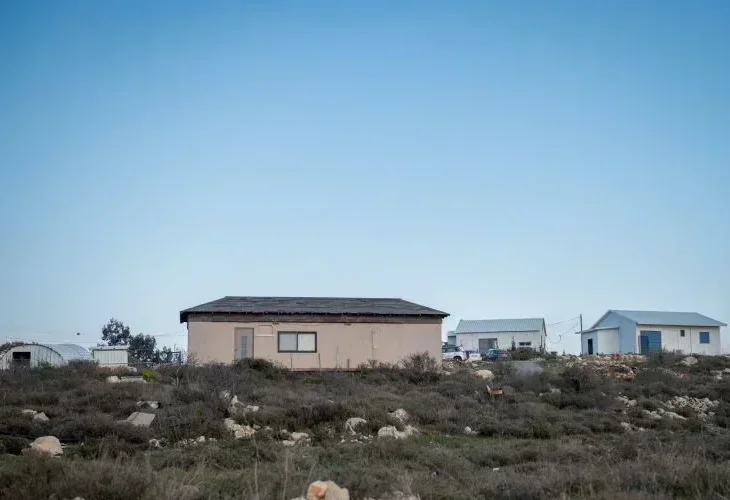 Archive (Photo: Sraya Diamant / Flash90)
The Israeli government on Sunday approved the reopening of formal land registration in Judea and Samaria for the first time since 1967, authorizing the Justice Ministry to begin a process that could reshape how property is recorded and managed across the territory. In parallel, a housing plan near the community of Adam is moving forward in a way that would effectively expand Jerusalem’s municipal footprint beyond the 1967 lines.
Together, the moves point to a shift in how Israel manages Judea and Samaria. Instead of relying mainly on temporary military arrangements that have been in place for decades, the government is expanding the use of regular civil systems such as land registration and municipal planning.
Under the decision approved Sunday, the Justice Ministry will begin formally registering land across Judea and Samaria, with new funding and staff assigned to the effort. Since 1967, much of the territory has never gone through a full Israeli land registration process, meaning each project often required separate measurements and ownership checks. Officials say completing the new system could take years.
In a joint statement, ministers said the move “constitutes an appropriate response to illegal land registration procedures being advanced by the Palestinian Authority in Area C, contrary to the law and existing agreements.”
Defense Minister Israel Katz described the step as “a vital security and governance move intended to ensure control, enforcement, and full freedom of action for the State of Israel in the area. Regulating land prevents unilateral facts on the ground, reduces illegal takeover attempts, and undermines terror infrastructures that destabilize security.”
Finance Minister Bezalel Smotrich said, “We continue the revolution of settlement and strengthening our hold in all parts of our land. For the first time since the Six-Day War, we are restoring order and governance to land management in Judea and Samaria.”
Justice Minister Yariv Levin called the decision “a true revolution in Judea and Samaria,” adding, “The Land of Israel belongs to the people of Israel. The Government of Israel is committed to deepening our hold in all its parts.”
At the same time, recent planning documents outline a proposal for hundreds of housing units near the community of Adam. The project would physically connect the area to Jerusalem’s Neve Yaakov neighborhood, with an access road that begins and ends inside the capital. The layout would effectively extend Jerusalem’s built-up area beyond the 1967 lines.
Israeli officials maintain the measures operate within existing legal authorities. In recent weeks, however, additional government decisions expanding administrative authority in Judea and Samaria have drawn criticism from several Western and Arab governments, some of which described them as “de facto annexation.”
Annexation in international law typically refers to a formal legislative act incorporating territory into a state’s sovereign borders. No such vote has taken place. Instead, the current approach relies on land registration, planning procedures, and administrative authority.
The land registration process is expected to unfold gradually, potentially reshaping legal clarity, infrastructure development, and governance in Judea and Samaria over time. For now, the shift is occurring through bureaucracy rather than declaration, as debate over the territory’s future continues.

