

Magazine
The Remarkable Epitaph a Jerusalem Shopkeeper Chose for His Headstone
Why would a man ask for his greatest spiritual achievement to be engraved on his gravestone? The answer begins in a small Jerusalem shop.
- Naama Green
- | Updated
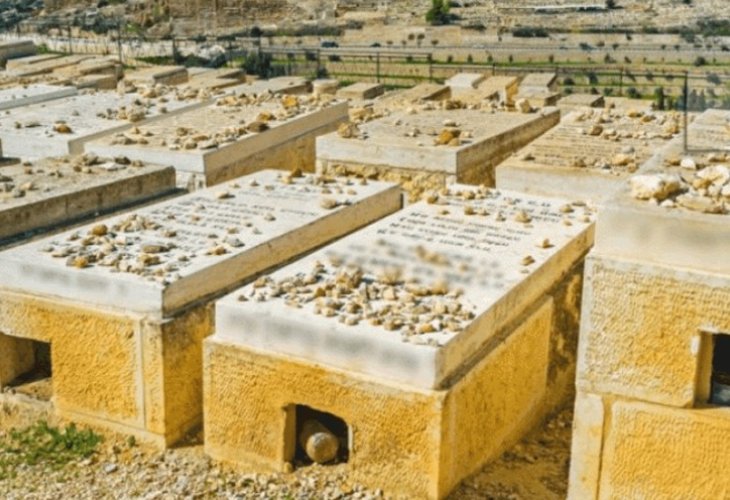 (Illustrative photo: Shutterstock)
Up on Har HaMenuchot, not far from the grave of the previous Belz Rebbe, stands a tomb whose headstone bears an unusual inscription:
“Here lies Rabbi Eliezer Yosef, son of Rabbi Yitzchak HaLevi Lederberg, of blessed memory. He taught Torah publicly, studied and reviewed by heart more than 4,000 times the tractates Beitzah and Rosh Hashanah. He passed away on Thursday, the 23rd of Sivan, 5714. May his soul be bound in the bond of life. In his will he wrote: It is worthwhile to engrave this on the headstone, so that perhaps the reader, too, will take it upon himself to do the same.”
What is the story behind these remarkable words? Here is what happened, as related by Rabbi Zalman Ruderman in the Karov Eilecha bulletin.
A Life of Torah and Kindness
Rabbi Eliezer Yosef was a lively, warm soul, a learned and devout man who lived in Jerusalem’s Batei Varsha neighborhood. He devoted his life to Torah and the service of Hashem. Day after day, he taught a regular Torah class in the synagogue, and he even authored a book titled Ahavat Hashem, explaining the commandment to love Hashem according to the teachings of Jewish mysticism.
To support his family, he ran a small stationery shop near Jaffa Gate. Yet even there, Torah and kindness filled the space. Tired passersby would step inside to escape the sun, and he would pour them a glass of cold water to revive them. With learned visitors he exchanged words of Torah, and with others he shared a thoughtful idea from the weekly portion.
When Something Went Wrong
One day, a frustrated customer stormed in. “I asked for white, smooth paper, and instead you packed gray, rough paper,” he complained. Rabbi Eliezer Yosef stepped outside with the roll in hand, held it up to the sunlight, and realized the customer was right.
In the days and weeks that followed, similar mistakes kept occurring. People asked for one item, and he handed them something close, but not quite right. That was when he understood that something in his vision had gone wrong.
A visit to a specialist confirmed his fears. A thorough eye examination revealed a serious condition that would only worsen. “You will need a complicated operation,” the doctor explained, “one that may save your sight, but also carries a real risk that you could lose it completely.” Without surgery, blindness was inevitable.
“My Main Concern Was My Torah Learning”
Rabbi Eliezer Yosef returned home shaken. He sat down, covered his face with his hands, and tears flowed freely. In a trembling voice he told his family what the doctor had said.
“If I don’t undergo surgery, I will certainly lose my sight. And if I do, I still risk losing it. What will become of the Torah? Is it possible that I will no longer be able to open a book, delve into a passage, and fulfill the commandment of Torah study, which is considered equal to all the commandments?”
A few days later, he returned to the doctor for another examination. When he left the clinic, a faint smile rested on his face. From there he went straight to the synagogue, took a volume of the Talmud from the shelf, and immersed himself in study.
For six straight months, he spent most of each day bent over the Gemara, his lips never ceasing from learning.
Preparing for the Worst
After half a year, he returned to the doctor to undergo the operation. His eyes were bandaged while the incisions healed. Anxiety filled the home, yet Rabbi Eliezer Yosef himself was strikingly calm. This composure stood in sharp contrast to the anguish he had felt when he first heard the doctor’s diagnosis.
One of those caring for him finally asked how he managed to remain so serene while everyone around him was overcome with fear.
“Of course I am afraid of becoming blind,” he replied. “Our sages say that blindness is like being considered dead. I certainly do not want to lose my eyesight, upon which so many commandments and their beautification depend. But from the very first moment I grasped the seriousness of my condition, my main concern was my Torah learning. What value would my life have without Torah? At first, I was overcome with dread, but afterward I strengthened my faith and trust in Hashem.”
He then explained what he had done.
“I asked the doctor how long we could safely postpone the surgery. He said half a year. From his clinic I went straight to the synagogue, determined to spend those months committing one or two tractates of the Talmud to memory. That way, if Heaven forbid the operation failed, I would still be able to learn them by heart. During that time, I reviewed Tractate Beitzah and Tractate Rosh Hashanah again and again, until I knew them thoroughly. Now you understand why I am not swept up in your anxiety.”
Light Returns to His Eyes
A few weeks later, the doctor came to the house to remove the bandages. The family gathered around, whispering Psalms and offering heartfelt prayers. The bandages were lifted, and the doctor examined his pupils carefully.
“You can see,” the doctor announced.
The relief in the room was overwhelming. Rabbi Eliezer Yosef’s joy was immense, as he was able to return not only to his daily life, but to the Torah study he loved so deeply.
From then on, he continued reviewing Beitzah and Rosh Hashanah by heart at every opportunity. By the end of his life, he had completed those two tractates more than 4,000 times.
A Headstone That Teaches
In his will to his sons, Rabbi Eliezer Yosef explained why he wanted those words engraved on his headstone.
“People will pass by, see the inscription, and their curiosity will be stirred. They will ask and be told that once, in the Holy City, there lived a Jew who loved the Torah so much that he reviewed two tractates more than 4,000 times.”
And that is the story behind the remarkable headstone on Har HaMenuchot, a lasting memorial to a man who placed Torah at the center of his life, and whose love for it quite literally illuminated his eyes.

