

Magazine
From Monastery to Mezuzah: A Remarkable Journey Back to Judaism
How one small mezuzah, a persistent uncle, and a search for identity led a former English clergywoman on a powerful spiritual return from Christian leadership to Jewish life in Safed
- Yehosef Yaavetz
- | Updated
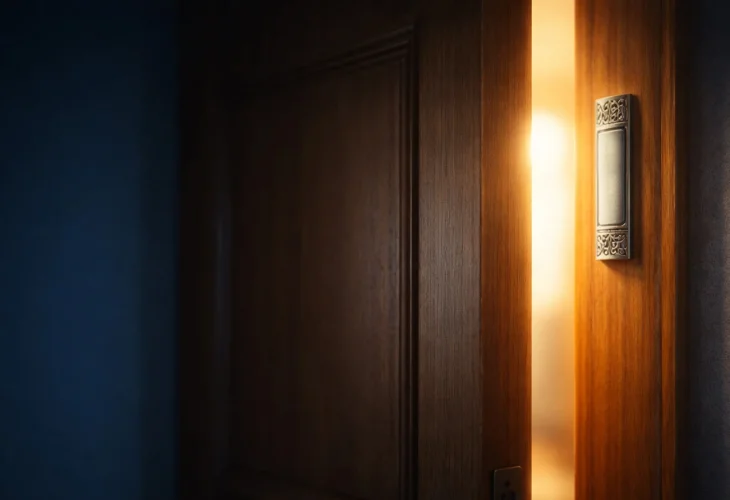
On a winter morning in a cemetery, between silent gravestones and a soft wind stirring dry leaves, a story is reborn. Yet the story itself began far away, in a Christian monastery in England, with a single small mezuzah on a doorframe. Standing beside the family grave is Toni, now called Tova. Her eyes fill with tears as she describes how one tiny parchment transformed the direction of her life and the lives of her family.
From a Jewish Home to Christian Leadership
Tonika Marlow was born in England to an interfaith family. Her mother was Jewish, from the Damordo family, and her father was an Anglican clergyman. For Toni, the path seemed clear: to leave Judaism behind, build a deep Christian identity, and gradually rise through the ranks of religious leadership. She became a prominent clergywoman, a lecturer, and a respected figure in her community, someone who believed with all her heart that her path represented the truth. Years later, her full story would be documented in her autobiographical book To Play With Fire.
The Uncle Who Refused to Give Up
Long before the book and the international lectures, one small moment began the entire drama. It started with the persistent visits of an uncle from Israel, Samuel (Sammy) Damordo, who could not accept that members of his family had been absorbed into Christianity. His father, Rafael Damordo, had even sat shiva for his daughter who had distanced herself from the Jewish people. Sammy did not sit shiva. He boarded a plane, again and again.
Each time he arrived at the English monastery, he would sit across from his niece and plead with her in simple words: come to Israel. Not for a theological debate and not for arguments about doctrine, just for one day. If you do not feel a connection, he promised, I will personally put you back on the plane. Rather than trying to break her faith, he admired its strength. “I wish I had faith as strong as yours,” he once told her.
The Mezuzah That Changed Everything
Toni refused repeatedly. She was convinced that Judaism was mistaken and that her destiny lay in the church. Yet at the height of her resistance, she suddenly made an unexpected request: “If you want to bring me something from Israel, send me a mezuzah for the door of my room in the clergy institute.”
That seemingly innocent request became the turning point. Uncle Sammy returned to Israel, bought a simple mezuzah, wrote a letter, and sent it. Toni, the clergywoman, affixed a mezuzah to the doorframe of her room inside a Christian institution in England. In a place where crosses hung on the walls, a small case now held the rolled parchment of “Shema Yisrael.” Without anyone noticing, the first crack appeared in the wall of identity she had built.
Church life continued as usual around her. Lectures, prayers, ceremonies. But inside her room, the silent mezuzah reminded her each time she entered or left who she was according to Jewish law, and to whom she belonged at her deepest root. Years later, Tova Mordechai would explain that reconnecting with Jewish identity through her uncle, and through the living bond with Israel and her family, was one of the earliest seeds of her long journey back to Judaism.
A Family’s Pain and Persistence
The family story did not end there. Uncle Sammy never gave up. He returned again and again, reminding her that the Jewish people welcomed her as a daughter, not as a stranger. Back in Israel, the Damordo family carried real pain. On one side stood a father who had mourned his daughter as if she were gone, and on the other a son who fought for years to bring his family back. Between London and Tzfat stretched a delicate thread woven from tears, prayers, visits, and phone calls.
Eventually, that thread grew stronger. Tonika Marlow became Tova Mordechai. No longer an English clergywoman, she became a Jewish woman living in Safed, reconnecting with a life of halachah, building a family, and dedicating herself to lectures about identity, choice, and returning home. Her writing and personal testimony made her a recognized figure in many communities.
At the heart of every lecture and every page of her story remains that small moment of iron and nails: a single mezuzah placed by one persistent Jew on the door of a monastery in England, driven by the belief that it is never too late to remind a Jew who they truly are.

