

Magazine
Blind but Not Broken: A Journey of Faith, Strength, and Inner Vision
Living without sight for 18 years, Yosef Elchanan Shabtai transforms blindness into purpose through Torah, resilience, and a powerful mission of prayer and inspiration
- Michal Arieli
- | Updated
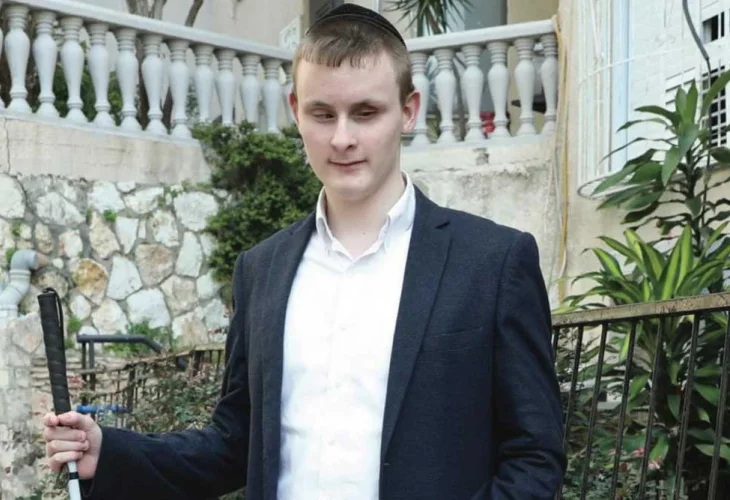 Yosef Elhanan Shabtai
For the past 18 years, Yosef Elchanan Shabtai has lived in a world without sight. The only thing he can sense is sunlight, and even that he does not truly see, but experiences as a certain glare in his eyes. Despite recently hearing about a possible surgical treatment that could partially restore his vision, he has firmly declined.
“Right now, I’m not interested,” he explains in an inspiring conversation. “As a small child I underwent two surgeries, and thank God neither succeeded. I’m actually happy about that, because the Creator knows exactly what He is doing with me. I believe Hashem is the greatest healer in the world. If He wants my sight to return, He will guide me in the right way. As the years pass, I understand more and more that blindness is a gift, and I have no reason to be sad about it.”
Seeing Without Sight
Yosef Elchanan lives in Bnei Brak and has been blind since infancy. “I was born extremely premature, with several complications caused by a lack of oxygen to the brain. At eight months old I was diagnosed with total blindness,” he says. “I have no memory of sight. When people talk to me about colors or physical objects, I have no real way to imagine them.”
Throughout his life he studied in Torah institutions alongside sighted students. “There were specialized schools for the blind, but they were mixed frameworks, and my mother preferred that I remain in regular yeshiva settings. Today I study in yeshiva while also completing my matriculation exams.”
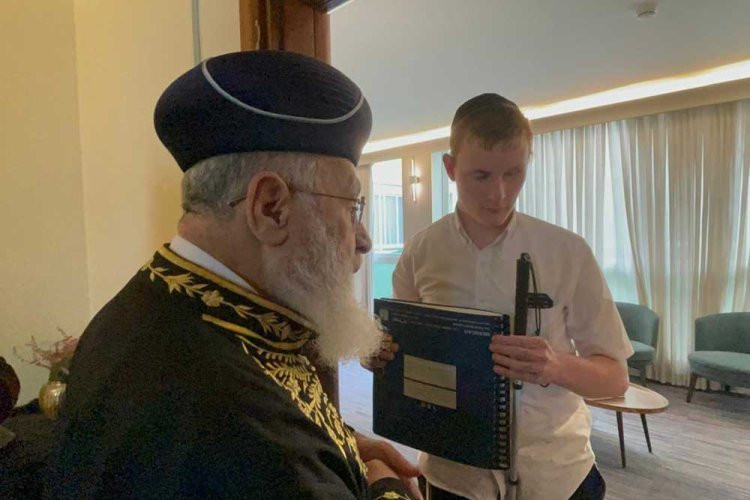 With the Rishon LeZion, the Gaon Rabbi Yitzhak Yosef
From Braille to Screen Readers
“From kindergarten age I read and wrote in Braille,” he explains. “In school I used textbooks translated into Braille. In fourth grade I received my first computer equipped with a screen reader — software that reads aloud everything written on the screen. What most people read with their eyes, I hear through audio.”
Yosef Elchanan types on a regular keyboard and uses a special smartphone that reads everything aloud. “As time goes on, I rely less on physical reading because most information comes through sound. That’s one reason I love radio — it feels like someone is truly speaking to me, not just a program reading text.”
Falling and Rising Again
Blindness has brought challenges since childhood. During school recess, while others played soccer, Yosef Elchanan often stayed inside. “Still, I never felt pitiful,” he says. “I formed friendships, listened to music, read books, and discovered that music is one of the most incredible gifts God created.”
As an adult, his main challenges arise when navigating outside. “I use a white cane in familiar areas like the route to synagogue. In new places a rehabilitation instructor helps me learn the path at first. Today I travel independently, take buses, and even manage to get off at the correct stops.”
People are usually eager to help. “Many offer assistance before I even ask. I politely decline physical help — my cane is enough. I just ask them to tell me when it’s safe to cross, where the intersection is, and what color the traffic light shows.”
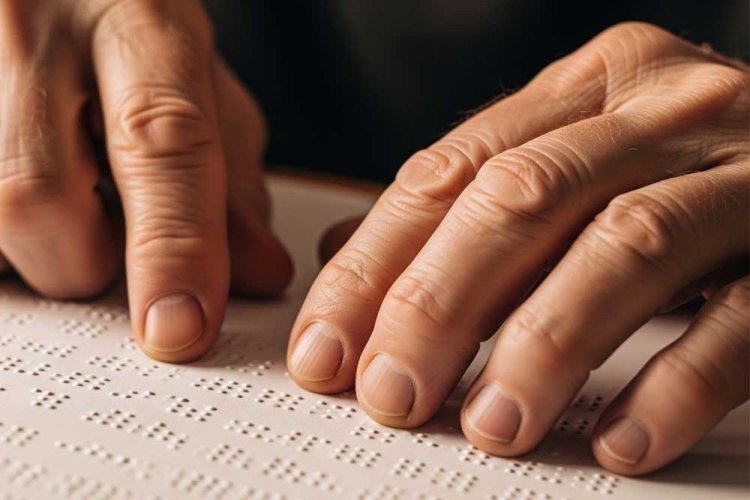 "I read and wrote in Braille from kindergarten onwards"
Challenges in Mitzvot and in Life
“I try not to give up on any mitzvah,” he says, “except two that are difficult for me — lighting Chanukah candles and being called to the Torah, as the person called up must read along with the reader.”
He reflects thoughtfully: “As a blind person I know what it means to fall — literally. That’s why I know the only option is to rise again. Everyone faces struggles. Our task is to keep getting up.”
Looking ahead, he believes blindness may even shape his future relationships positively. “During the matchmaking stage I know there will be challenges, but I also have an advantage. Sighted people often judge first by appearance. I listen to character and heart.”
He pauses and adds quietly: “Maybe one day I’ll feel a brief moment of sadness, when, God willing, I have children and cannot see them. But I don’t pity myself. I believe every soul agrees to its journey before entering this world.”
The Gift Within the Limitation
Yosef Elchanan sees unexpected benefits in his blindness. “First, I merit the highest level of guarding my eyes — twenty four hours a day. I also receive disability support, and strangely, my blindness helps me avoid unnecessary spending. People see shop windows and feel tempted. I buy only what I truly need.”
He laughs lightly: “I even read a study saying people struggle with dieting because they eat with their eyes. Since I don’t, I usually eat exactly what my body needs.”
A Corner of Tehillim: Turning Challenge into Impact
Several years ago, together with a friend, he launched the “Daily Mishnah” initiative — a phone line that broadcasts the daily Mishnah with commentary. Over time it expanded to include weekly Torah portions, Shabbat teachings, and halachic insights.
“When the war began, I asked myself how I could add more merit for soldiers and hostages,” he explains. “That’s how we created a Tehillim corner. Together we completed the reading of 28 Books of Tehillim, praying daily for salvation. My friend Yosef Chaim Ben David, who is also blind, hosts a separate segment called ‘Strengthening Together.’”
Even now, after the war has ended, the Tehillim project continues. “There are still many wounded people, trauma survivors, and others who need prayers,” he says.
He concludes with a personal dedication: “These days I dedicate the Tehillim to Avi Katz — Avi Meir ben Yehudit — who has hosted a late night radio program for thirty years, giving people a place to share their struggles. As someone who listened to him for years, it’s a privilege to pray for him. May all our prayers be accepted with compassion.”

