

Magazine
The Bus Ride That Went Wrong: A Lesson No One Expected
Two secular women set out for a blessing in Bnei Brak. What happened along the way changed far more than they expected.
- Naama Green
- | Updated
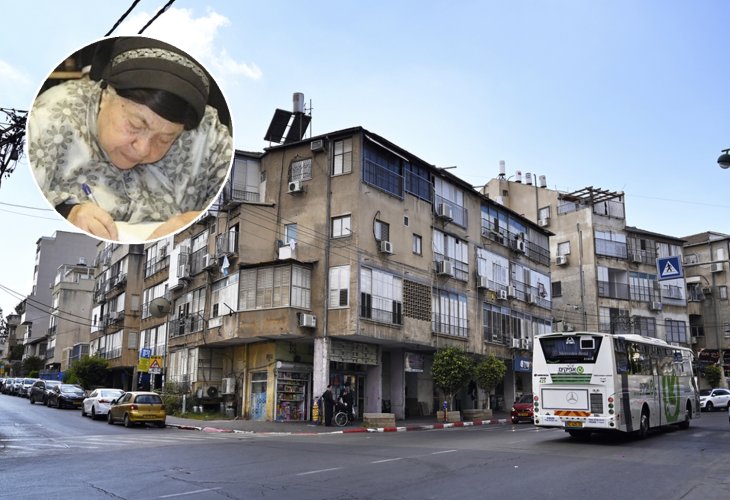 (In the circle: <i>Rebbetzin</i> Batsheva Kanievsky, of blessed memory)
A secular woman who lived near Be’er Sheva once shared her personal struggles with a coworker.
“Let me give you some advice,” her friend said, offering an idea that sounded unexpected and unusual. “In Bnei Brak there’s an elderly rebbetzin, Rebbetzin Kanievsky. Go see her. She’ll give you a blessing.”
Rabbi A. Hefetz recounts this remarkable story in his column in the Shabbat Kodesh supplement. It took place more than twenty years ago and was told to him by Rabbi Chizkiyahu Yosef Karlenshtein, son of the renowned preacher Rabbi Reuven Karlenshtein, of blessed memory.
“Me? Going to a Rebbetzin?”
“Are you serious?” the woman replied. “Have you lost your mind? Me, going to Rebbetzin Kanievsky? Who is she, anyway?”
“I’ll explain,” her friend answered calmly. “And if you still don’t want to go, that’s fine. But I want you to know something. What helped me will help you too. I went to see her a few months ago. I received a blessing, and things changed. If I could go, so can you.”
“We live in completely different worlds,” the woman protested. “The religious are against people like us. How am I supposed to walk into Bnei Brak and visit a rebbetzin?”
“You can,” her friend insisted. “I went for an hour and came back. I’ll go with you. We’ll dress modestly. She’s very particular about that. We’ll come respectfully.”
After a great deal of persuasion, they finally agreed to go.
A Wrong Turn in Bnei Brak
They reached the entrance to Bnei Brak, got off the bus on Jabotinsky Street near the Mor Institute, turned onto Rabbi Akiva Street, and asked how to get to Rashbam Street. They were directed to Bus 54 at the nearby stop.
Once on the bus, they sat in the back. In front of them sat a teenage boy, deeply absorbed in a book. They asked him where to get off for Rashbam Street, where Rebbetzin Kanievsky lived.
He either didn’t hear them properly or misunderstood the question. “I think you should get off at the very next stop,” he replied.
They did. Almost immediately, they sensed something was wrong.
“You got off far too early,” a passerby told them in surprise. “Rashbam Street is many stops away. Who told you to get off here?”
Anger and Frustration
The woman who had resisted coming exploded. “I told you this was a mistake. This is exactly how they behave. That boy saw two secular women and decided to play games with us. I’m done. I’m going home.”
“Please don’t make a scene,” her friend pleaded. “We’re already here. Let’s just continue.”
They waited, boarded Bus 54 again, and rode on. The complaints continued the entire way.
This time, they got off at the correct stop on Nehemiah Street. The friend, who had been there once before, recognized the route, and together they walked toward Rashbam Street.
The Moment That Changed Everything
When they reached the building, they nearly cried out.
Standing by the stairwell was the very same teenage boy.
Their anger surged. They pushed past him impatiently and said loudly, “Excuse us, we’re going up to see the rebbetzin.”
“Of course,” the boy said softly. “But may I ask, were you the ones who asked me on the bus earlier how to get to Rashbam Street?”
“Yes,” they replied coldly.
“I was actually supposed to get off somewhere else,” he continued. “But once I realized I misunderstood your question and caused you trouble, I got off on purpose, came here, and waited. I wanted to apologize and repay you for the extra bus fare.”
He pulled out the exact amount for two bus rides in small coins, handed it to them, turned, and quietly disappeared.
They stood there in silence. Stunned.
The Rebbetzin’s Perspective
They went upstairs, entered the rebbetzin’s home, shared their request, and received her blessing. Before leaving, one of them couldn’t let go of what had just happened.
“Rebbetzin,” she said, “something strange happened to us. A boy made us get off the bus early, and then we found him downstairs waiting to apologize and repay us. What was that?”
The rebbetzin answered gently. “There is nothing strange here. A child raised in a Jewish home is taught to take responsibility for his actions. Whether or not he was strictly obligated to repay you is beside the point. What you saw is simply the natural behavior of a God-fearing boy raised with values.”
“This Is Where I Want to Grow”
They left the apartment and walked downstairs. At the entrance of the building, the woman who had come so reluctantly stopped and turned to her friend.
“If this is what religious Jews are really like,” she said quietly, “if this is how a boy behaves on his own, without pressure or supervision, then this is where I want to be. If this is the environment that produces people like him, I want to grow in this environment too.”
That was the turning point.
One Act, Generations of Impact
Twenty years later, a veteran lecturer told this story at a seminar in Jerusalem. When he finished, a young woman approached him.
“That’s my mother,” she said. “I’m her daughter.”
Today, she has four sons and four daughters, all learning in Jerusalem’s Haredi educational institutions.
Rabbi Hefetz concludes with a message to all of us. Even if you are not involved in outreach, even if you are simply living your life with integrity and values, your actions matter. A single moment of honesty by a fourteen-year-old boy shaped a family and generations to come.
Sometimes, a flame rises on its own.
And each of us carries one.

