

Behind the News
Rubio Says U.S.–Europe Alliance Must Shift From Global Cooperation to National Strength
Secretary of State tells Munich forum that free trade and weak borders harmed the West’s security
- Brian Racer
- | Updated
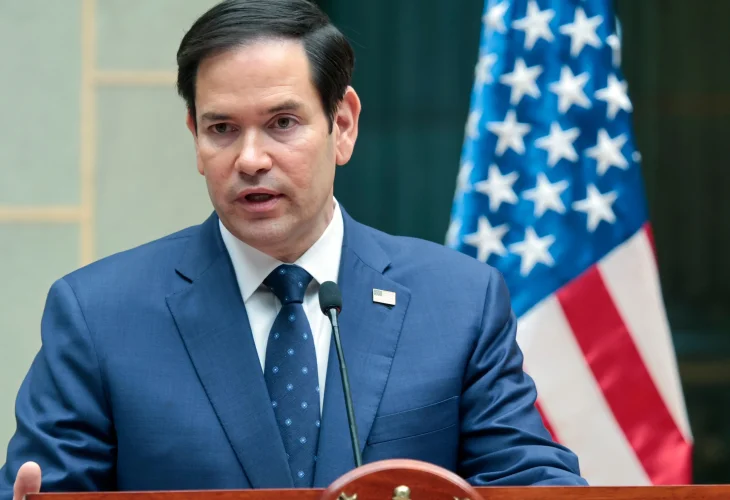 Marco Rubio (Shutterstock)
U.S. Secretary of State Marco Rubio used his address at the 2026 Munich Security Conference to outline what he described as a new direction for the West, one built on national sovereignty, border control, and rebuilding industry at home.
Speaking before European leaders and security officials on February 14, Rubio argued that the period after the Cold War was marked by what he called a “dangerous delusion,” or the belief that trade and global institutions would replace national strength and power politics.
“That idea cost us dearly,” Rubio said, referring to decades of free trade and expanding international cooperation that he said weakened Western countries instead of strengthening them.
Rubio contended that Western nations allowed themselves to become dependent on foreign supply chains, lost manufacturing capacity, and outsourced decision-making to international bodies. He criticized what he described as “free and unfettered trade” that hollowed out industries and left communities vulnerable.
Instead, he called for “renewal and restoration,” saying Western countries need to start making more of their own products again, especially in key industries like artificial intelligence and critical minerals. He argued that relying on foreign supply chains has made the West weaker and more vulnerable.
On migration, Rubio struck an equally firm tone. He described border enforcement as a “fundamental act of national sovereignty” and argued that mass migration has strained social cohesion in many Western societies.
“We made these mistakes together,” Rubio said, adding that the United States now seeks to correct them, ideally in partnership with Europe, but prepared to move forward even if there are disagreements.
Despite the sharp critique of past policies, Rubio emphasized that the United States remains committed to its alliance with Europe. He described the transatlantic relationship as rooted not only in military and economic ties but in a shared Western civilization shaped by common history and heritage. “We belong together,” he told the audience, calling for a “new Western century” that is “unapologetic in our heritage.”
European leaders said they still value cooperation with the United States, but some disagreed with Rubio’s description of Europe’s situation. European Union foreign policy chief Kaja Kallas rejected the idea that Europe is in “civilizational decline,” saying the continent remains stable and committed to its democratic system.
The speech unfolded as Europe debates how much it should rely on the United States for its security. In recent months, European governments have accelerated discussions about strengthening their own defense industries and reducing dependence on Washington.
Rubio did not directly focus on Russia or NATO in his address, issues that remain central concerns for many European governments. Instead, he centered his remarks on sovereignty, industrial renewal, and cultural identity.
Taken together, the speech signals a shift in tone and priorities from Washington. The message was clear: the United States still sees Europe as its closest partner, but the terms of that partnership are evolving.
Rather than defending the post–Cold War model of global cooperation, Rubio is urging Western nations to rebuild strength at home first. How Europe responds may shape the future of the transatlantic alliance in the years ahead.

