

Magazine
He Opened a Grave in Kazakhstan and Found a Tallit Intact After 63 Years
For decades, Rabbi Menachem Mendel Akshtein has brought Jews buried in the Diaspora to their final rest in Israel. One mission revealed something that defied nature, and left a powerful lesson behind.
- Shuli Shmueli
- | Updated
Rabbi Menachem Mendel Akshtein, one of the elder Hasidim of Nadvorna, is widely known within the chevra kadisha as an authority on everything related to bringing the deceased for reburial in the Land of Israel. For more than fifty years, he has devoted himself to this sacred task.
During the lifetime of the great halachic authority Rabbi Shmuel HaLevi Wosner, of blessed memory, Rabbi Mendel consulted him on every detail of this work. Over time, Rabbi Wosner remarked that Rabbi Mendel himself could already serve as a rabbi in these matters, having asked every possible question and learned every nuance.
A Grave in Kazakhstan
On one occasion, Rabbi Mendel was asked to arrange the transfer of a burial casket from the Kazakhstan region to Israel. What he encountered there was extraordinary.
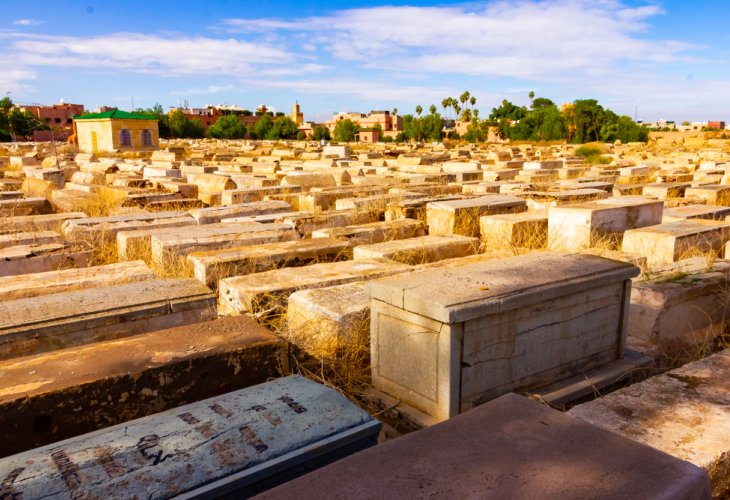
An elderly Israeli Jew named David Gross had asked that his father be brought to rest in the Holy Land, in the cemetery in Beit Shemesh. Rabbi Mendel traveled to the remote cemetery in Kazakhstan, located the grave, stood by the headstone, recited chapters of Psalms and prayers asking forgiveness of the deceased, and then began the delicate work.
A local non-Jew cleared away the soil while Rabbi Mendel lifted the concrete slabs.
Suddenly, he froze.
Before his eyes lay a thick wool tallit, the kind once worn by Galician Jews, perfectly intact. Sixty-three years underground, and the tallit had not decayed. This was far beyond the natural order.
A Question Without an Answer
Rabbi Mendel never opens a grave without authorization from senior rabbis who take responsibility for the decision. He had received permission in this case, having been told that the deceased was a simple person named Chaim ben Rabbi Yitzchak Gross, known for charity and kindness.
But this was no ordinary sight.
He wrestled with what to do. Should he continue or stop?
He had no phone and no way to consult anyone. The only One he could turn to was Hashem. For ten minutes he poured out his heart in prayer, asking for a sign whether to proceed or withdraw.
At the end of those minutes, he felt a powerful inner clarity, a sense that he must continue and complete the task.
When the grave was fully opened, the wonder deepened. Only the tallit remained whole. Beneath it, everything else appeared exactly as expected after so many decades.
Escorting the Deceased Home
After bringing the casket to Israel, Rabbi Mendel decided to accompany it through burial, even though it was not officially his responsibility. He felt personally accountable to ensure that the deceased was laid to rest properly, according to halacha, in the soil of the Holy Land.
Before the burial, he approached the officiating rabbi and described the tallit that had survived intact. The question arose immediately: what should be done with it?
In the Land of Israel, the custom is not to bury the deceased with a tallit. While the Rema writes that one who was careful with tzitzit should have them placed with him, Rabbeinu Tam explains that tzitzit allude to the 613 mitzvot and testify that a person fulfilled the entire Torah. Since no one can claim such perfection, even great tzaddikim today are not buried with a tallit.
But this was no ordinary tallit. One that Heaven had preserved for decades demanded careful consideration.
A Son Remembers
The rabbi called over the deceased’s eldest son and asked him to share what he knew about his father.
“I don’t remember much,” the son said apologetically. “I was only twenty when he passed. We fled Galicia during the war, and my father sensed his heart was weak. He asked to be buried wherever possible, and that when it became feasible, he be brought to Israel. What I know is what’s written on the gravestone—that he gave charity and kindness with love.”
“That is admirable,” the rabbi replied, “but here there is something more. Do you remember anything about your father connected to his tallit or tzitzit?”
The son smiled. “Yes. My father was careful never to speak while wrapped in his tallit. Even when asked his name for an aliyah, he would remove the tallit, answer ‘Chaim ben Yitzchak,’ and then put it back on.”
A One-Time Ruling
The rabbi was deeply moved. A simple Jew had accepted upon himself a personal standard of reverence, and for that, Heaven had guarded his tallit beneath the earth for more than sixty years and revealed it publicly when his remains were brought to Israel.
He issued a rare, one-time ruling that this man should be buried with his tallit.
Rabbi Chaim ben Yitzchak merited that his quiet devotion became known publicly, strengthening all those who guard their speech during prayer.
When Rabbi Mendel later told the story to Maran Rabbi Chaim Kanievsky and asked whether it should be shared, the answer was brief and clear: “It is a mitzvah to publicize it.”
A Stone That Speaks
This is the inscription on his headstone at the Eretz HaChaim cemetery in Beit Shemesh:
“Here lies R. Chaim Gross son of R. Yitzchak, of blessed memory, from Haelshitz, Galicia. The crown and pride of our family, who dealt in charity and kindness with affection and love. He passed away in exile in Aktyubinsk, Kazakhstan, on 10 Tammuz 5701. Brought to rest in the Holy Land on 23 Menachem Av 5764. May his soul be bound in the Bond of Life.”
The Lesson That Remains
The synagogue is a holy place, a mikdash me’at, and we are commanded to treat it with reverence. It is where we stand before Hashem, and our conduct there should reflect humility and awe, as the Torah teaches: “You shall revere My sanctuaries.”
Our sages speak sharply about those who converse during prayer, warning that such behavior shows a lack of reverence for the Divine Presence. History has shown, again and again, the cost of treating holy spaces lightly.
This story offers a different vision. A quiet act of restraint, unnoticed by others, echoed across decades and continents.
Sometimes, what Heaven preserves longest is what was done most quietly.

