

Passover
The Mitzvah of Telling the Exodus Story: Meaning, Laws, and Purpose of the Pesach Seder
A clear guide to the commandment of recounting the Exodus from Egypt, including its sources, timing, practical steps, and the deeper spiritual message behind the Passover Haggadah
- Naama Green
- | Updated
 (Photo: Shutterstock)
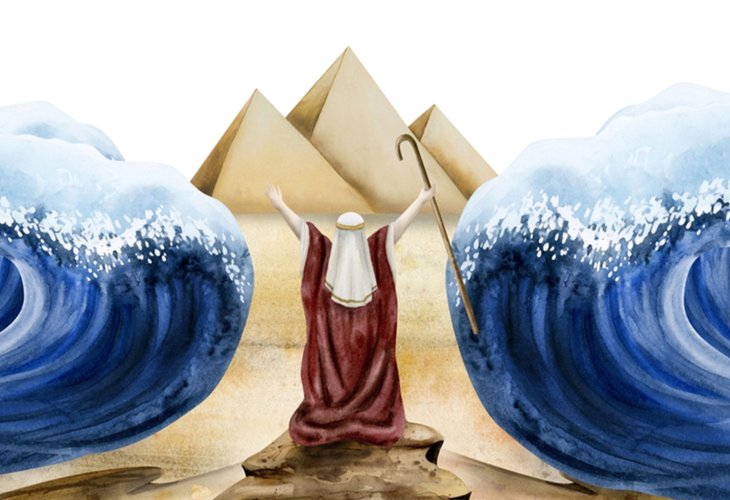
The story of the Exodus from Egypt is a commandment that obligates every Jew to recount, each year on the night of the fifteenth of Nisan, the events described in the Torah about the departure from Egypt and the Ten Plagues that preceded it. This mitzvah forms the foundation and central motivation behind all the customs of the Seder night, foremost among them the recitation of the Passover Haggadah.
Source of the Commandment
The source of this mitzvah appears in the verse: “And you shall tell your child on that day, saying: It is because of this that the Lord acted for me when I went out of Egypt” (Shemot 13:8).
Based on this verse, the Mishnah teaches: “In every generation a person must see himself as if he personally left Egypt. Therefore we are obligated to thank, praise, glorify, exalt, honor, bless, elevate, and acclaim the One who performed all these miracles for our ancestors and for us, bringing us from slavery to freedom, from sorrow to joy, from mourning to celebration, from darkness to great light, and from bondage to redemption, and we say before Him Hallelujah.”
The Rambam counts this commandment as positive commandment 157, and the Sefer HaChinuch lists it as mitzvah 21.
To fulfill the mitzvah, one must tell about the enslavement of Israel in Egypt, God’s judgment against Egypt, and the salvation granted to Israel. The more detailed and vivid the telling, the more praiseworthy the fulfillment. The sages expressed this idea in the well known statement: “Whoever elaborates in telling the story of the Exodus is praiseworthy.” According to Sefer HaChinuch, the practices of the Seder and the recitation of the Haggadah are all included within the laws of this mitzvah.
The Time of the Mitzvah
Unlike the commandment to remember the Exodus, which applies daily, the mitzvah of telling the story has a specific time. This is learned from the verse “And you shall tell your child on that day,” which the Mechilta explains refers to a time when one can say “because of this” while pointing to the symbols of redemption, namely when matzah and maror are placed before us. Therefore, the proper time is the night of the Seder.
How the Mitzvah Is Fulfilled
The story should be told in a format of questions and answers, encouraging curiosity and engagement.
One begins with disgrace and concludes with praise. The narrative moves from hardship to redemption so that the greatness of the miracle becomes clear.
The words “Pesach, Matzah, and Maror” should be mentioned together with an explanation of their meaning, connecting the story to the practical mitzvot of the holiday.
A person must view himself as if he personally left Egypt. As the Rambam explains, each generation must present itself as though it has just now emerged from slavery.
The story concludes with praise and gratitude, including Hallel and songs of thanksgiving to God for bringing Israel from slavery to freedom and from sorrow to joy.
The Reasons Behind the Commandment
According to the Book of Shemot, the purpose of this mitzvah is to transmit the story from generation to generation, since it forms the foundation of Israel’s obligation to study Torah and observe the commandments.
Sefer HaChinuch explains that its purpose is to remember the miracles God performed in redeeming Israel, thereby strengthening faith in creation and in Divine involvement and providence in the world.
According to the Kuzari, the Exodus is the defining event that establishes faith in one all powerful God who guides history, which is why it must be passed on continuously from one generation to the next.

