

Passover
Why Pesach Requires Action: The Meaning Behind the Holiday of Freedom
A deep exploration of how the laws and traditions of Passover shape faith, strengthen family connection, and transform the Exodus from a historical memory into a living spiritual experience
- Rabbi Moshe Reis
- | Updated
Each festival on the Jewish calendar possesses its own character, and every holiday conveys a unique system of values and truths that it seeks to instill. The distinct identity of each festival emerges from its specific laws and practices, which give it its special flavor.
For this reason, our Sages taught that one should study and discuss the laws of a festival thirty days before it arrives. During this period, a person prepares properly, both practically and spiritually, so that the festival can elevate them and be celebrated in the fullest way.
Pesach seems to require even more preparation than the usual thirty days, for learning its many laws, preparing the physical needs of the festival, and engaging in deep emotional and spiritual preparation. The laws of Pesach are numerous. Alongside the mitzvot of praise and joy common to all festivals, Pesach includes the strict prohibitions regarding chametz, as well as many positive commandments from both the Torah and the Sages, including eating matzah and maror, drinking the four cups, and reciting the Haggadah.
Why So Much Effort?
In earlier times, when the Temple stood in Jerusalem, even more laws applied, including the obligation to ascend to Jerusalem, the offering and eating of the Korban Pesach, and additional prohibitions such as not breaking a bone of the offering or cooking it improperly.
Naturally, one might ask, “Why is all this work necessary?” If Pesach commemorates the suffering in Egypt and the miracles of redemption, why not remember it in simpler ways? One could imagine lectures in schools, media programs, or youth activities that discuss freedom and the Exodus without such demanding preparation.
Yet the Torah did not choose that path. It teaches that the values and memories of Pesach are preserved specifically through action. The many mitzvot, some involving doing and others involving refraining, shape the identity of the festival and embed its message within us.
Consider one example: the prohibition against breaking a bone of the Korban Pesach. This commandment is not about doing something, but about refraining from an action. According to Sefer HaChinuch, this restraint teaches dignity. Royal people do not gnaw bones like hungry animals. By acting with honor each year, we internalize the idea that we are a holy nation.
To some, this may seem puzzling. How can refraining from breaking a bone help a person feel like royalty? Are reminders of freedom really necessary? These questions are not new. Sefer HaChinuch explains that a person is shaped by their actions. Even someone with negative inclinations can transform by consistently engaging in positive deeds. “Hearts follow actions,” and therefore the Torah is filled with many mitzvot so that our thoughts and lives would be shaped by them.
Values take root through practice. Without these repeated actions, the memory of the Exodus might fade. The many laws ensure that its message remains alive within us.
History itself demonstrates that ideals without action can collapse. Ancient Egypt was advanced and cultured, yet committed terrible cruelty, even throwing infants into the Nile. Ideologies without practical moral behavior can become hollow. The Torah therefore anchors ideals in action.
Not Only Actions, but Understanding
And yet, actions alone are not enough. They must be accompanied by explanation and meaning.
Rabban Gamliel taught that anyone who does not explain Pesach, matzah, and maror has not fulfilled their obligation. Every action on Pesach must be surrounded by understanding. The Torah does not seek empty rituals but meaningful acts that engage the human mind and heart.
This is the purpose of the Haggadah: to speak, explain, and tell the story. The Sages would continue recounting the Exodus throughout the night, even until dawn.
Corresponding to the Four Children
The obligation to tell the story is not one size fits all. Just as people differ, so do their questions. The Torah speaks of four children: wise, wicked, simple, and one who does not know how to ask. Each requires a different response.
The Rambam writes that a parent must teach according to the child’s level. A young or simple child receives a basic explanation, while a wise child is taught deeper details. Even a child who does not know how to ask must be encouraged to question.
These explanations are not intended to reveal the ultimate reasons behind the commandments, which remain beyond full human understanding. Rather, they sweeten the mitzvot and help bring their meaning closer to the heart.
From the First Pesach Until Today
The commandments practiced today were already observed during the first Pesach in Egypt, along with additional instructions unique to that historic moment. Even then, parents explained the meaning of each act to their children. At that first Seder, the people sang words that still echo today: “Now we are here; next year in the Land of Israel. Now we are slaves; next year we will be free.”
This approach prepared the nation to accept the Torah. When God revealed Himself at Sinai, the people declared, “All that God has spoken, we will do.” They understood that Torah is not merely philosophy but a way of life expressed through action. Yet they also added, “We will do and we will hear,” committing to act while striving to understand.
The afikoman symbolizes this unity of action and awareness, remaining as a reminder that deeds and understanding must go hand in hand.
The Family Table
The Exodus laid the foundation for the Jewish people, emphasizing that the strength of the nation rests upon the strength of the family. Pharaoh attempted to divide the people, suggesting that only some should leave Egypt, but Moshe insisted, “With our young and our old, with our sons and daughters we will go.” Only whole families could form a strong nation.
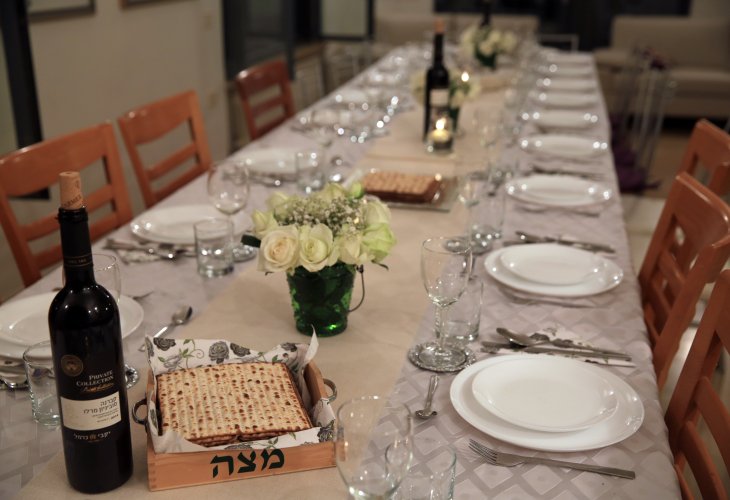
The Seder night highlights tradition and education, drawing families together around one table. Throughout history, the stability of Jewish family life has been a model for others.
Today, however, family structures face many challenges, and the Seder may be the only time some families gather together in unity. We hope that the inspiration of this great festival will extend beyond a single night, filling the entire year with meaning and connection, so that the door opened for Elijah the Prophet will symbolize lasting spiritual renewal.
This article is based on a teaching by Rabbi Moshe Reis from “El HaMekorot.”

