

Passover
The Plague of Arov Explained: Divine Justice and Protection in Egypt
Discover the dramatic story of the fourth plague, the swarm of wild animals, and how Divine providence, measure-for-measure justice, and Israel’s spiritual elevation were revealed through the events of the Exodus
- Behalacha Ube'agadah
- | Updated
 (Illustration: Shutterstock)
God said to Moshe: “This wicked one, Pharaoh, hardened his heart during the first three plagues. The fourth plague will be harsher than the previous ones. Go and warn him so that he will send My people and the plague will not come upon him.”
In ordinary human behavior, when a person wishes to harm an enemy, he strikes suddenly so that the victim will not sense it and escape. But the Holy One, blessed be He, warned Pharaoh again and again, perhaps he would repent.
Moshe did as God commanded and warned Pharaoh: “Send out My people, or you will be struck with the plague of Arov — a mixture of wild animals, birds, predators, crawling creatures, and insects.”
Yet Pharaoh hardened his heart, even while his body still itched and ached from the lice and while countless dead lice lay everywhere. Every morning for three weeks Moshe entered the royal palace without permission and warned him, and the king refused to listen. On the final day Pharaoh could no longer tolerate the repeated warnings. He left for the Nile earlier than usual, hoping to avoid Moshe. But nothing is hidden from God. The Almighty told Moshe to go even earlier to meet Pharaoh at the Nile for one final warning.
Divine Providence Revealed
Earlier than any previous morning, Moshe met Pharaoh by the river. Pharaoh was once again exposed in his disgrace — the “great god” forced to attend to bodily needs. Moshe declared: “So says God: Send My people that they may serve Me. If you refuse, I will send the swarm upon you, your servants, your people, and your homes.”
Moshe added that until now Pharaoh had learned that God created the world. Now he would learn that God supervises His creation — rewarding the righteous and punishing the wicked. The proof would be that the swarm would fill Egypt, yet not even a single fly would enter the land of Goshen, where the Israelites lived. Even if a Jew walked outside Goshen, no animal would harm him. Pharaoh was given one day to flee to the protected land of Goshen.
The Plague Begins: “There Are Bears — and a Forest Too”
The next day Egypt was flooded with terrifying creatures: bears, lions, leopards, wolves, snakes, scorpions, rodents, predatory birds, and swarming insects — flies, mosquitoes, bees, fleas, and more. Even the frogs and lice returned.
Wild animals are usually fierce only in their natural habitat. In populated areas their courage weakens. To ensure the plague’s full force, God brought with the animals the very earth upon which they were accustomed to roam, so they would feel at home and attack Egypt with full strength.
The animals came first to Pharaoh’s palace. From there they spread to the homes of his servants and then throughout Egypt, destroying the land. Their path defied logic; instead of moving gradually from the outskirts inward, they struck the royal palace first, demonstrating Divine providence, by punishment beginning with the most wicked.
A Direct Assault on Pharaoh
Imagine Pharaoh seated upon his throne, crown on his head, surrounded by guards. Suddenly a direct attack begins. Swarms of bees sting him and his ministers. Birds of prey storm the palace, knocking the crown from his head. Then come lions, bears, and wolves roaring through the halls, followed by snakes, scorpions, frogs, and lice.
Throughout Egypt strange forests suddenly appeared. At first Egyptians were intrigued by the greenery, until predators emerged from the trees and chaos erupted as people fled for their lives.
“I Will Set a Distinction Between My People and Yours”
On another street a Jewish slave walked carrying the children of his Egyptian master. The children ran excitedly toward one of the new forests — only to be attacked by a lion. One child was devoured. As the terrified caretaker fled, more predators struck, until none of the children remained.
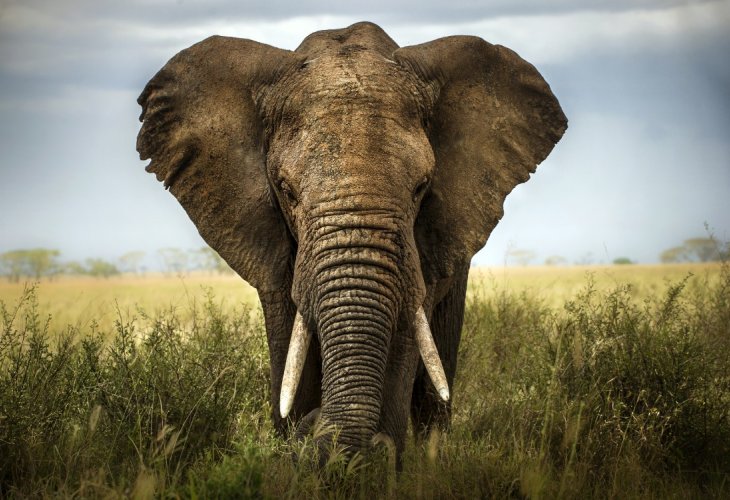
The Jewish slave continued alone, convinced his own death was near. Surrounded by beasts, he recited the Shema and even confession. Suddenly an enormous elephant approached, but instead of attacking, it saluted him and passed by peacefully. Other animals also left him unharmed. Slowly he realized he was protected by God. His crushed spirit began to rise, and a sense of dignity replaced years of humiliation. One purpose of the plagues, indeed, was to uplift Israel’s spirit and prepare them to receive the Torah.
Measure for Measure
When the Jewish servant returned to report the deaths, Egyptian homes filled with grief. Their cries echoed the suffering the Israelites had endured when Egyptian soldiers murdered their children.
In another house a mysterious creature stretched its long arm through the roof, opened the door from within, and allowed a lion to enter. A baby was snatched before the family’s eyes. The elderly grandmother fainted, remembering how decades earlier she had helped expose Israelite babies who were then thrown into the Nile. Now the suffering returned to Egypt — measure for measure.
No Escape
Wild animals roamed freely. Terrified Egyptians fled into forests that had sprung up overnight. Some leaped into lakes seeking safety, only to meet sharks and predatory fish. Others climbed towers, but birds of prey attacked through the windows.
Inside their homes Egyptians tried to find refuge. Even their sheep — once worshipped as gods — were devoured. Yet no hiding place could protect them. Only Goshen remained safe. Strange creatures opened locked doors, letting predators enter.
Parents tried calming their children, insisting they were safe indoors, until a lion burst in and tragedy struck again. The horror mirrored the cries of Israelite mothers whose infants had been taken from them.
Seven Days of Terror
For a full week the plague devastated Egypt while leaving Israel untouched. Streets emptied as Egyptians hid indoors. Nights brought no rest; fear and memories of earlier plagues haunted them. Just as sleep approached, lice would bite again, and the croaking of frogs filled the darkness. Seven days and seven nights of unrelenting terror passed.
Near the end Pharaoh pleaded, “I will send you to sacrifice to your God in the wilderness — only do not go far. Pray for me.” Moshe prayed, and the plague ceased the next day. Yet Pharaoh hardened his heart once more and refused to release the Israelites.
Afterward all the animals departed alive and returned to their natural habitats. Unlike the frogs, which died and remained in Egypt, the animals were removed so that Egyptians would not benefit from their hides, meat, or fur — for the plagues were not meant to bring them pleasure.

