

Purim
Mishloach Manot: When Halacha Meets a Real-Life Dilemma
A Swiss hospital query and a centuries old Purim incident reveal how a simple mitzvah can raise an unexpected halachic question.
- Shuli Shmuali
- | Updated
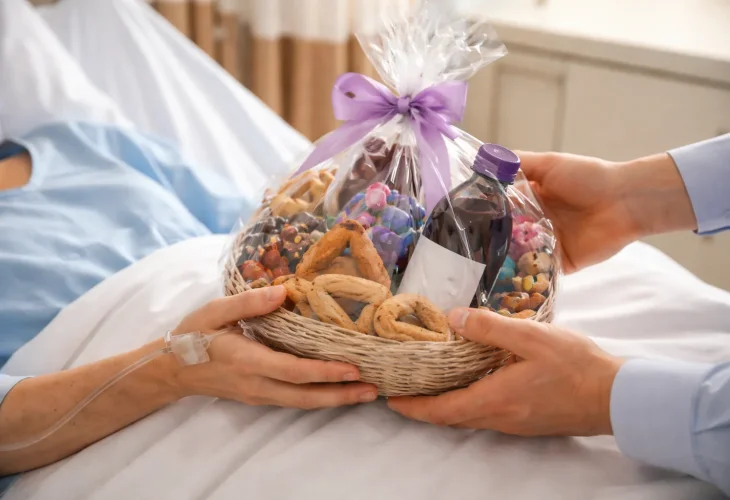
There is a well known halachic principle regarding mishloach manot on Purim: a man sends to a man, and a woman sends to a woman. A man should not send mishloach manot to a woman, particularly if she is single or widowed, due to the concern that this could create a doubt of kiddushin.
A related halachic question was reported in the Ramat Elchanan bulletin Kol Barama and was brought before Rabbi Yitzchak Zilberstein. Rabbi Zilberstein shared that while he was in Switzerland, he received an inquiry from a hospital where two Jewish patients, a man and a woman, were staying.
The question was whether the mitzvah of mishloach manot could be fulfilled under those circumstances. Since there was no possibility of using messengers and no alternative recipients, the question arose whether the ill man was permitted to send mishloach manot to the ill woman. Rabbi Zilberstein contacted Rabbi Yosef Shalom Elyashiv and presented the case to him.
Rabbi Elyashiv ruled that the mitzvah of mishloach manot is derived from the words of the Prophets and carries a weight similar to a Torah level obligation, while the concern of creating a doubt of kiddushin is mentioned by the Rishonim. Therefore, when there is absolutely no alternative, a man may send mishloach manot to a woman. With this ruling, Rabbi Zilberstein concluded the matter.
When a Halachic Question Shook the Jewish World
Hundreds of years ago, a related halachic question caused a major uproar throughout the Jewish world. A wealthy man was distributing matanot la’evyonim, and among those waiting in line was a young girl. When her turn came, the man took out a valuable coin and asked her, “Do you want to receive matanot la’evyonim?” After she answered yes, he handed her the coin and declared, “Behold, you are betrothed to me according to the law of Moses and Israel.”
The question that followed was whether the girl had in fact become betrothed to that man. The case reached many of the leading halachic authorities of the time and sparked widespread debate.
In the early halachic work Kol Eliyahu, a response was published addressing the case after it became widely known. The ruling explained that once the man asked whether she wished to receive matanot la’evyonim and she agreed, he bound himself with a neder to give her the coin specifically for that mitzvah. As a result, the coin was given solely to fulfill the obligation of matanot la’evyonim, which neutralized any possibility of kiddushin.
Through this reasoning, the halachic authorities clarified that the act could not be considered a valid betrothal, resolving a case that had deeply unsettled the Jewish community.

