

Passover
The Spiritual Meaning of Matzah and Chametz: Humility, Redemption, and the Inner Message of Passover
A deep exploration of why matzah was commanded before the Exodus, the symbolism of pride and humility, and how the month of Nisan prepares the soul for personal and national redemption
- Rabbi Zamir Cohen
- | Updated
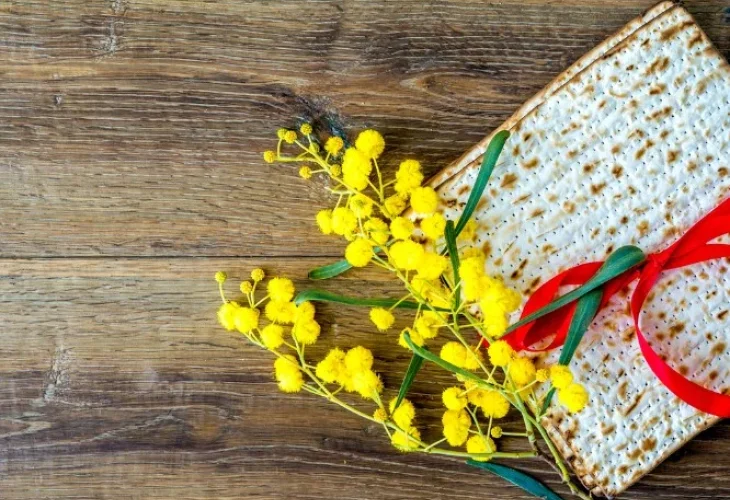 Image: Shutterstock
On the night of the fourteenth of the month of Nisan, before the Exodus from Egypt, the Children of Israel were commanded to offer the Passover sacrifice and eat it with matzah and bitter herbs, as it is written (Shemot 12:8): “And they shall eat the meat that night, roasted by fire, with matzot and bitter herbs.”
We must understand: why were Israel commanded to eat matzah before leaving Egypt? Seemingly, the eating of matzah commemorates the fact that their dough did not have time to rise when they departed. Yet on the night of the fourteenth of Nisan, that event had not yet occurred. Why, then, were they already commanded to eat matzah?
The Spiritual Meaning Behind Eating Matzah Before the Exodus
On a simple level, one may explain that Israel were commanded to eat matzah in anticipation of the future, for the One Who knows all generations knew that their dough would not have time to rise. Alternatively, they were commanded to eat matzah because Egypt fed them matzah-like food that digested slowly, conserving provisions; thus they ate it one final time by Divine command so that they would remember both their servitude and their redemption for all generations.
Yet every physical act carries spiritual meaning. At a deeper level, the essence of matzah, which is the opposite of chametz, is intrinsically connected to redemption itself. Without the inner quality symbolized by matzah, redemption cannot take place.
The Difference Between Chametz and Matzah
Both matzah and chametz are made from flour and water. Even when the quantities are identical, chametz is called by that name because it rises and expands, not due to added substance, but because of empty air pockets that inflate it. Matzah, by contrast, reflects what it truly contains, without arrogance or false elevation.
For this reason, the Hebrew words “matzah” and “chametz” contain similar letters. The single “leg” of the letter hei becomes attached to the roof and transforms into the letter chet, which symbolizes sin. The dough swells with emptiness, appearing larger than it truly is. Just as chametz is easier to chew than matzah, it may seem more appealing, yet it lacks truth.
So too with pride. A person feels elevated by imagined greatness, yet in truth the heart has risen through illusion.
Pride as the Root of Spiritual Corruption
Just as dough rises when left idle, pride grows in one who does not work on refining personal character. Self-development prevents arrogance; neglect allows it to expand. And just as chametz can cause other dough to ferment, pride corrupts all other traits. One who imagines themselves superior becomes quick to anger, resentful of perceived disrespect, consumed by desire, and prone to sadness when expectations are unmet.
The root of pride lies in falsehood, for perfection belongs only to God. Even Moshe, the greatest of prophets, is described as “very humble, more than any person on the face of the earth” (Bamidbar 12:3). Whoever becomes arrogant, therefore, builds upon illusion.
Because God’s seal is truth, arrogance distances the Divine presence. The sages teach that God says of the arrogant person: “He and I cannot dwell together.” True exaltation belongs only to the Creator.
Humility as a Prerequisite for Redemption
Although humility is always virtuous, before redemption it becomes essential. Redemption reveals God’s kingship in the world, whereas pride pushes away the Divine Presence. Therefore Israel needed to correct pride and acquire humility before their liberation from Egypt.
This idea is reflected in the ultimate defeat of the primordial serpent, representing the evil inclination. When false elevation disappears, God’s name is magnified and sanctified. Thus Israel were commanded to eat matzah before redemption, internalizing truth and humility in preparation for freedom.
The same principle applies to the future redemption, as the sages state: “The son of David will not come until the arrogant cease from Israel.”
The Month of Nisan and the Spiritual Opportunity for Change
After Israel fulfilled the mitzvah of eating matzah and sought to uproot pride, a spiritual influence became embedded in creation. Each year in the month of Nisan, a special flow of redemption descends, enabling every person to more easily remove pride, the root of many spiritual flaws.
For this reason, Nisan is uniquely suited for redemption: “In Nisan they were redeemed, and in Nisan they will be redeemed.”
The difference between the Hebrew words “golah” (exile) and “geulah” (redemption) is the letter aleph, symbolizing the Divine Presence. When humility brings God’s presence into one’s life, exile transforms into redemption.
The festival is therefore called “the Festival of Matzot,” for the inner essence of matzah leads to redemption.
Why Chametz Must Be Completely Removed
Unlike other prohibited foods, chametz carries the commandment of “it shall not be seen nor found.” Other prohibitions may be harmful in essence, yet they remain true to their form. Chametz, however, represents false expansion, and falsehood itself must be distanced entirely, as the Torah commands: “From a false matter you shall distance yourself.”
Similarly, the Rambam writes that while most traits require balance, pride demands extreme distancing. Like chametz, even a small amount of false arrogance must be removed.
From Brokenness to Redemption
Creation itself reflects the verse: “I bring death and I bring life; I wound and I heal.” Growth emerges from struggle; light follows darkness. The serpent, symbolizing corruption, shares a numerical value with “Mashiach,” hinting that ultimate redemption will transform impurity into holiness. Even the word chametz, symbolizing pride, rearranges into “tzemach,” a title of the Messiah.
Therefore only substances capable of becoming chametz may be used for matzah. The possibility of corruption contains the potential for elevation. Through challenge, a person rises higher.
The Rambam himself testified to striving for humility even when misunderstood. He wrote that he forgave those who belittled him and chose restraint in order to overcome personal ego. Such conduct demonstrates the profound level of humility to which a person can aspire.
The Spiritual Work of Nisan
The essential spiritual task of the month of Nisan is to acquire humility, uproot pride, and remove chametz both physically and spiritually. This inner work benefits the individual, strengthens Israel as a whole, and hastens redemption by restoring the Divine Presence.
Fortunate is the person who understands the moment and acts accordingly, helping to raise the Divine Presence from the dust and bringing the world closer to redemption.

