

World News
Iran Enters Nuclear Talks in Geneva as U.S. Readies Weeks of Military Action
Washington positions naval forces and plans for extended action while Tehran insists uranium enrichment remains non-negotiable
- Brian Racer
- | Updated
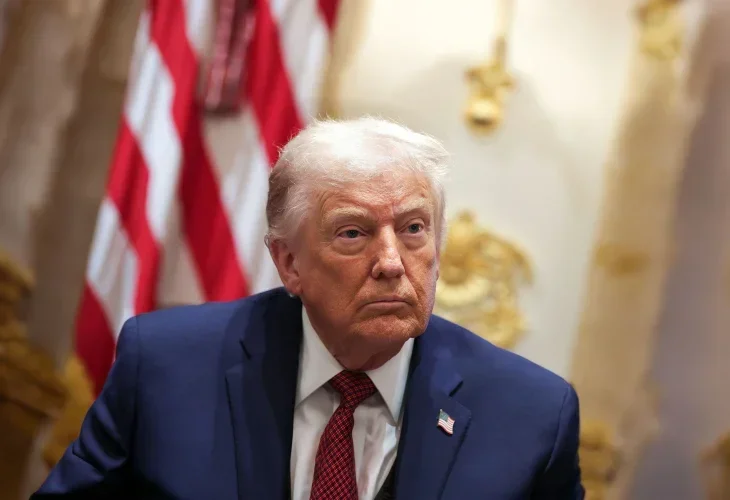 Trump (Shutterstock)
The United States and Iran opened a second round of indirect nuclear talks Tuesday in Geneva, as both sides entered negotiations under visible military pressure. The discussions, mediated by Oman, come as Washington positions significant naval assets in the region and Iran conducts military drills in the Strait of Hormuz.
Speaking aboard Air Force One on Monday, President Donald Trump said he would be involved in the process indirectly and expressed confidence that Tehran seeks an agreement. "Iran wants a deal. They do not want to bear the consequences of what will happen if there is no deal," Trump said. He added, "I will be involved in the talks with Iran, not directly. They will be very important. We’ll see what happens."
Trump also referenced prior U.S. military action against Iran’s nuclear facilities. "Iran are tough negotiators, and I would say not good ones either. We could have had a deal, but we had to send the B-2 bombers and destroy their nuclear capability. I hope they act more rationally."
U.S. envoy Steve Witkoff and Jared Kushner are participating in the Geneva talks alongside Iranian Foreign Minister Abbas Araqchi. The negotiations are being held behind closed doors and are structured as indirect exchanges through Omani mediation.
U.S. military planners are preparing for the possibility of weeks of operations against Iran if Trump were to order an attack. The talks follow strikes last June in which Israel launched a bombing campaign against Iranian targets and was later joined by U.S. B-2 bombers that struck nuclear sites. Tehran has since said it halted uranium enrichment activity.
At the same time, Iran began a military drill Monday in the Strait of Hormuz, a strategic waterway for global oil exports. Oil markets showed cautious movement as investors assessed the potential impact of regional instability. Washington has described its current regional deployment as a significant naval buildup compared to previous negotiation efforts.
Iranian officials have set clear boundaries for the current round. Ibrahim Rezai, spokesman for the Iranian parliament’s national security committee, said, "In this round of negotiations in Geneva, we will not discuss stopping or giving up uranium enrichment, and there is no intention of removing Iran’s nuclear stockpiles from the country. These issues have already been accepted by the Americans. The talks are not related to missile issues or regional matters."
Iranian sources further stated that sanctions relief is considered inseparable from any agreement and that Tehran entered the process only after receiving assurances that the focus would remain solely on nuclear issues. "Iran agreed to enter this process only after receiving a message from the other side that the only subject for negotiation would be the nuclear issue," officials said.
In Washington, officials have acknowledged uncertainty about the consequences if diplomacy fails. A CNN report cited discussions within the administration about potential regime-collapse scenarios but noted a lack of clarity over who would assume power in such a case. Secretary of State Marco Rubio told lawmakers that "No one knows" who would lead Iran if its current leadership were to fall.
U.S. intelligence assessments cited in the report indicate that Iran’s IRGC would likely move to fill any leadership vacuum in the short term. An intelligence source said the Guard is "certainly dominant and operates above the regular military bureaucracy, but it is difficult to predict exactly what will happen in a regime-collapse scenario."
The Geneva talks follow a first round of indirect negotiations held on February 6 in Oman. As delegations meet again, Washington is signaling readiness to escalate if necessary, while Tehran insists uranium enrichment and its existing stockpiles remain off the table.

