

Passover
Passover, Matzah, and Maror: The Three Spiritual Messages of Freedom, Faith, and Renewal
A deep exploration of the inner meaning of Pesach, revealing how redemption, humility, and life’s challenges shape personal growth and national rebirth
- Rabbi Moshe Sheinfeld
- | Updated
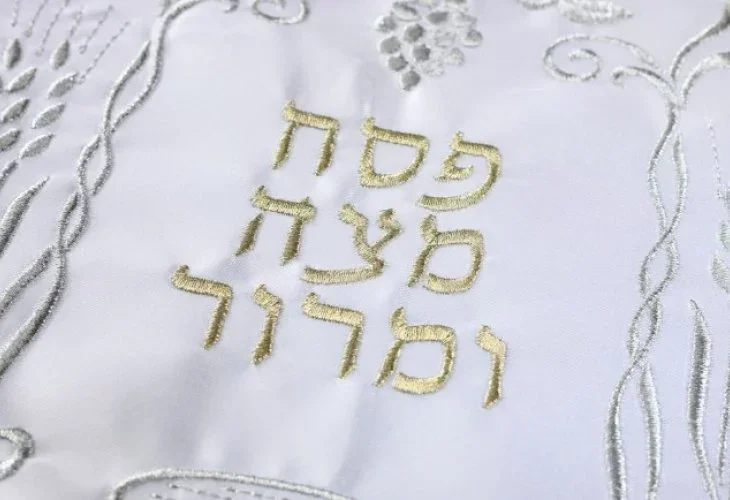 Photo: Shutterstock
Every year, the seeds hidden within the earth awaken from their winter sleep, and new freshness begins to flow through them. Dormant cocoons come alive once more, the frozen ground releases its grip, and nature rises toward renewal. At that very same time, the people of Israel, the symbol of humanity’s rebirth, celebrate their own festival of revival and redemption, recalling the moment when they were cast “into the open field,” and the Eternal One passed by them and said, “By your blood you shall live” (Rabbi Samson Raphael Hirsch, In the Circles of the Year).
This redemption of nature and the collective redemption of Israel awaken within each individual a deep desire to emerge from inner stagnation and spiritual slumber, and to enter a warm, springlike world of renewal, freedom, and redemption.
Rabban Gamliel would say: Whoever has not spoken of three things on Passover has not fulfilled his obligation. These are: the Passover offering, matzah, and maror.
Passover, matzah, and maror are three guiding ideas that, when a person connects to them, help open the path to freedom and new life.
The First Idea: Passover
The name “Passover” comes from the concept of skipping or passing over, as it says: “Who passed over the houses of the children of Israel in Egypt when He struck Egypt.” The verse refers to the plague of the firstborn, when God passed over the homes of Israel and saved them.
Its deeper meaning is the quiet and peaceful sleep at midnight, free from fear within the homes and hearts of the people. While storms raged outside, Israel rested calmly. They slept without fear of the death that moved through the streets, for “It is a night of guarding for the Lord… a night of guarding for all the children of Israel throughout their generations.” Even in the darkest night, when no moon or star is visible and it seems that hope is lost, God remains close and watches over His people forever.
The Torah uses the plural form “a night of guardings” to teach that Divine providence extends to every individual life. God watches each home, each doorway, each person, in every generation.
The Second Idea: Matzah
The nation became free and gained independence. But what would happen if, over time, the people forgot their origins, the years of slavery and suffering? What if future generations crowned themselves with victory and declared, “Our own strength achieved this,” forgetting the Source of their redemption?
For this reason, God gave the newly born nation a sign to remember forever the night of exile and redemption. They were commanded to eat the sacrifice of freedom together with the bread of poverty, the food that sustained them during slavery: “They shall eat it with matzah and bitter herbs.”
The Passover offering symbolizes freedom, while matzah reminds us of humility and dependence. If freedom could lead to pride, the matzah stands beside it to remind us who granted that freedom and to whom we owe gratitude.
The Third Idea: Maror
Maror teaches that the path to redemption is not lined with roses. Many thorns and hardships accompany the journey to freedom. Labor, struggle, sorrow, and pain, which have accompanied humanity since leaving Eden, can become tools of healing and growth, strengthening a person until the moment arrives when God fulfills His promise and draws us into a covenant.
Therefore, in every generation, Israel wraps together the Passover offering, matzah, and maror, learning to appreciate both the suffering of the past and the deeper purpose of present challenges.
On the day that commemorates the Exodus, one should envision the hardships endured by our ancestors. Even if life today feels bitter, that bitterness fades when placed beside the suffering of earlier generations. From Avraham onward, no mission was fulfilled without trials and testing.
The Message of the Seder Table
Thus, the three symbols unite upon the Seder table: Passover, matzah, and maror. The prophet declares, “As in the days when you left Egypt, I will show you wonders.” The people of Israel await a future redemption filled with miracles even greater than those of Egypt.
Hope for redemption is not merely about the future. It is a living force in the present, reminding us that Israel carries an eternal destiny worth investing in today.
Passover, matzah, and maror are the melodies of national spring and personal renewal. Whoever wishes to blossom and step into freedom must hold these three messages together and pass them on to the next generation.
A kosher and joyous Passover.

