

Magazine
Blessing After Every Meal: The Incredible Survival Story That Began With a Child’s Promise
From a Polish cheder to Nazi labor camps and finally to Jerusalem, one man’s lifelong devotion to Birkat Hamazon reveals how unwavering faith and heartfelt gratitude transformed suffering into a powerful story of survival and spiritual strength
- Naama Green
- | Updated
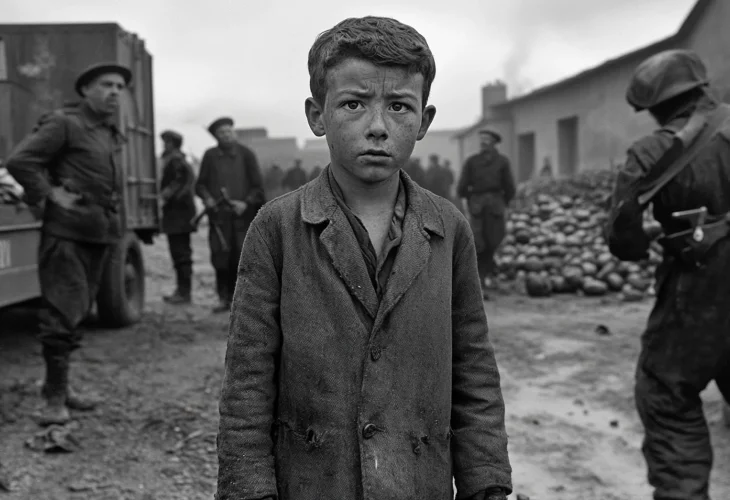
A gentle and pleasant-natured Jew named Reb Shimon used to pray in the Har Tzvi synagogue in Jerusalem. His Birkat Hamazon (Grace After Meals) was an experience of holiness. The words were recited with deep concentration, in a warm and moving voice that touched the hearts of all who heard him. Many wondered what led Reb Shimon to devote himself so completely to this particular mitzvah. When neighbors who were captivated by his blessings asked him, he shared a powerful life story that began in his childhood in Poland and continued through unimaginable miracles of survival in Nazi labor camps.
A Promise Made in Childhood
“When I was about eleven years old, before the outbreak of World War II,” Reb Shimon began, “I studied in a cheder in Poland. One day the great Rabbi Meir Shapiro, head of the Yeshivat Chachmei Lublin, came to test us on our studies. At the end of the exam he told us that as a reward for our efforts he would reveal to us a special ‘gift of life.’ He quoted the Ba’er Heitev, who explains that the final letter ‘peh sofit’ does not appear in Birkat Hamazon because whoever recites the blessing with proper intention is protected from anger and wrath, and his sustenance will be provided with abundance and dignity throughout his life.”
Rabbi Meir added another detail from the Ba’er Heitev: one should be careful to recite Birkat Hamazon from a written text rather than by heart.
“At that moment,” Reb Shimon continued, “I accepted upon myself to bless Birkat Hamazon with true concentration. It required real sacrifice. The other boys would finish eating quickly and rush to play, but I would sit and recite the blessing slowly, word by word. I often missed the playtime, yet I remained faithful to my commitment. Eventually I became known among the children as ‘the boy of Birkat Hamazon.’”
The War and the Selections
His peaceful childhood ended when dark clouds covered Poland. The Nazis took control, and frequent selections separated the elderly and children from those fit for labor. The weak were sent to death camps.
“In one selection,” he recalled, “those sent to the left were doomed, and those sent to the right were allowed to live. I was tall for my age and tried to appear even taller. By Heaven’s mercy I was sent to the right. The Nazis demanded that each person state a profession. I had none, and I trembled. Suddenly someone whispered behind me, ‘Say you are a cook, and I will be your assistant.’ With nothing to lose, I agreed. They placed us in the kitchen workforce.”
He immediately saw the blessing fulfilled. As a cook he received regular food and maintained a stronger appearance than many others. Yet even there, he never abandoned his commitment. If he knew he could not recite Birkat Hamazon properly, he refrained from eating bread.
The Impossible Command
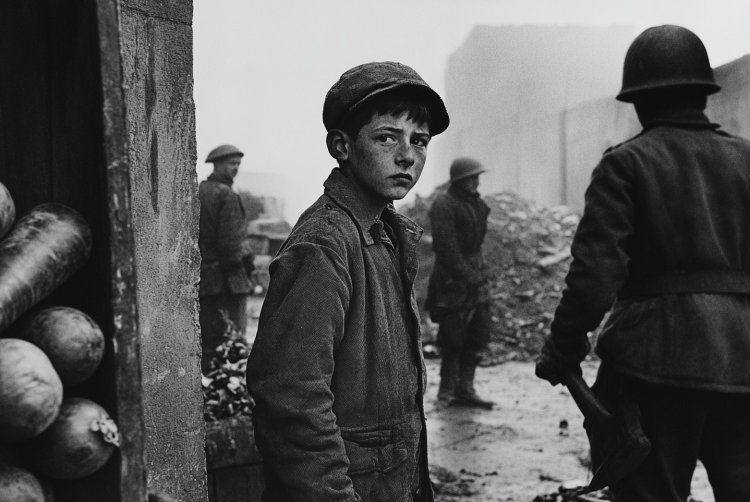
After several months, a cruel German officer visited the kitchen. Angered to see a Jewish boy who did not look starved, he shouted that such a thing would not continue. He handed Reb Shimon a small hammer and ordered him to dig a two-by-two meter bunker in rocky ground within a few hours. It was clearly an impossible task meant to break him.
“My spirit almost collapsed,” he said. “How could I, a young boy with a tiny hammer, dig through ground as hard as iron? I lifted my eyes Heavenward and prayed. Had I not been promised that my sustenance would be provided with dignity? Was this already the end of my life?”
Vegetables from Heaven
Soon a truck filled with Nazi soldiers passed by. Seeing him alone, they mocked him and began throwing vegetables at him from the truck: cucumbers, potatoes, carrots and more. Even in that moment he sensed the blessing of abundant sustenance.
But the bunker still had to be dug. Shortly afterward another truck arrived, this time with Polish soldiers. Seeing the vegetables and his strong appearance, they assumed he was in charge. An idea flashed into his mind. He pretended to be a supervisor and offered them vegetables in exchange for digging the bunker. They returned with tools and quickly completed the work while he stood aside. The blessing had manifested fully. He possessed food in abundance and even appeared as a commander directing others.
A Promise Fulfilled
With tears of gratitude he called the German officer to inspect the finished bunker. The officer could not comprehend how it had been done and muttered, “I always knew your God protects you.” Reb Shimon was returned to the kitchen and survived there until the end of the war.
“From that moment,” he concluded, “I made a firm decision. If I would leave that valley of darkness alive, I would continue to recite Birkat Hamazon with deep intention for the rest of my life, thanking the One who sustained me with abundance and dignity even in the shadow of death.”
“And as you can see,” Reb Shimon finished with emotion, “I keep that promise. God never abandoned me. May His kindness continue to accompany me always.”

