Passover

The Hidden Meaning of Maror: Why Bitter Herbs Are More Than Just Bitterness

From lettuce versus horseradish to the deeper symbolism of redemption, discover the spiritual purpose of maror and how halachic debates reveal a richer understanding of the Seder plate

AA

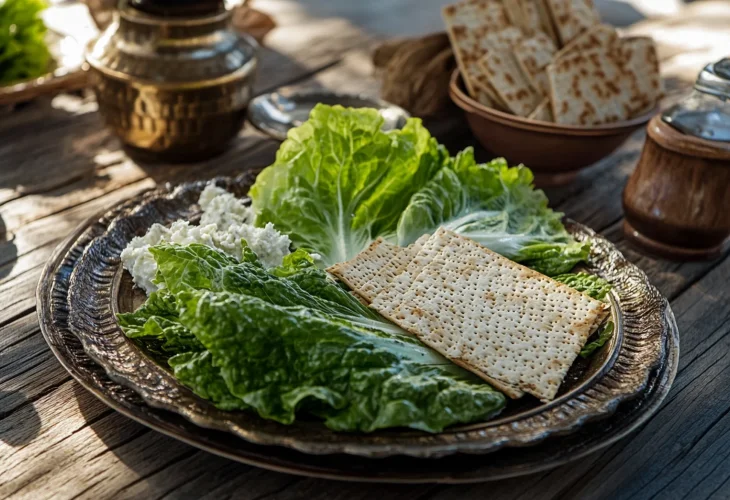
Maror is bitter, a reminder of slavery. That is well known. However, the early sources explain that maror is not intended only to be bitter. On the contrary, it serves as a seasoning for the matzah and the Paschal offering, though it must contain bitterness in order to recall the hardship of bondage. In the Torah, the commandment of maror appears together with the Paschal sacrifice: “They shall eat it with matzot and bitter herbs.”

Maror as an Appetizer That Draws the Heart

The Mishnah in Pesachim 114a states: “They brought before him lettuce, and he dips it until he reaches the appetizer of bread.” The Tosafot explain that the term “appetizer” refers to the maror eaten after the matzah, called parperet, meaning something that stimulates the appetite, as vegetables draw the heart toward the meal. From here we see that maror is described as a vegetable that whets the appetite. It accompanies the meal and draws the heart toward the bread and meat.

Maror also functions as a seasoning for the Passover meal, though its taste must include bitterness to evoke the memory of suffering. Just as charoset resembles mortar to recall the labor of slavery but is not defined solely by that symbolism, so too maror combines meaning with culinary purpose.

Eating Like Royalty: The Insight of the Or HaChaim

The Or HaChaim HaKadosh, in his commentary on Parashat Bo, adds that maror reflects a royal manner of eating. It was customary to eat meat together with sharp vegetables. Just as today people combine meat, bread, and lettuce, so too in earlier times. The Talmud even describes how Rabbi Yehudah HaNasi and Antoninus would eat their meals regularly with lettuce.

Rabbeinu Yerucham, a student of the Rosh, writes that one should not eat lettuce on the eve of Passover so that the maror will be eaten with appetite. This shows that maror also involves enjoyment and desire for food. The Shulchan Aruch rules accordingly in Orach Chaim 473.

Lettuce or Horseradish? A Halachic Debate

The Chazon Ish maintained that horseradish should be preferred over lettuce, because lettuce is not truly bitter and is often sweet and eaten pleasantly. Although the Chazon Ish agreed with the Mishnah that maror is not intended as a punishment and may be enjoyable, he held that some bitterness must still be felt. If one eats lettuce without any trace of bitterness, it becomes questionable whether the obligation has been fulfilled. He cites the Jerusalem Talmud, which suggests seeking out bitter lettuce, and therefore argues that completely sweet lettuce may not suffice.

The Ashkenazi Custom and Practical Considerations

This view aligns with the long standing Ashkenazi custom of using horseradish as maror. Even though it is clearly not the classical lettuce mentioned in the Mishnah, some identify it with the species known as tamcha. One practical reason was climate, as lettuce did not grow easily in colder regions of Europe, which limited access. In addition, authorities such as the Chazon Ish held that lettuce was not bitter enough, leading to a preference for horseradish. While horseradish’s sharpness can mask its bitterness, once the intense spiciness fades, a distinct bitter taste can still be perceived.

Reconciling the Jerusalem Talmud

Regarding the Jerusalem Talmud’s statement, which seems challenging for those who use lettuce, the Beit Yosef already explained that lettuce begins bitter and ends sweet. Therefore, one may fulfill the obligation even when it tastes sweet, since the existence of bitter lettuce itself symbolizes the experience of slavery. Those who seek a stronger sense of bitterness often eat the lettuce stalk, where the bitterness is more noticeable.

Tags:HalachaPesachSedermatzahMarorcharosetLettucebitternessAppetiteHerbshorseradishKorban Pesach

Articles you might missed