

Magazine
The Advice from Rav Chaim Kanievsky That Changed Everything
He was the weakest student in the room. Rav Chaim zt"l gave him one simple instruction. At 3 a.m., in a quiet Jerusalem synagogue, this young man’s life changed forever.
- Naama Green
- | Updated
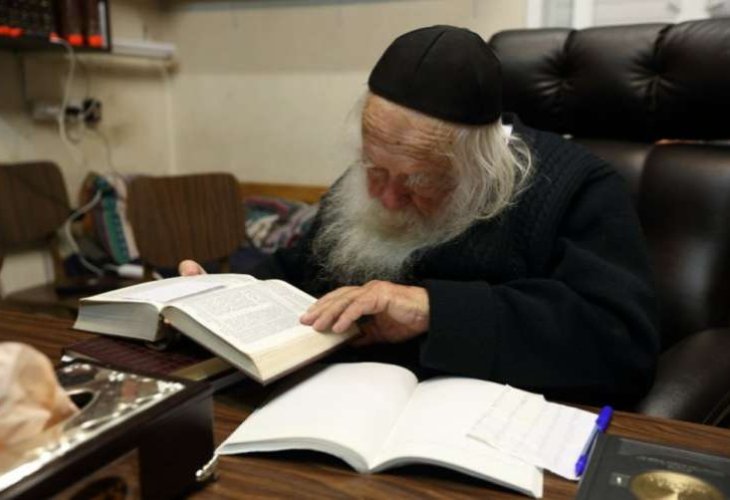 Rabbi Chaim Kanievsky zt"l (Photo: Yaakov Naumi/Flash90)
Not every struggle in Torah is solved with sharper intellect. Sometimes the key lies elsewhere.
This is the story of a young student who sat in one of Jerusalem’s small yeshivas feeling broken and defeated, and how one moment of self sacrifice in prayer changed his entire life.
A Mind That Would Not Open
The young man desperately wanted to succeed in learning. His will was strong. He reviewed again and again. He pushed himself. But from Heaven he had not been blessed with natural gifts, and no matter how hard he tried, the words of the Gemara would not settle in his mind.
One of the yeshiva’s rabbis noticed his struggle and felt deep compassion. Every day after class he sat with him, reviewing the Gemara with Tosafot and the classic commentators. Still, nothing took hold.
The rabbi was baffled. Usually, someone who toils rises. Effort bears fruit. Here, it seemed not to.
After much thought, the rabbi decided to take the student to Bnei Brak to seek advice from Rav Chaim Kanievsky zt"l.
“Torah Is Acquired Through Toil”
When they arrived, the rabbi first spoke warmly about the young man’s character, his prayers, and his reverence for Heaven. “Despite all this,” he said, “his learning simply does not succeed. How can he merit success in Torah?”
Rav Chaim smiled gently. “Apparently he needs a bit more toil. Torah is acquired only through hard work and true effort.”
The teacher replied that the student was already exerting himself with all his strength, but his mind simply could not grasp the material.
Rav Chaim turned to the young man and asked kindly, “Do you pray for success in Torah?”
“Yes,” he answered. “I ask and plead, but I have not yet seen an answer.”
“Accept upon yourself never to miss prayer with a minyan,” Rav Chaim said. “Even if it requires real self sacrifice.”
He blessed them with success.
Years Later
The student eventually moved on to a larger yeshiva. Years passed.
One day he returned to his former teacher’s office and placed a beautifully printed booklet on his desk. It was filled with original Torah insights on Tractate Yevamot.
The teacher began flipping through the pages. His eyes widened. The depth, clarity, and sharp analysis were remarkable.
“Who wrote this?” he asked. “It must be the work of a distinguished scholar.”
The young man smiled. “I did. With much siyata d’shmaya. I came to show you the fruits of your investment.”
The rabbi stood frozen. “You? Only a few years ago you could barely understand a Tosafot. What happened?”
The young man sat down and began to explain.
Three in the Morning
“At the beginning of my time in the larger yeshiva, I still understood almost nothing,” he said. “My friends were advancing. I remained stuck.”
Toward the end of one term, the yeshiva organized a trip to holy sites in the north. It was Thursday night. They prayed Yom Kippur Katan in Meron and returned very late.
When he got home to Ramot, it was nearly three in the morning. Suddenly he realized he had not yet prayed Maariv.
He immediately remembered Rav Chaim’s instruction. Never miss a minyan, even with sacrifice.
But at that hour, where could he find one? Public transportation had stopped. The only late minyan was in Zichron Moshe, across the city.
“I decided to try,” he said. “I gave myself ten minutes.”
He walked to the main road. Moments later, a neighbor pulled up.
“Where are you going?”
“Zichron Moshe.”
“I am going there too,” the neighbor replied.
“Atah Chonen”
When they arrived, five men were waiting. They still needed three for a minyan. Some wanted to pray alone, but the young man begged them to wait.
Eventually, a full minyan formed.
He began to pray slowly, word by word. When he reached the blessing “Atah Chonen L’Adam Da’at,” something inside him broke open.
“I cannot explain it,” he told his teacher. “A stream of tears poured from me. I stood there crying for nearly forty five minutes while everyone else had already left.”
He left that prayer feeling like a different person.
Since it was already near dawn, he decided to stay for vatikin.
He took a Gemara Sanhedrin from the shelf and began to learn.
Suddenly, he understood.
“The words entered me,” he said. “I tasted a sweetness I had never known. For the first time, I read Tosafot and grasped their depth.”
During Shacharit, when he reached “Ahava Rabbah,” he pleaded from the depths of his heart. Again at “Atah Chonen,” tears flowed.
The Gates Opened
After Shacharit he returned home, ate briefly, and began learning. He did not stop until Shabbat.
That Friday night, despite not having slept for more than a day and a half, he could not pull himself away from his Gemara. His father urged him to sleep. He promised to learn just a little more.
He did not sleep at all.
“From that day,” he said quietly, “the gates of Torah opened for me.”
He began to understand deeply. With clear siyata d’shmaya, he grew steadily in learning and merited what he called the crown of Torah.
The teacher sat in silence, overwhelmed.
Sometimes the turning point is not in sharper intellect, but in a prayer whispered at three in the morning with tears.
Adapted from the book Hit’alut.

