

World News
Ramchal Handwritten Letter Sells for $392,700 at Auction
Two-page 1731 manuscript draws intense Orthodox bidding; scholars say it once belonged to Jewish Theological Seminary collection
- Brian Racer
- | Updated
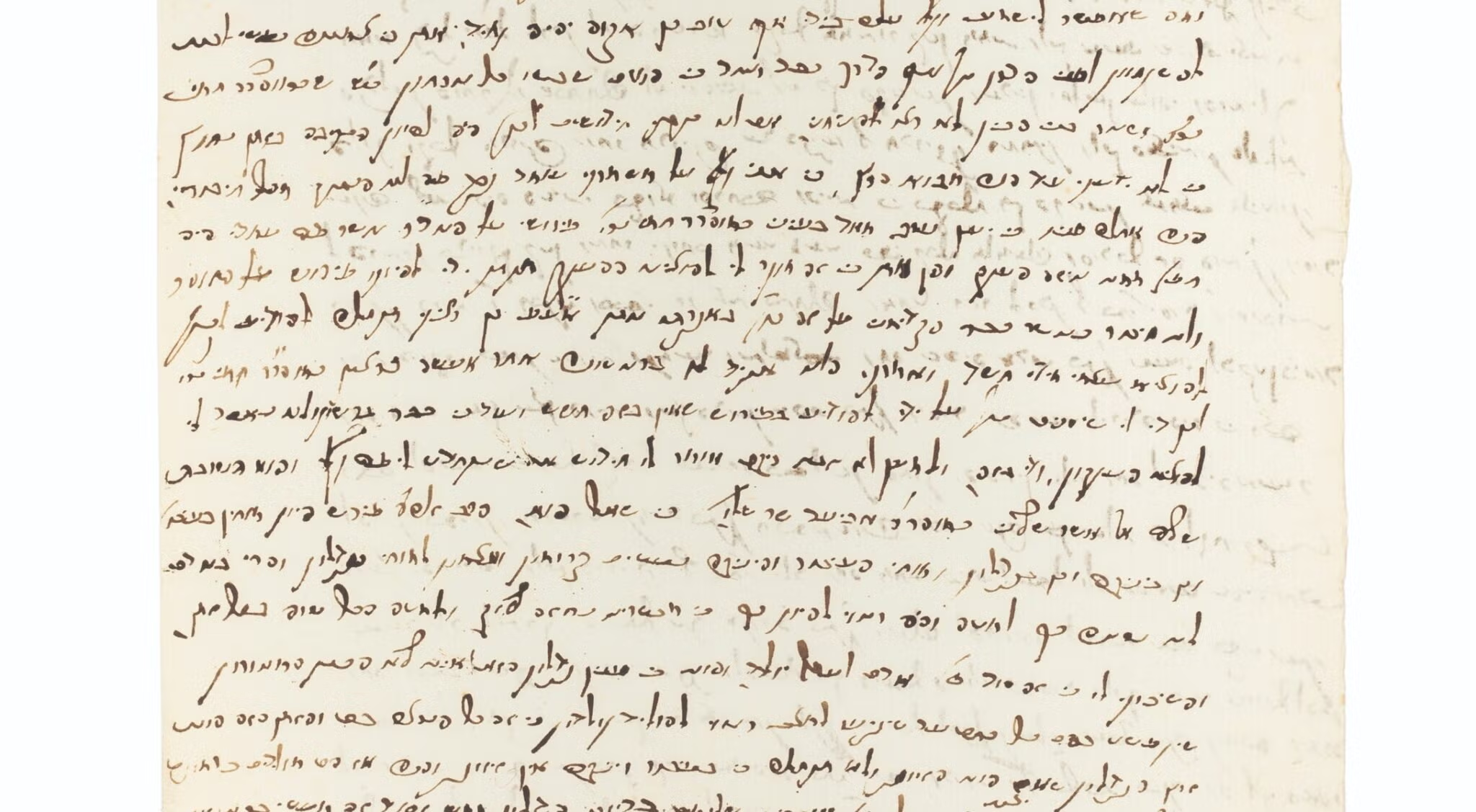 Screenshot of part of the letter (Used in accordance with 27a)
A handwritten 1731 letter by the 18th-century Jewish thinker Moshe Chaim Luzzatto, known as the Ramchal, sold Sunday for $392,700 at a Genazym auction. The two-page manuscript, written in Mantua and addressed to his mentor Rabbi Yeshayahu Bassan, became one of the most closely watched items in the auction.
The letter contains a detailed discussion of mystical concepts and references additional writings that Luzzatto was developing at the time. Genazym marketed the document to its Orthodox clientele as a text by “a great and holy Kabbalist.”
The price highlights the growing appeal of heritage artifacts within an increasingly affluent Orthodox collector market, where rare texts and autograph material are often viewed not only as sacred objects but also as long-term investment assets. The identities of the seller and buyer have not been publicly disclosed.
According to scholars, however, the manuscript once formed part of the Jewish Theological Seminary’s extensive Ramchal collection before leaving institutional custody about a decade ago during a financial crisis.
At the time, the seminary turned to its assets, selling real estate as well as rare books from its world-renowned library. The book sales were conducted privately, and the institution has never publicly detailed which specific items were sold or the prices they received.
In 2021, the seminary’s librarian, David Kraemer, told the Jewish Telegraphic Agency that he had been instructed to sell items of his choosing in order to raise a specified amount of money, though he did not disclose the sum. Seminary officials have said that deaccessioned materials were digitized and deemed to have limited research value, allowing scholars continued access to their contents even after the originals left the collection.
For some scholars, the resurfacing of the Ramchal letter at a public auction raises concerns about the long-term impact of those decisions.
“It’s a scandal within the world of scholarship and American Jewish institutions,” said David Sclar, a librarian at a Modern Orthodox high school in New Jersey who wrote his dissertation on Luzzatto using primary sources, including manuscripts from the seminary’s holdings.
“This is one of the items that they sold through the back door, which means they sold it for probably virtually nothing,” Sclar said. “And the tragedy in all of this, besides JTS sort of destroying cultural heritage, is that it’s also stupid, because if they had decided that they were desperate for money then just do an auction. Don’t do it through the back door.”
Asked about the matter, a seminary spokesperson said in an emailed statement, “Decisions were made at the time with careful consideration of what was in the best interest of the institution.”
Born in 1707 in Italy, Luzzatto was a prolific writer and mystic, whose best-known work, “Mesillat Yesharim,” became a cornerstone of Jewish ethical literature and remains widely studied. In a 1928 essay titled “The Boy from Padua,” the Hebrew poet Chaim Nachman Bialik described Luzzatto as a precursor to three major currents of modern Jewish history: the Lithuanian rabbinic tradition, Chasidism and the Enlightenment.

