

Passover
The Spiritual Power of the Seder Night: Faith, Redemption, and the Eternal Light of Pesach
How the Passover Seder renews the Exodus each year, strengthens faith in our children, and teaches timeless lessons of redemption, perseverance, and spiritual growth for every generation
- Rabbi Reuven Elbaz
- | Updated
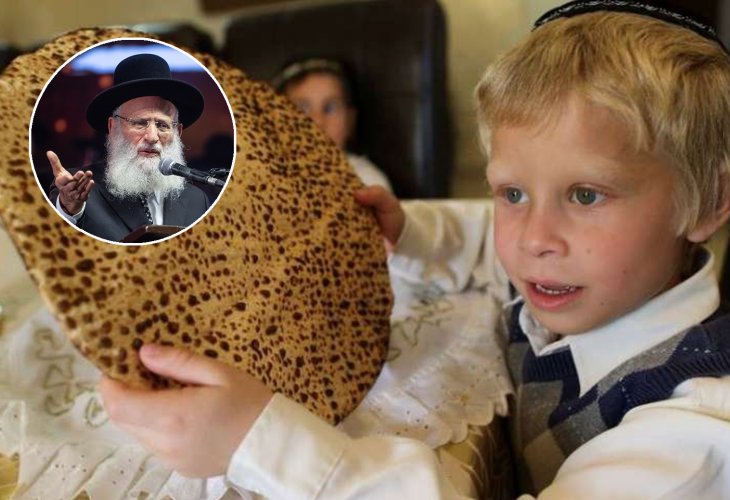 (Photo: Nati Shohat, Flash 90)
We stand at the threshold of the holy festival of Pesach, when the Jewish people awaken and receive the same spiritual illumination granted to our ancestors when they left Egypt and transformed from servants of Pharaoh into servants of God. As the commentators explain regarding the verse, “You shall keep this statute at its appointed time from year to year,” these days themselves return to us each year, renewing the experience of the Exodus. Therefore, in every generation a person is obligated to see themselves as if they personally left Egypt, moving from slavery to freedom and from bondage to redemption.
Rabbi Moshe Chaim Luzzatto writes that time itself moves in cycles, and the spiritual influences of those original days remain embedded within the cycle of the year. When Pesach arrives, we step once again into that same spiritual current. During these sacred days we can strengthen our pure faith in God, transmit it to our children and grandchildren, and hope to witness divine redemption just as our ancestors did, as it is written: “As in the days when you left the land of Egypt, I will show you wonders.”
Instilling Faith in the Next Generation
One of the central commandments of this night is “And you shall tell your child on that day.” The Torah emphasizes speaking “into the ears of your child,” teaching that the story must be told according to each child’s level of understanding. Maimonides rules that it is a mitzvah to teach children even if they do not ask questions, and that a parent must tailor the message to the child’s comprehension. For a young child, one explains simply that we were once slaves and God redeemed us; for a wise and mature child, one recounts the miracles and deeper meaning of the Exodus.
In his Sefer HaMitzvot, Maimonides explains that the mitzvah of telling the story of the Exodus on the night of the fifteenth of Nisan should be done with eloquence and detail. The more one expands upon God’s kindness, the suffering of the Egyptians’ oppression, and the miracles performed on our behalf, the more praiseworthy it is.
On this holy night a powerful spiritual light descends from heaven, enabling parents to plant faith and good character traits in their children. Even if during the year it sometimes feels difficult to inspire them, the Seder night carries a unique power. Many people who later drifted away from observance have returned after recalling the warmth and inspiration of the Seder with their families. The sanctity of this night can accomplish extraordinary spiritual transformation.
A Home Filled With Holiness
A story is told about the holy Ohr HaChaim, who once arrived in a small town seeking a Jewish home in which to stay. He was led to a modest family known for their hospitality. Although their home reflected poverty and simplicity, he sensed an extraordinary holiness filling the air.
When he asked the family about the source of this spiritual atmosphere, the head of the household explained that their home was always open to guests. A mysterious elderly visitor would occasionally stay with them, bringing gifts and offering advice. Over time, this visitor discouraged them from singing blessings and prayers aloud, claiming that God hears even quiet voices. Eventually he demanded that they recite the Haggadah softly as well.
This time the family refused. The mother insisted that the Seder night, when faith is planted in the hearts of children, must be filled with joyful, audible expression. They returned the gifts and chose to preserve the spirit of their home.
Upon hearing this story, the Ohr HaChaim exclaimed that he now understood why divine presence rested upon their home. Their joyful prayers had brought great pleasure to Heaven, and the mysterious visitor had been nothing less than the evil inclination attempting to weaken their sincerity. Because they stood firm, holiness dwelled with them.
The King’s Fish
Our sages illustrate Pharaoh’s stubbornness with a parable. A king sent his servant to buy fish, but the servant chose a large fish that was already spoiled, hoping that heavy seasoning would hide the smell. When the king tasted it, he was furious and gave the servant three options: eat the rotten fish, receive lashes, or pay a heavy fine.
The servant first tried to eat the fish but could not bear it. He then accepted the lashes but soon begged to stop. In the end, he paid the fine as well. Thus he suffered all three punishments.
The same is true with Pharaoh. Had he released the Israelites willingly, he could have avoided suffering and loss. Instead, he endured plagues, paid dearly, and ultimately sent Israel away anyway.
“Now We Are Here…”
At the beginning of the Haggadah we say, “Now we are here; next year in the Land of Israel. Now we are here as servants; next year as free people.” The commentators ask why the phrase “now we are here” is repeated. One explanation is that even when Jews live in their land, complete redemption may still be lacking. A person may live with a sense of limitation or dependence, unable to act freely due to external pressures. Therefore we pray not only for physical presence in our land but for true and complete redemption, when Israel will dwell securely and freely.
This deep faith is what we must instill in ourselves and our children on this holy night. We believe that a time will soon come when we will witness God’s complete salvation, rejoice in the rebuilding of Jerusalem, and sing a new song of redemption.
May it be fulfilled speedily in our days, Amen.

