

Passover
The Two Mitzvot That Brought Redemption: Self Sacrifice, Faith, and the Secret of the Exodus
Why Korban Pesach and Brit Milah became the spiritual turning point of Yetziat Mitzrayim, how Moshe Rabbeinu’s devotion unlocked miracles, and what timeless lessons about courage and faith still inspire Jewish life today
- Rabbi Ovadia Chen
- | Updated
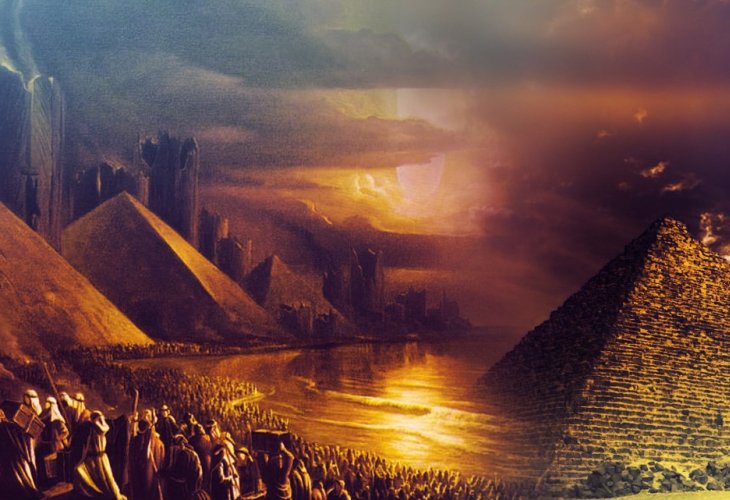
At the time of the Exodus from Egypt, the Holy One, blessed be He, wished to redeem His people through mercy. Yet He saw that they did not possess sufficient mitzvot by whose merit they could be redeemed. What did He do? He gave them two commandments: the Korban Pesach and Brit Milah.
What was unique about these two mitzvot specifically? Were there not many other commandments in the Torah, such as observing Shabbat? Rather, when Israel stood on the brink of redemption, there was a heavenly accusation against them. The spiritual minister of Egypt protested and claimed: “Just as these Egyptians worship idols, so too do these Israelites worship idols.” If so, by what merit should Israel be redeemed? His argument carried great weight in Heaven, and therefore Israel needed to perform mitzvot that required true self sacrifice.
The Korban Pesach and the Courage to Defy Idolatry
The mitzvah of the Paschal lamb involved extraordinary self sacrifice, since the lamb was considered a deity by the Egyptians. As Moshe told Pharaoh: “Shall we sacrifice the abomination of Egypt before their eyes and not be stoned?” (Shemot 8:22).
The Tur (Orach Chaim 430) explains why the Shabbat before Pesach is called Shabbat HaGadol. The Israelites took a lamb on the tenth of the month and tied it to their beds. When the Egyptians asked why, they answered that they would slaughter it as a Pesach offering by God’s command. The Egyptians were furious that their god would be slaughtered, yet they were powerless to respond. Because of that great miracle, the day became known as Shabbat HaGadol.
It was an act of remarkable bravery to slaughter the Egyptian idol without fear, to roast it publicly so its scent spread everywhere, and even to smear its blood on the doorposts. In doing so, Israel openly declared that the Egyptian deity was worthless.
Rabbi David Abudraham explains the well known question: why did Israel need to place the blood of the Pesach offering on their doorposts during the plague of the firstborn? After all, God Himself descended to strike Egypt and did not need signs of identification. It is explained that the blood was not merely a marker of Jewish identity, but was the very merit that justified their redemption. Their willingness to publicly display the blood of Egypt’s idol demonstrated profound self sacrifice, which led to the Divine “passing over” their homes.
Brit Milah and Trust in God’s Command
Self sacrifice was also evident in the mitzvah of circumcision. The Israelites knew they were about to embark on a long and difficult desert journey. Who would dare to undergo a surgical procedure on the eve of such a departure? And yet, they fulfilled God’s command without hesitation.
The Chida adds that this involved real danger. While they were in pain and vulnerable, the Egyptians could have attacked them, just as Shimon and Levi overcame the people of Shechem when they were weakened after circumcision. Even so, Israel gave themselves over to the mitzvah without fear.
About this it is written: “I passed over you and saw you wallowing in your blood, and I said to you: By your blood you shall live” (Yechezkel 16:6). “By your blood you shall live” refers to the two acts of devotion, the blood of the Pesach offering and the blood of circumcision, through which Israel merited life. Through these acts, God answered the accusations in Heaven: do the nations possess such devotion for the commandments of the Creator?
Why These Mitzvot Carry Unique Spiritual Weight
The Bnei Yissaschar writes that these two commandments are the only positive commandments whose deliberate neglect incurs the punishment of karet, spiritual severance. Since Israel left Egypt through their merit, one who rejects them distances himself from the identity of the redeemed nation.
By fulfilling these mitzvot, Israel also paved the way for receiving the Torah. If they were willing to perform commandments requiring self sacrifice with enthusiasm and courage, it was clear they would accept the entire Torah fifty days later.
Why Moshe Was Chosen as the Redeemer
Rabbeinu Yosef Chaim, in Ben Ish Chai, explains why Moshe Rabbeinu was specifically chosen to lead Israel out of Egypt. God told him decisively: “If you do not redeem them, no one else will redeem them” (Shemot Rabbah 3:3).
Since there was a heavenly accusation, a messenger of exceptional self sacrifice was required to bring redemption and to serve as the vessel through which great miracles could occur. Anyone who gives himself over for the sanctification of God’s Name merits that miracles be performed through him.
Moshe uniquely fit this role. Because he had killed an Egyptian, he was a wanted man in Pharaoh’s court. By returning to Pharaoh, he placed himself in real danger. His willingness to risk his life for the sake of God’s command and the salvation of Israel constituted profound self sacrifice. Therefore only Moshe, whose merits were bound to such devotion, could overcome the accusations and bring about redemption.
In Tractate Berachot (20a), Rav Papa asked Abaye why miracles were common in earlier generations but had become rarer in later ones. Abaye answered that the earlier generations gave themselves over for the sanctification of God’s Name, while we do not do so to the same extent.
Even in more recent times, however, stories of remarkable devotion continue to emerge.
A Modern Story of Devotion from Georgia
A family that emigrated from Georgia to Herzliya was blessed that all of their sons became Torah scholars and their daughters married outstanding students of Torah.
When a rabbi asked what merit led to such success in raising their children, the father shared a powerful story about his own father, the family’s grandfather.
In their Georgian town, the Jewish community endured constant harassment from the authorities, especially regarding the ritual bath. One day the grandfather heard that officials planned to inspect the mikveh, intending to close it under the pretext that it was not sterile enough.
Arriving moments before the inspectors, he entered the mikveh room. When the officials arrived, they shouted that the water was unfit and that the mikveh must be closed. Suddenly, the grandfather jumped into the mikveh fully clothed, filled a large cup with water, recited a blessing as if drinking, and swallowed it to the last drop. “How dare you claim the water is unclean if I have just drunk it?” he declared.
His act of devotion overcame even the hostile authorities, who left without further action. It is no wonder that he merited such righteous descendants, for as we have learned, self sacrifice brings merit in Torah.

