

Passover
See Yourself Leaving Egypt: Rabbi Aharon Margalit on the Power of Imagination at the Seder
Why guided imagination is the key to experiencing true gratitude and freedom on Pesach and how visualizing exile and redemption can transform the way you read the Haggadah each year
- Yonatan HaLevi
- | Updated
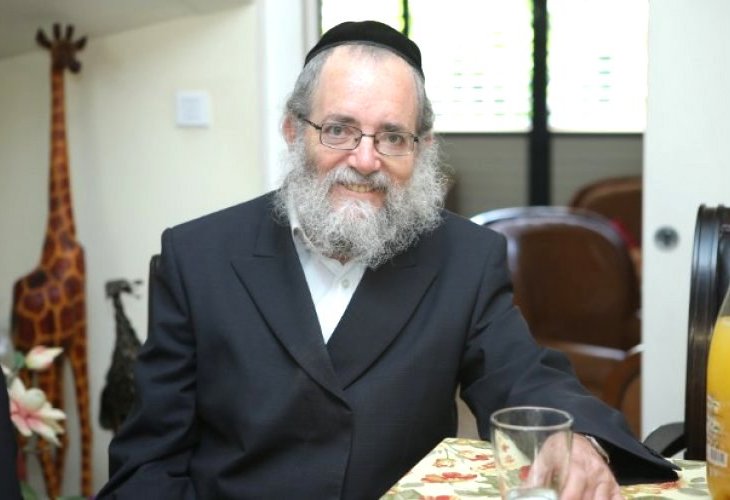 Rabbi Aharon Margalit
As Passover approaches, Rabbi Aharon Margalit gave a special talk in which he explained how to properly prepare for reciting the Haggadah and experiencing the Seder night in its full depth.
The Only Mitzvah That Calls for Guided Imagination
“Among all the mitzvot of the Torah and all the Jewish festivals,” Rabbi Margalit begins, “there is only one place where our Sages explicitly instruct us to use imagination — guided imagination.”
He explains that while the Torah often commands us to remember, such as remembering the Exodus from Egypt, what God did to Miriam, or what Amalek did to us, there is only one night where we are told to actively imagine: the night of the Seder.
“Our Sages teach that ‘In every generation, a person must see himself as if he personally left Egypt.’ And where should that imagination begin? The Haggadah itself tells us: ‘At first our ancestors were idol worshippers.’”
Why Specifically on Seder Night?
Rabbi Margalit asks: why only on this night? Why not imagine Mount Sinai covered in smoke on Shavuot, or the Clouds of Glory on Sukkot?
Because, he explains, the essence of Seder night is gratitude to the Creator. The purpose is to recognize the kindness of God, who redeemed us from Egypt, judged our enemies, split the sea, brought us to Sinai, gave us the Torah and Shabbat, and ultimately led us to the Land of Israel — just as we sing in “Dayenu.”
A person cannot truly feel gratitude simply by knowing that life is good now and was once difficult. To feel genuine appreciation, one must imagine the depth of the suffering and the intensity of the bondage — the forty nine gates of impurity into which the Jewish people had sunk before God redeemed them with miracles and a mighty hand.
Visualizing Slavery to Feel Freedom
Rabbi Margalit encourages a person preparing for the Seder to picture those long and painful years in Egypt: the hardships, hunger, suffering, and oppression. To imagine the harsh decrees of Pharaoh, the unbearable labor, the gathering of straw and bricks, the humiliation and pain of slavery.
After vividly imagining this reality, he says, one should open their eyes and look at the Seder table: the beautiful dishes, the family gathered together, the children dressed in festive clothing, the clean and glowing home. One sits like a king, surrounded by light and peace, and only then can one truly feel freedom.
A Tunnel Without Light
The hardest part of the Egyptian exile was not only the suffering, but the feeling that there was no end in sight. For generations, people were born slaves and died slaves. There was no hope, no vision of rescue, no reason to believe that anything would change.
When a slave woke up each morning, he faced another day of forced labor without expectation of redemption. The bondage felt eternal.
In our time, Rabbi Margalit explains, it is difficult to fully grasp that level of despair, but even a small attempt to imagine it helps us understand what our ancestors endured.
From Bondage to Gratitude
After filling the heart with the feeling of exile and oppression, one should then look again at the present reality: a beautifully set table, beloved children, a warm and protected home. One is free to make choices, free to live and grow. What an extraordinary privilege.
“How fortunate we are,” Rabbi Margalit exclaims, “to have been born after the Exodus from Egypt, and to be free people!”
Through the power of imagination, a person can internalize a deep sense of gratitude for the endless kindness that God bestows upon us. Only after experiencing that inner transformation can we truly begin the Seder and recite the Haggadah with joy, elevation, and heartfelt appreciation.

