

Passover
The Fire of Passover: Spring, Renewal, and the Spiritual Meaning Behind the Festival’s Mitzvot
Explore how fire, food, and the energy of Nisan reveal the deeper connection between body and soul, redemption and renewal, and why the warmth of Pesach is a gentle flame meant to elevate rather than consume
- Yosef Yaavetz
- | Updated
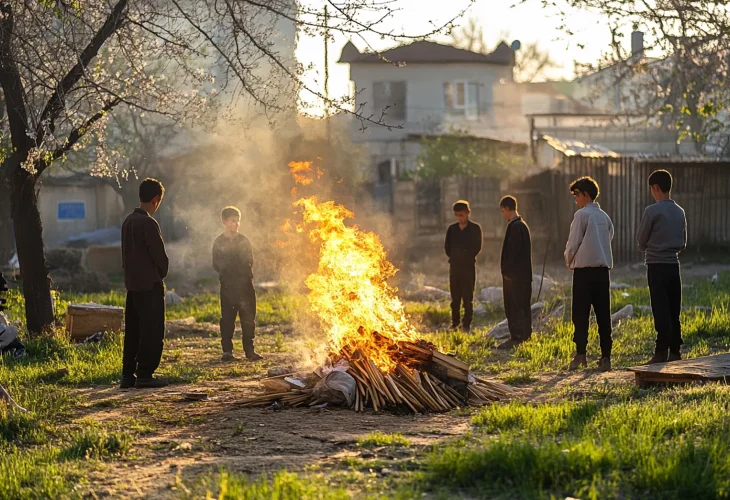
The mitzvot of Passover revolve around fire. Chametz is burned in fire, matzah is baked in an oven, and the Korban Pesach was roasted only over fire. Even the counting of the Omer is connected to the offering brought upon the altar. Fire symbolizes transformation, renewal, and elevation, which are themes that run throughout the festival.
Spring Awakening and the Warmth of Renewal
During the days of spring, the sun rises higher and warms a world that lay frozen throughout the long winter. Trees begin to bear fruit, streams flow from melting snow, grass blooms, and hills turn green. The world awakens from its sleep, and so does the human spirit, eager to go out, rejoice, and discover new things.
As summer advances, however, the heat can become overwhelming. Streams dry up, the grass yellows, and eventually come the days of mourning over destruction. Fire therefore contains both blessing and danger. It is the punishment of the wicked and the reward of the righteous. In the future, our Sages teach, God will remove the sun from its sheath: the wicked will be burned by it, while the righteous will be warmed by its light.
In the spring, we all stand as righteous, igniting our inner fire to fulfill the mitzvot of Passover.
Two Beginnings of the Year: Tishrei and Nisan
The beginning of the year in Tishrei marks the spiritual renewal of the soul. After judgment and atonement, a person enters the long “winter” of inner work. There are no Torah mandated festivals during this time because it is a season of quiet effort and perseverance. Spirituality means serving God even in darkness, even without favorable physical conditions. This is the strength that sustains us in exile, symbolized by the sukkah, the “shade of faith,” a temporary dwelling illuminated by surrounding spiritual light.
By contrast, Nisan marks the beginning of the physical year. Spring awakens within us a sense of new beginnings. We want to change, to move forward, to start again. The mitzvot of Passover are performed with a joy that is also physical. The foods of the festival, the feeling of being like royalty, the cleaning and renewal of the home, and the desire to step into the world all express a fresh start. This is a service of God rooted in redemption, where mitzvot are not separate from life but become life itself, something the body naturally desires.
Physical Joy and the Feast of Redemption
The central mitzvot of Passover revolve around eating: the meal of the Korban Pesach, matzah, and maror. In contrast, the primary mitzvah of Sukkot is the taking of the Four Species, a beautiful but more abstract spiritual act that does not involve physical nourishment. The joy of Sukkot is the joy of purification after Yom Kippur, a prayer for divine blessing and rain. The joy of Passover, however, is the joy of redemption, leaving the previous year behind and beginning anew with God without conditions.
The mitzvah is to eat until one is satisfied, and even after reaching fullness, to eat the afikoman. In this way, the story of the Exodus is told from a place of physical abundance. Even the poorest person should not feel hunger or lack while recounting redemption. Instead, one feels full and satisfied, recognizing the generosity of the Creator.
The Inner Fire of the Human Being
The digestive system itself is considered an inner fire because of its powerful processes. Some sages even suggested that eating could be viewed as a form of destroying chametz, since digestion resembles burning. The soul is compared to a flame, as it says, “The soul of man is the candle of God.” When the flame takes hold, eating becomes an act of transformation. The table of a person is likened to an altar, and the righteous elevate food like a sacrifice.
Fire has the power to change form. The body takes food, breaks it down into its elements, and transforms it into life. This ability to dismantle and recreate is essential to the world’s repair. The Chazon Ish wrote that even predatory animals, though harsh, are part of the world’s necessary balance. Without struggle and refinement, the world would feel incomplete. Fire represents this process of purification and transformation, the divine fire that reshapes reality.
The Fire of Spring and the Limits of Joy
The month of spring is a time of fiery ascent. We feel drawn upward, eager to act and grow. The mitzvot of Passover invite us to celebrate this awakening before God. Yet such intensity cannot last forever. In exile, physical joy and spiritual connection do not always remain united. After the festivals of Passover, the Omer, and Shavuot, the Temple is no longer present, and the physical expressions of joy lack a central place to rest.
As the sun grows stronger, we retreat into periods of mourning, avoiding the harsher side of its heat. That is why the joy of spring feels especially precious during exile. It is a brief window in which body and soul can unite in closeness to God. This is the fire of spring: a gentle flame that warms us without burning, guiding us toward renewal and redemption.

