

Passover
The Holiness of Passover: Essential Preparations, Matzah, and the Deeper Meaning of the Seder Night
Insights from the Pele Yoetz on removing chametz, the spiritual power of matzah, and how to approach Pesach with joy, faith, and careful observance
- Moriah Chen
- | Updated
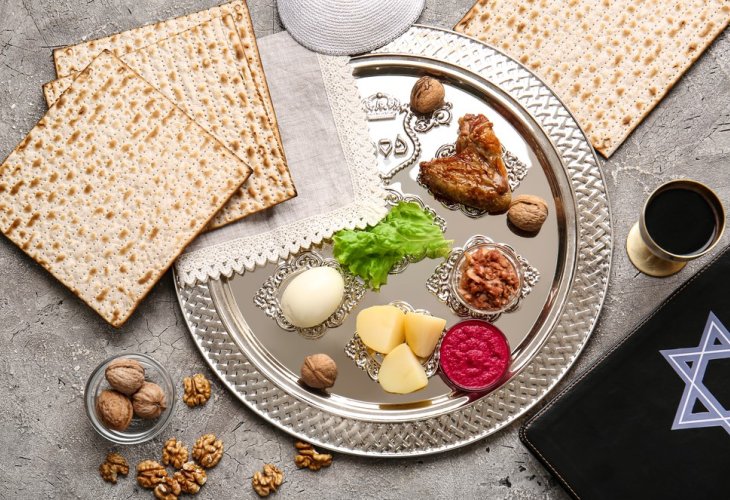 (Photo: Shutterstock)
We are now in the midst of Passover cleaning, preparing the home and removing chametz. Below are important guidelines in preparation for the upcoming festival, based on the entry “Pesach” from the book Pele Yoetz, written by Rabbi Eliezer Papo of blessed memory.
The Holiness of Passover
Passover is an exceptionally holy festival. Had the Holy One, blessed be He, not taken our ancestors out of Egypt, we and our children would still be enslaved, a nation within a nation. We would not have received the Torah and its commandments, and the name of Israel might never have endured.
God showed Israel extraordinary kindness beyond human comprehension. Even if we grasp only a fraction of His kindness, we understand that He revealed His greatness, love, and power to overturn nature itself and to guide us with personal providence. This is why the Torah repeatedly commands us to remember the Exodus from Egypt, mentioning it in many mitzvot. It is placed as a sign upon our hands and between our eyes, and it is recalled in Shabbat and the festivals when we sanctify the day with the words “a remembrance of the Exodus from Egypt.”
The purpose of remembering the Exodus daily and through the mitzvah of tefillin is to internalize these truths deeply. A person should rejoice in their Creator, come to fear and love God, cleave to Him, and serve Him wholeheartedly. This is fitting after God has revealed to us His love, His power, and His attentive care.
Increasing the Telling of the Exodus Story
For this reason, on the night of Passover we are commanded to speak extensively about the Exodus. Whoever increases in telling the story is praiseworthy. Beyond the mystical teachings associated with this practice, the simple meaning is that the more one recounts the story, the more love and reverence for God become rooted in the hearts of both the storyteller and the family members listening. The central goal of the Seder is to teach our household how God revealed His greatness, compassion, and providence, and why we should serve Him wholeheartedly and keep His commandments.
The Mitzvah of Eating Matzah
During this sacred festival we are commanded to eat matzah. There is a well known debate regarding how carefully the matzah must be guarded from moisture. Some opinions maintain that it must be supervised from the moment of harvest, and many leading halachic authorities hold that one does not fulfill the mitzvah properly without such supervision.
Since the mitzvah of matzah is lofty and profound, referred to in the Zohar as “the food of healing,” a person should be meticulous, at least regarding the matzah used to fulfill the obligation at the Seder, ensuring that it is made from wheat guarded from harvest. What benefit is all the effort invested in Passover preparations if one does not properly fulfill the mitzvah of matzah?
It is proper to appoint supervisors in places where matzot are prepared. The utensils must be cleaned thoroughly between each batch of dough, the matzot should be rolled thin, and they must not be left idle before baking. If dough made with water is left unattended, it may become chametz. Community leaders bear responsibility to oversee these matters and help others avoid transgression.
The Joy of the Mitzvah
On the night when the festival begins, a person should strengthen themselves to fulfill the teaching of our Sages that one must view themselves as if they personally left Egypt. Through pure and elevated thoughts, the heart becomes inspired and filled with joy. According to one’s effort and spiritual awakening, so will be the heavenly assistance granted, for “one who comes to purify themselves is helped from above.” This leads to a deep and authentic joy in serving God.
The Kabbalistic teachings add that not only is chametz strictly forbidden during Passover, but spiritual missteps also leave a stronger impression during these days. Therefore, one must be especially careful and attentive throughout the festival.
The Order of the Mitzvot on the Night of Passover
Our Sages arranged the mitzvot of the Seder in the well known order “Kadesh, Urchatz…” Yet many people are unfamiliar with its meaning and details. It is therefore proper to learn the laws from a knowledgeable teacher and even write down the steps in one’s own language as a reminder, so that everything is done correctly.
This is a fundamental principle: “He who walks with the wise becomes wise.” In this lies the essence of a person’s spiritual growth.

