

Religions
10 Surprising Facts About Muhammad and the Quran
Examining the Quran, Muhammad, mass revelation at Sinai, and key theological differences from a traditional Torah perspective
- Daul Israel
- | Updated
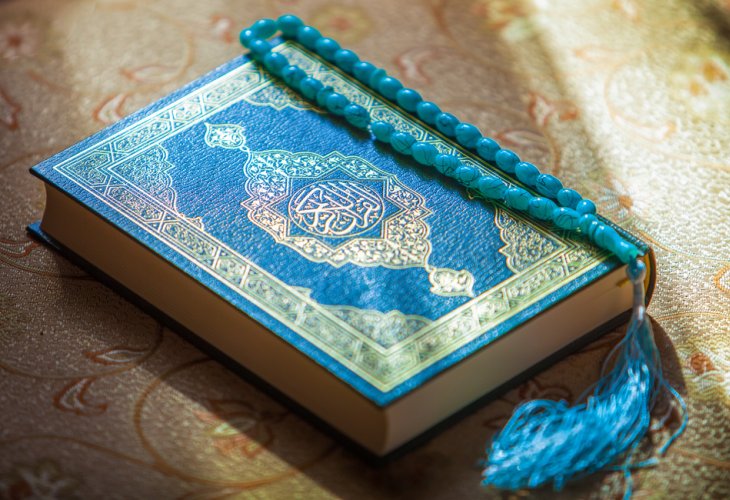 Photo: Shutterstock
1. Muhammad Did Not Write the Quran
Unlike the Torah of Israel, which was written by Moshe according to the Jewish tradition and given publicly to the entire nation in the desert, the Quran was not written by Muhammad himself. According to Islamic tradition, Muhammad was not literate. The Quran was transmitted orally to followers who wrote it down after his death and edited it repeatedly over many years.
2. The Quran Borrowed From Biblical and Rabbinic Sources
It contains passages resembling material from Proverbs, Ecclesiastes, Job, and even Pirkei Avot from the Jewish Mishnah, along with stories similar to Midrashic narratives. For example, the well known Mishnah teaching “Whoever saves one life is considered as if he saved an entire world” (Sanhedrin 4:5) appears in the Quran (Surah 5:32). This reflects the historical reality that Muhammad encountered Jews and heard about Jewish teachings during his lifetime.
3. The Quran Lacks Chronological Order
For this reason, the Quran is not arranged like the Tanach but appears as fragments of ideas and memories. One chapter may mention the Exodus from Egypt, while another suddenly shifts to Adam and Eve.
4. The Quran Contains Historical Errors
Because early Muslims were not deeply familiar with the Hebrew Bible, the Quran includes historical confusions. For example, Haman from the Book of Esther appears in the story of the Exodus as Pharaoh’s advisor, and Pharaoh is described as wanting to build the Tower of Babel (Surah 40:36-37). Pharaoh’s daughter is portrayed differently, and the binding of Isaac is replaced with Ishmael. Muhammad was also influenced by Christianity, which is reflected in the portrayal of Jesus and Mary. The Quran mentions the Exodus and the giving of the Land of Israel to the Israelites, yet Jerusalem itself is not explicitly named; Mecca in Arabia is the central sacred city in Islam.
According to this viewpoint, many Muslims are unfamiliar with these details because Islamic practice does not involve the same structured weekly reading cycle that Jews have with the Torah. Muslim prayer often centers on repeating a small portion of verses alongside physical prostrations.
5. The Claim That Jews Altered the Bible
Muslim tradition sometimes explains contradictions between the Quran and the Bible by claiming that Jews altered the biblical text. However, the Hebrew Bible had already been translated and widely circulated centuries before Muhammad’s lifetime. Ancient manuscripts, such as those found among the Dead Sea Scrolls, closely match the biblical text known today.
6. Muhammad’s Historical Conduct
According to this perspective, Muhammad’s life involved military campaigns and political struggles among Arabian tribes, including conflicts with Jewish communities such as the battle of Khaybar. Historical accounts describe marriages and relationships formed after these conflicts, including women who had been taken captive. Some traditions also describe Muhammad’s marriage to Aisha at a young age.
7. The Black Stone in Mecca
Muslims pray facing Mecca toward the Kaaba, which contains a black stone. The site had earlier associations with pre Islamic worship, and pilgrimage to this stone became one of the central practices of Islam.
8. Views About Salvation
From this viewpoint, Judaism is described as a universal ethical faith that does not require all nations to convert but asks non Jews to follow the Seven Noahide Laws. Islam and Christianity, however, are portrayed as teaching that those who do not accept their prophet risk eternal punishment. A cited hadith states that anyone who hears Muhammad’s message and rejects it faces judgment.
9. The Hebrew Bible and the Eternal Covenant
The Hebrew Bible includes passages emphasizing an everlasting covenant between God and Israel and the enduring validity of the Torah. Verses from Leviticus, Exodus, Isaiah, Malachi, and Deuteronomy are presented as evidence that later prophets cannot abolish the commandments or replace Israel’s covenant.
10. Individual Revelation Versus National Revelation
According to Islamic tradition, Muhammad received revelation privately in a cave through the angel Gabriel. By contrast, the Torah describes a national revelation witnessed by an entire people at Mount Sinai, accompanied by dramatic miracles such as the Ten Plagues and the splitting of the sea. The argument presented here is that a covenant witnessed publicly by millions would not be replaced by a later claim based on a single individual’s experience.

