

Relationships
Take Off the Survival Suit: The Secret to Real Intimacy in Marriage
After 20 years of mistrust, can a marriage heal? Discover how dropping emotional armor and learning to “host” your spouse can restore closeness and trust.
- Hannah Dayan
- | Updated
 (Illustration: shutterstock)
“Honestly, I don’t understand why we’re here at all,” Gabriel began. “She doesn’t really want to change. She brought me here just to prove how wrong I am. We’ve tried so many therapists. What could possibly be different this time?”
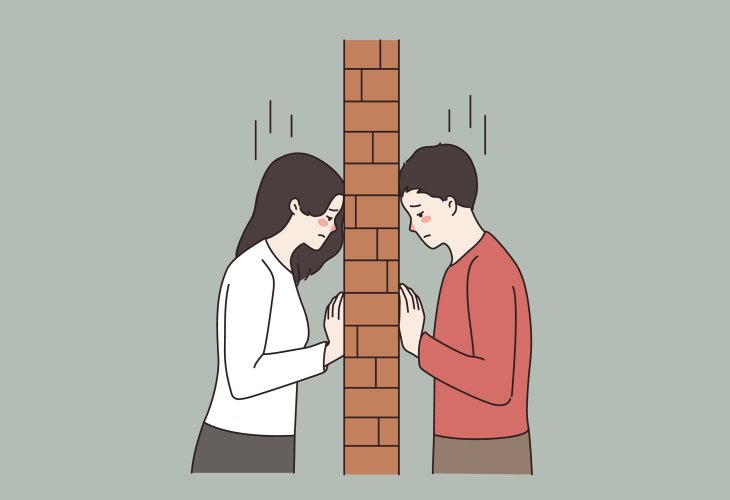
Anat turned toward him. “Maybe that’s the problem. You don’t really know me. I feel like I’m living with a stranger. It’s as if there’s a thick wall between us. Our marriage feels forced.”
“Forced?” Gabriel shot back. “You don’t have to stay with me. If it were up to me, we could end this today.”
“See?” Anat turned to me. “He keeps hurting me. How can I trust someone who hurts me again and again?”
I looked at both of them. “If you truly want to repair this marriage, you will have to remove the survival suits you are wearing.”
What Is a Survival Suit?
“Survival suits?” Gabriel asked.
“Yes,” I explained. “A real connection requires emotional intimacy. Without it, there is no true meeting between two people.”
“That’s exactly what I’m saying,” Anat replied. “There’s no intimacy. He doesn’t feel me.”
“It is very hard to connect while wearing emotional armor,” I said. “We will learn how to meet each other without protection. The same inner strengths that once connected you are still there.”
“Do you really think that’s possible after 20 years of mistrust?” Anat asked quietly.
“The first condition is willingness,” I answered. “If you genuinely want to reconnect, it is possible. My role is to make sure the space between you is safe, even while mistrust still exists.”
Anat sighed. “I don’t even understand what has been between us all these years.”
Doing Things Together Is Not the Same as Meeting
I continued, “You may travel together, go to restaurants, attend events, and think you are strengthening your relationship. But it is possible to do many activities together and still not truly know what your spouse is experiencing.”
Gabriel leaned forward. “So what do we actually need to do?”
“The first step,” I said, “is to let go of the idea that there is one objective truth in your experiences. When each of you believes your version is the only valid one, the other person’s world becomes dismissed.”
We must learn how to meet each other’s inner world. When couples meet from a place of strength instead of pain, emotional wounds begin to regulate within the relationship.
What Does It Mean to Regulate a Marriage?
“What is not regulated between us?” Gabriel asked.
“Each of you carries emotional burdens, disappointments, and old wounds,” I explained. “When those emotions are not processed together, they create pressure on the marriage. A healthy relationship is one that can regulate itself. It can calm tension instead of escalating it.”
“How do we regulate it?” Anat asked.
“When each of you feels that you are not alone,” I said.
Anat nodded slowly. “So if we understand each other better, we won’t feel alone.”
“You do not necessarily need full understanding,” I clarified. “You may never fully understand Gabriel’s inner world. His beliefs, fears, and perceptions may be very different from yours.”
“Then what is the meeting based on?” she asked.
“It is based on two skills: hosting and being a guest.”
Hosting and Being a Guest
“When you host,” I explained, “you invite your spouse into your world without placing responsibility on them. When you are a guest, you enter your spouse’s world without judgment, without defensiveness, and without trying to fix or correct.”
Gabriel began sharing. “Many times I have told Anat how important it is for me that she respect me in front of my friends and give me more attention.”
“That is not hosting,” I gently corrected him. “That is assigning her a role. You are placing responsibility on her to fix your world. That feels heavy. A guest should not feel burdened.”
“So how do I host her properly?” he asked.
“Share your inner world,” I answered. “What does love look like to you? Where do you feel pain? Where do you feel loneliness? When you share without demanding, she can enter your world without feeling drained.”
Anat looked uneasy. “If I open up, he will judge me.”
“That is why I am here,” I reassured her. “This space must remain safe. If either of you moves toward criticism instead of hosting, I will pause the process.”
She wiped her eyes. “When he talks about his pain, I immediately feel guilty. I assume he is hurting because of me.”
“When guilt takes over,” I said gently, “you are no longer present with him. You are back inside yourself. As a guest, your role is not to defend yourself. It is to witness his world.”
From Argument to Intimacy
We practice this repeatedly. Slowly, couples learn how to step out of constant self defense and into real emotional meetings.
When spouses stop arguing about who is right and begin exploring each other’s inner experiences, something shifts. The marriage gains a new compass. Communication becomes safer. Intimacy deepens. Emotional closeness returns.
Healing in marriage does not come from winning arguments. It comes from learning how to host and how to be a guest in each other’s world.
When couples remove their survival suits, they rediscover the connection that first brought them together.

