

Jewish Law
Kosher Locusts in Jewish Law: Tradition and Debate
Why the Torah permits certain locusts, how Yemenite and Moroccan traditions differed, and the halachic debate among leading rabbis
- Yosef Yaavetz
- | Updated
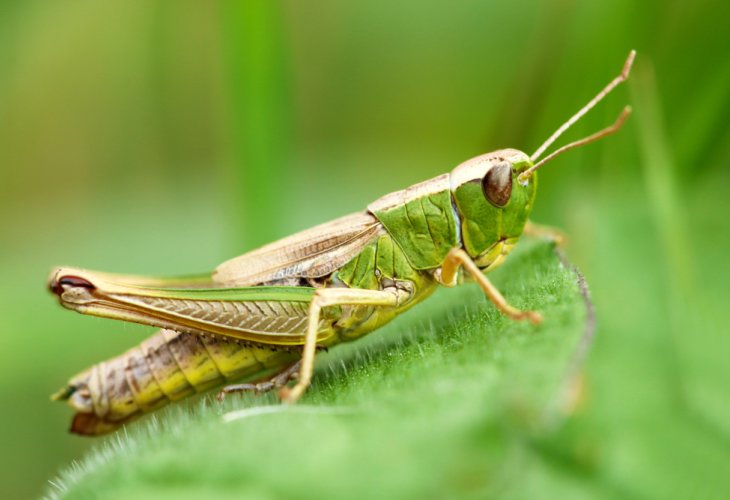 (Photo: shutterstock)
Do you ever wake up from a long afternoon nap and start looking for something to snack on? Why not try a locust or two?
In Vayikra we read: “Every winged swarming creature that walks on four is an abomination to you. Yet these you may eat from among the winged swarming creatures that walk on four — those that have jointed legs above their feet with which to leap upon the ground: the locust according to its kind, the bald locust according to its kind, the cricket according to its kind, and the grasshopper according to its kind.”
Although creeping creatures are generally considered a severe and repulsive prohibition, the Torah makes a surprising exception by permitting four specific types of locusts.
The Signs of a Kosher Locust
The Talmud describes identifying features of the permitted locust, including a unique condition: it must actually be known by the name “chagav” (locust). This requirement highlights how Jewish dietary law often depends not only on physical signs but also on tradition.
The very existence of this permission raises an interesting question: Why would the Torah allow such a creature to be eaten at all? Some explain that during massive locust plagues, when crops were destroyed and famine struck, the locust itself could serve as a source of food.
Living Traditions Among Yemenite Jews
Most people today have never eaten a locust, but certain Yemenite Jewish communities preserve an ancient tradition identifying the permitted species. Once a year, some gather to eat locusts so the tradition will not be forgotten. Historically, Yemen experienced periods of severe famine, and eating locusts may have been a practical necessity.
Rabbi Yitzchak Ratzabi notes that even among Yemenites, not every locust that displays kosher signs is eaten — only one specific species accepted by their tradition.
The Moroccan Debate: To Eat or Not to Eat
Interestingly, this tradition was not limited to Yemen. In earlier generations, Moroccan Jews also had a custom of eating locusts during infestations. However, the great sage Rabbi Chaim ben Attar strongly opposed the practice. In his work Pri Toar, he writes that although people claimed their ancestors permitted locusts, they lacked a clear tradition identifying them as the true “chagav.” He himself refrained from eating them and discouraged the custom, viewing it as a practice adopted mainly during years of drought.
He even recorded a striking story: one man who ignored the warning reportedly dreamt that he was eating forbidden creeping creatures, only to realize it referred to the locusts he had eaten that very day. Rabbi Chaim ben Attar concluded by describing what he saw as a remarkable outcome — after he publicized the prohibition and local sages supported it, the locust swarms that had appeared regularly seemed to disappear from Morocco for more than twenty years.
Voices That Permitted the Custom
Not all Moroccan rabbis agreed with banning the practice. Some, such as Rabbi Petachia Bardugo and Rabbi Meir Toledano, argued that those who were lenient had authorities upon whom to rely.
Rabbi Aharon Peretz of Djerba described how locusts were widely eaten in his community. His own teacher, Rabbi Nissim Kiat, loved them intensely, and Rabbi Peretz himself once considered them a delicacy. Yet after studying the commentary Ohr HaChaim and later obtaining a copy of Pri Toar, he reexamined the issue and ultimately accepted upon himself never to eat locusts again.
Despite his personal decision, he refrained from publicly declaring them forbidden for two reasons: first, many communities in Tunisia continued to permit them, and not everyone would accept his ruling; second, he feared that publicly prohibiting them might appear arrogant. Instead, he waited for a time when locusts would again become common in Djerba before announcing a formal ruling.
A Halachic Tradition That Still Sparks Discussion
The story of kosher locusts reveals a fascinating intersection of halachic tradition, communal practice, and historical circumstance. While most Jews today would never consider eating locusts, the Torah’s permission — combined with differing rabbinic approaches, shows how Jewish law balances textual sources, living traditions, and real-life challenges faced by communities throughout history.

