

Relationships
"I Want a Divorce": When Feeling Like a Victim Takes Over
When a woman came seeking divorce, she uncovered how a lifelong sense of victimhood was shaping her relationships and keeping her stuck in pain.
- Hannah Dayan
- | Updated
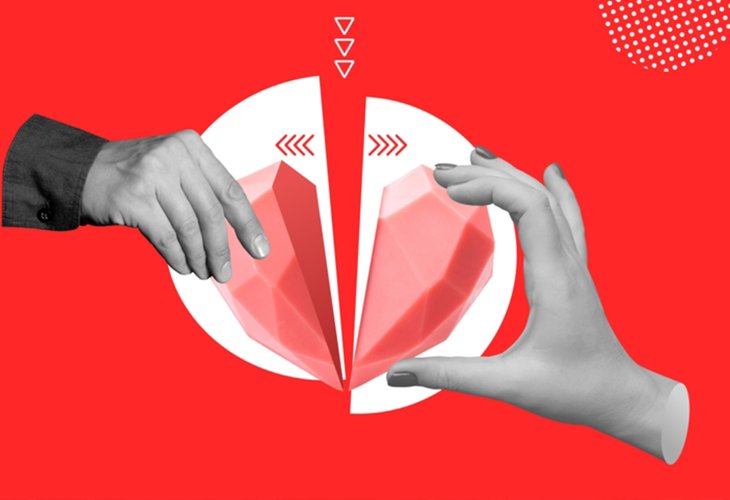 (Photo: shutterstock)
"Why did you come to see me today?" I asked Daphna.
"I want to divorce Ron," she said. "I’m not happy with him. He constantly does things that hurt me. He often takes the children’s side, and everyone seems to be against me. If you heard the way my daughter speaks to me, you would understand. If we divorce, at least I’ll stop suffering like this."
"It’s very hard to live in a relationship filled with so much pain," I said. "Tell me a little about your relationships growing up. What was it like with your parents and siblings?"
"My parents were sick and unhappy," she replied. "I had to be the responsible one. I took care of them and of my siblings."
"That is a heavy burden for a child to carry," I said. "It sounds like you had very little chance to simply be a child. Do you have close friends?"
"I have friends," she said, "but I don’t know if I would call them close. At some point I always feel that they have their own interests, and I keep giving without knowing whether they appreciate it."
A Deeper Story
"From everything you’ve described," I said gently, "it sounds like you are not only looking to divorce Ron. It seems as though there is an entire world you want to separate yourself from."
"What world?" she asked.
"The world of victimhood."
"I really do feel like a victim," she said. "Somehow everyone hurts me. I don’t understand why this keeps happening."
"The sense of victimhood develops as a way to cope," I explained. "In your childhood you experienced real injustice. You were powerless, and in that situation the feeling of being a victim was completely justified. It is not fair for a young child to carry the responsibilities of an adult instead of enjoying a childhood filled with freedom and joy."
"But the same mechanism often continues into adulthood. It creates the illusion that if we hold on to the belief that we have been wronged and that we are innocent, the pain will be easier to bear. As long as we see ourselves only as victims, we can place responsibility on others. This pattern began in your childhood and continues to shape how you experience your life today."
"But why would I want to keep feeling powerless?" she asked in surprise.
The Hidden Gain
"Unconsciously, powerlessness can feel safe," I explained. "It allows us to keep looking for someone or something to blame, including ourselves. There is often a hidden gain in remaining in that place."
"What gain?" she asked.
"When I do not see myself as responsible for my pain, there can be a certain sense of relief. But the price is high. Remaining in the role of victim keeps us tied to the past and focused on losses that cannot be changed. It prevents us from coming to terms with what happened."
"The sense of victimhood offers a kind of false comfort. It slows our growth and development, and the longer we remain there, the harder it becomes to move forward."
"But why would I choose to stay there?" she asked again.
"Freedom and independence come with responsibility," I said. "The feeling of victimhood can serve as a kind of permission to avoid that responsibility. The first step toward change is a willingness to let go of the hidden benefit that comes with remaining a victim. Only then can a new perspective begin to develop."
"What kind of perspective?" she asked.
"A perspective in which each of us can choose how to respond to what happens in our lives. We can acknowledge that we were hurt and still take responsibility for our future. We can recognize our pain and innocence while also choosing a healthy and growth-oriented path."
The First Steps Toward Change
"I understand what you’re saying," she said quietly, "but I don’t know how to do it. Please give me practical tools."
Tears filled her eyes.
"Real change begins within the soul," I said gently. "First you need to become willing to give up the comfort that victimhood provides. Without that step, intellectual understanding alone will not bring change."
"You need to face the hurt child within you and offer her reassurance. You can begin to lead her out of the darkness by giving her love and a sense of security."
"The path forward is not through constant struggle and resistance. When you learn to stop fighting yourself, you will be able to develop compassion for who you are and what you have experienced. Gradually you will begin to see whether remaining in the cycle of victimhood weakens you or strengthens you."
"Only then will you be able to take hold of this crisis and allow real change to happen."
Hannah Dayan, Relationship Counselor

