

Passover
The Hidden Power of Seder Night: Faith, Healing, and Blessings
A moving story of faith and recovery alongside deep insights into the holiness of the Seder night, Elijah’s cup, and the spiritual abundance available to every Jew
- Rabbi Yeshayah Wind
- | Updated
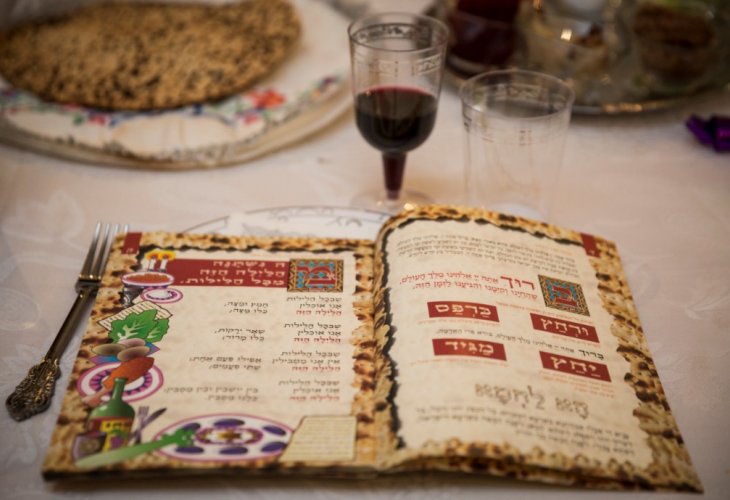 (Photo: Flash 90)
Several weeks before Pesach, Rabbi Meir Rosenberg learned that he was suffering from a well known and terrible illness. It had already spread through large parts of his body and it seemed that nothing more could be done. This was after the passing of his Rebbe.
On the night of the search for chametz, the Rebbe appeared in a dream to one of his followers and asked him to go to Rabbi Meir and tell him that the next evening, on the Seder night, he should drink from the remaining wine of Eliyahu the Prophet’s cup as a segulah for healing.
The messenger arrived at Rabbi Meir’s home and found him lying weak and in great pain, unable to move. He shared the message exactly as he had received it.
A Miracle at the Seder Table
The following night, Rabbi Meir fulfilled his teacher’s instruction and drank from Eliyahu’’s cup. As he drank, he suddenly felt renewed strength flowing through him. The improvement continued the next day. By the second Seder night, as observed outside the Land of Israel, he was already sitting at the head of the table with his family, praising and thanking the Creator for the open miracle they had witnessed.
Many people have the custom to drink from Eliyahu’s cup as a segulah for salvation, since he is known as the bearer of good tidings.
The Spiritual Power of the Seder Night
Many wonders have taken place on this holy and unique night. Sacred texts describe numerous spiritual practices, yet one teaching applies to everyone. The book Ohev Yisrael explains that the Exodus from Egypt is the key for every person to leave his own personal limitations and struggles. On the Seder night, just as the Jewish people were redeemed from exile, a person can be redeemed from whatever confines him spiritually and materially. Everything depends on the depth of one’s faith.
When a person concludes the blessing in the Haggadah, Blessed are You Hashem Who redeemed Israel, with sincere intention and full belief that God will help him, he can merit to move from distress to relief and from darkness to great light.
Every home where a Seder is held becomes a sacred space, similar to the Temple and even the Holy of Holies. The book Or Sameach explains that in Egypt the blood of the offering was placed on the doorposts, serving in place of the altar in the Temple. Even the floor of the home became sanctified like an altar. This holiness is eternal and returns each year on the night of Pesach to every Jewish home where matzah and maror are eaten.
Why Do We Invite Everyone?
The Chatam Sofer explains the declaration at the start of the Haggadah, “Whoever is hungry, come and eat.” A home has limited space and food is limited, so how can the host invite everyone?
On Pesach night the home receives a holiness similar to the Temple, and in the Temple there was never a shortage of space. Hundreds of thousands gathered there during the festivals, yet no one ever complained of crowding. When a person believes in the sanctity of the night, he can open his home generously, confident that there will be room for all.
The mitzvah of eating matzah brings abundance of livelihood throughout the year. The book Tiferet Shlomo teaches that the sustenance of the Jewish people during exile is rooted in the eating of matzah on Pesach.
A Night Open to Every Jew
The holy Rebbe Rabbi Asher of Karlin Stolin taught that every Jew can draw immense spiritual and material blessing from this sacred night. Not only the righteous or exceptional, but every Jew, even the simplest, can receive great abundance during these elevated hours.
The author serves as a spiritual director in the Hidabroot organization and head of the Ahavat Torah kollel.

