

Passover
Matzah Guide for Pesach: Key Types and Terms Everyone Should Know
Confused by matzah terms? A clear and simple Pesach guide explaining the essential concepts before the holiday
- Debbie Reichman
- | Updated
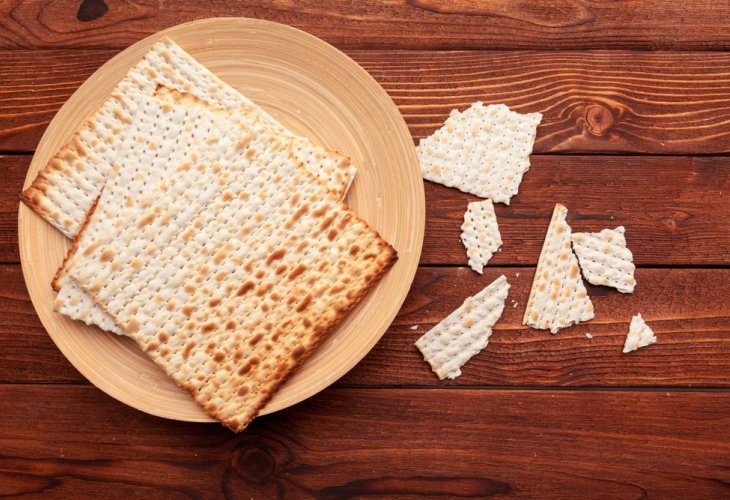 <i>Matzot</i> (Photo: Shutterstock)
We hear many different terms related to matzah, and it is easy to get confused between them. Following are the basic concepts everyone should know about matzah before the holiday of Pesach.
Matzah
Dough that was kneaded and baked before it had time to become leavened.
Mayim Shelanu
This does not mean water that belongs to us. It refers to water that has “rested” overnight. Matzah is not made with water drawn on the same day, but with water that “rests” overnight so that it cools down. Cooler water slows the leavening process, unlike warm water which can cause the dough to ferment quickly.
Shmurah Matzah
Matzah made from wheat that has been carefully guarded from the time of harvest until baking to ensure there is no risk of chametz. Regular matzah is generally guarded only from the time of grinding. Many people make sure to eat shmurah matzah at least on the first night of Pesach, when eating matzah is a Torah obligation.
Handmade Matzah
Matzah prepared entirely by hand. Handmade matzah is usually round and was the standard matzah eaten by Jews until the mid nineteenth century, when machines for baking matzah were introduced. Many consider handmade matzah more meticulous, and prefer to eat it during Pesach, especially at the Seder.
Machine Matzah
Matzah baked in a factory using specialized machines. Machine matzot are usually square and involve minimal human contact. When machines were first introduced, leading rabbis debated whether machine matzah was suitable for Pesach. Today it is widely accepted, and many people eat machine matzah throughout the holiday.
Matzah Mitzvah
On the night of the Seder there is a specific obligation to eat matzah. The matzah used to fulfill this commandment is referred to as matzah mitzvah.
Rich Matzah
Matzah made from flour kneaded not only with water but also with juice or eggs. Although it may be kosher for Pesach, it is not considered “bread of affliction,” so it cannot be used to fulfill the mitzvah of eating matzah at the Seder. Many Sephardim eat rich matzah during Pesach, while Ashkenazi custom is generally to avoid it.
Matzah that has been soaked in liquid after baking. According to the basic law, once the dough has been fully baked it cannot become leavened, so soaking matzah is permitted. However, some people avoid soaking matzah during Pesach out of concern that a small portion may not have baked fully or that traces of flour remained and could ferment when in contact with liquid.

