

Magazine
The Matzah of Auschwitz: A Mitzvah That Lives Forever
As matzah returns to our tables this Passover, one survivor’s story from Auschwitz reveals how a single mitzvah can illuminate a lifetime and beyond.
- Yonatan HaLevi
- | Updated
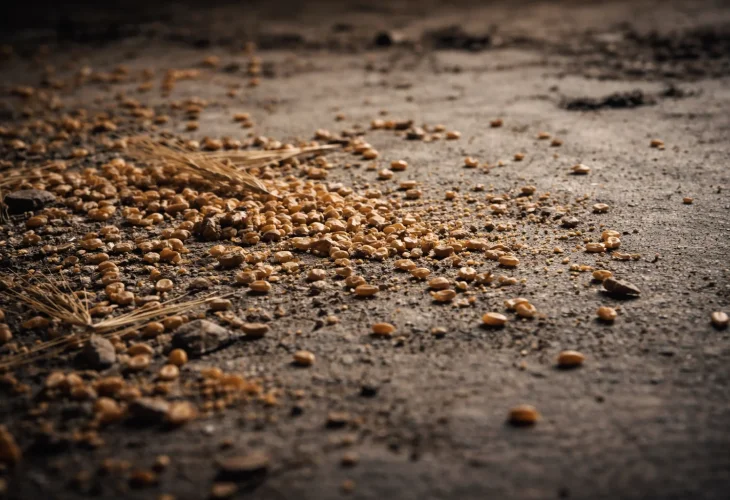 (Photo: Shutterstock)
In a special conversation Rabbi Yisrael Meir Shoshan gave to the Dirshu website, he tells in his flowing and captivating style a remarkable story that will not leave you unmoved, about the immense reward for mitzvot. Here is the story.
The rabbi of the Chatam Sofer community synagogue in Bnei Brak was Rabbi Ungar of blessed memory. The synagogue had 350 worshippers, most of them Holocaust survivors with blue numbers tattooed on their arms.
Akiva Steinberg, one of the congregants of the Chatam Sofer synagogue in Bnei Brak, was a Holocaust survivor. During the years of terror in Europe he lost his wife and six children and was left a young, penniless thirty year old, utterly alone.
One morning, when he was sixty, Akiva came to the synagogue’s rabbi, Rabbi Ungar, shaking with tears.
"Rabbi, I had a terrible dream last night," he said. "But before I tell it to you, I need to tell you my history."
"I arrived at Auschwitz in Cheshvan 5705. I lost my entire family the day I got there. I was sent immediately to brutal forced labor in a coal factory. At the end of the first day’s work, still within the first twenty four hours after my wife and six children were murdered, I lay on the bunk broken and in despair."
"Suddenly I felt a gentle touch on my shoulder. It was an avrech named Reb Aryeh."
"Akiva," he said, "we haven’t learned anything today. Let’s learn something."
Reb Aryeh had lost his eight children that very day. He was a talmid chacham and knew Gemara by heart. We began learning together, and Reb Aryeh simply brought me back to life. I felt in my own flesh the meaning of the verse: "For they are our life... and about them we meditate day and night."
The Matzah in Auschwitz
One evening in Adar, as I lay on the bunk, Reb Aryeh said to me:
"Akiva, in a little less than a month it will be Pesach. How will we eat a kezayit of matzah? How will we fulfill ‘In the evening you shall eat matzot’?"
"Reb Aryeh," I cried in despair, "what are you talking about? We’re in Auschwitz. Where will we get matzah here?"
"Akiva," Reb Aryeh answered gently, "don’t say that. We may be in Auschwitz, but Hashem can do anything. Habah l'taher mesayin oto. Don’t worry, we will yet merit to eat a kezayit of matzah."
All that night the bombings did not stop. Enemy planes bombed the munitions depots. The next day, Purim, as we marched as usual to work, we discovered that two bombs had fallen on the wheat warehouse. It was a massive storage building that held tons of wheat intended to feed the German army. The wheat was scattered across the entire area.
It was astonishing. The day before we had dreamed of a little wheat, and now the whole area was covered with it.
When we returned from work late at night, I hurried to gather two handfuls, one for me and one for Reb Aryeh. Reb Aryeh was the happiest man alive.
Akiva described how they found stones, ground the wheat, and turned it into flour.
Every night we ground wheat until the fifth of Nisan. We prepared dough quickly and rolled out the matzah. With a nail we made holes in it. We removed the sheet of metal from the oven with a rag and pressed the dough onto it. Within three minutes we had mehadrin matzah. We prepared two kezayitim for each of us.
I hid the matzah under my shirt and returned to the camp, guarding the precious treasure.
"You Eat the Matzah and I Will Take the Reward"
When we reached the camp, one of the guards noticed my strange posture.
"What are you hiding?"
With a sharp motion he yanked my hand away, and fragments of matzah fell onto the frozen ground.
The Nazi crushed the matzah under his boots and also struck Reb Aryeh with terrible blows. I collapsed and lost consciousness.
After a few minutes I came to. Bleeding and in pain, I remembered that beneath me lay a treasure. Matzah, crushed yes, but still usable for the mitzvah. I crawled to the bunk with what remained.
Only one kezayit was left.
Reb Aryeh burst into tears.
"You brought the wheat and took the blows, but please have mercy on me. How will I get through the Seder without matzah?"
I answered firmly:
"I will give up my meals tomorrow and the next day, but the matzah is mine."
Reb Aryeh pleaded again:
"Akiva, please give me the matzah. I will say the entire Haggadah with you, from Ha Lachma Anya to Chad Gadya."
I refused.
Finally Reb Aryeh said:
"Let’s make a deal. I will eat the matzah and you will receive the reward, the great reward of Lefum tza'ara agra."
I agreed. He would eat and the reward would be mine.
The Seder Night
Seder night arrived. We returned from work broken and exhausted. We had no four cups. The matzah was barely a kezayit. Maror we had in abundance.
We lay on the bunk and recited the Haggadah through terrible tears.
I eventually fell asleep from exhaustion, but Reb Aryeh could not sleep after eating the matzah.
Toward morning he prayed Shacharit in deep gratitude. During Hallel he became completely absorbed. When he cried out the blessing, the German guard sprang up, pressed a pistol to his head, and pulled the trigger.
His pure soul departed in Kiddush Hashem on the first day of Pesach.
Thirty Three Years Later
"I was shattered," Akiva said. "Reb Aryeh was my rabbi and my spiritual father."
On the seventeenth of Iyar the Americans arrived. He weighed only thirty six kilograms.
Slowly he rebuilt his life and merited four children and ten grandchildren.
Thirty three years later Reb Aryeh appeared to him in a dream, dressed in a white kittel and shining with light.
"I am in a place of pure light," Reb Aryeh told him. "For all my mitzvot I received great reward. But for one mitzvah I received no reward the matzah of Pesach 5705. We had an agreement that the reward belongs to you."
"I beg you," Reb Aryeh said, "please waive it."
Akiva refused.
"I will give you anything, but not the reward for a mitzvah."
The Waiver
Rabbi Ungar advised him to consult the Rebbe of Makhnovka.
After hearing the story, the Rebbe answered:
"In fairness, you should forgo."
He explained that Akiva had merited thousands of mitzvot since then, while Reb Aryeh had no further opportunities.
Akiva agreed.
The Rebbe instructed him to go to the synagogue and declare the waiver before the Holy Ark.
At midnight Akiva stood before the Torah scrolls and proclaimed:
"Master of the Universe, I forgo to Reb Aryeh with a full heart the reward for eating matzah on Pesach 5705."
The Final Dream
That night Reb Aryeh appeared again in a dream, his face radiant.
"Yasher koach, Akiva. Because of you I have been elevated to great heights."
The next morning Akiva told the Rebbe, who burst into tears.
"A holy Jew who sits in the highest place in Gan Eden was willing to leave everything for one more mitzvah. And we live here with mitzvot within reach. What will we answer Above?"
Rabbi Shoshan concludes:
Let us cherish mitzvot and not miss the opportunities that come our way. May we merit to fill our lives with mitzvot and bring great reward to the World to Come.

