

Magazine
Rabbi Meir Chodosh’s Turning Point: A Lesson in True Character
As a young yeshiva student fleeing the war, Rabbi Meir Chodosh zt"l faced a painful disappointment that became a defining moment, teaching him a lifelong lesson in true character and inner strength.
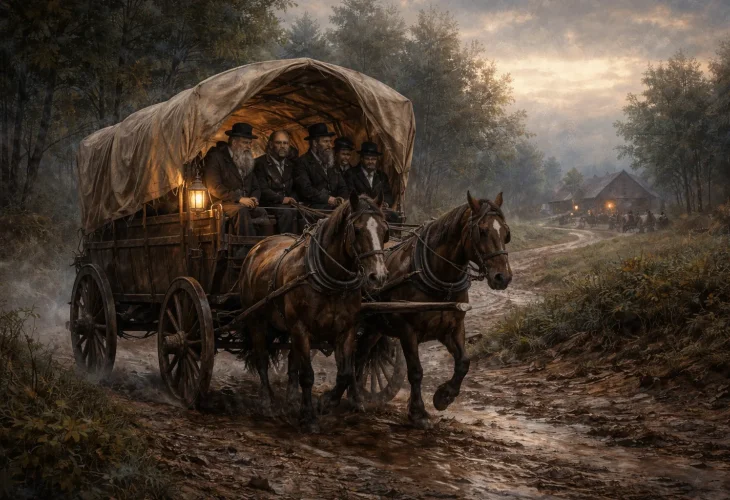
Rabbi Meir Chodosh zt"l, the renowned mashgiach of the Hebron yeshiva, did not only educate his students in Torah and mussar. He also served as a living example of inner growth and the ability to overcome challenges. In a moving story he would share with his students during va'adim, he described how a moment of deep disappointment almost caused him to change his personality. Instead, he chose to remain faithful to his values, and in doing so rose to a higher spiritual level.
That moment, he explained, became a turning point in his life and remains a powerful lesson for anyone who seeks to live as a ma’avir al middotav, a person who overlooks personal offenses and stays true to their values.
"I was a young boy," Rabbi Meir said, "when I entered the world of Torah, even before my bar mitzvah. I went from place to place of learning until I found my home in the yeshiva of my teacher and master, the Alter of Slabodka."
"In those days the yeshiva was a place of true spiritual growth. But the quiet did not last. The world war raging across Europe reached our doorstep. The shifting front brought enormous waves of refugees, tens of thousands of people moving from place to place just to escape the line of fire. By the age of eighteen I once again found myself wandering, fleeing every few days from the advancing German army."
Waiting in the Town Square
"It was in a small town where we found rest for several days that one afternoon a terrifying rumor spread: the German army is approaching. Everyone began to flee for their lives."
"I too began to run, together with a friend from earlier years whom I had met in that town. We hurried to the town square, hoping to find a wagon driver who would take us farther from the front as quickly as possible."
"When we reached the square and I was about to take a place on one of the wagons, my friend suddenly said, 'I forgot my bundle at the inn. My documents are there, my money, and most of all my tefillin."
Please do me a favor and wait for me while I run back and return.'"
"I agreed and remained there waiting for him."
Meanwhile, before his eyes, the town emptied. Wagons filled and departed one after another.
"I began to feel pressure. What would happen if no wagons remained? Where is he? He said he would run. Is this called running?"
A thought crossed his mind that perhaps he should leave and secure a place on one of the wagons.
"But I immediately rejected the thought. This is not how one treats a friend. It is not fair. He asked me to wait and I would remain devoted to my word. I would not run away from him."
A Painful Disappointment
"The pressure grew. The last wagon left the square and it stood empty. And still he did not come. Then finally I saw him running from afar. Now, I thought, we would find a way to leave together."
"As he arrived, a loaded wagon suddenly appeared. With a wave of our hands we stopped it. The driver announced that there was room for only one passenger."
"My friend immediately climbed onto the wagon and disappeared, as if I had never waited for him at all."
Rabbi Meir described openly the shock and hurt he felt.
"For your sake I lost every opportunity, and you run off like that? What behavior. What ingratitude. One could see that he was not a true ben Torah."
"In those moments of deep disappointment I decided in my heart: I will not make this mistake again. I will never again wait for someone else and lose out because of it."
The Voice of Mussar
"But a moment later mussar spoke within me."
"'Meir Chodosh,' my yetzer hatov said to me, 'Did you wait for him? You waited for yourself. You waited because you are not someone who runs away. Because you are a ben Torah. Because you are a decent and upright person.'"
"If so, why should you change your good character because of the behavior of someone else? Did you wait because you are weak? Certainly not. You waited because you are striving to be a better person."
Becoming Another Meir
"At that moment, when I decided that this disappointment would not change my personality, I truly felt myself rise and become uplifted."
"In those moments I ascended to a higher level. A significant part of my character was built in that pure moment. From then on I became a different person another Meir, Meir Chodosh."
Rabbi Meir Chodosh zt"l (1898–1989) served as mashgiach of the Hebron yeshiva for more than half a century. He also served as mashgiach in the yeshivot Ateret Yisrael and Or Elchanan and was one of the prominent figures of the Mussar movement.

