

Passover
Which Matzah Do You Need for the Seder? A Practical Guide
Learn the differences between shmurah matzah, handmade and machine matzah, and which type is required on Seder night
- Yosef Goldfrandi
- | Updated
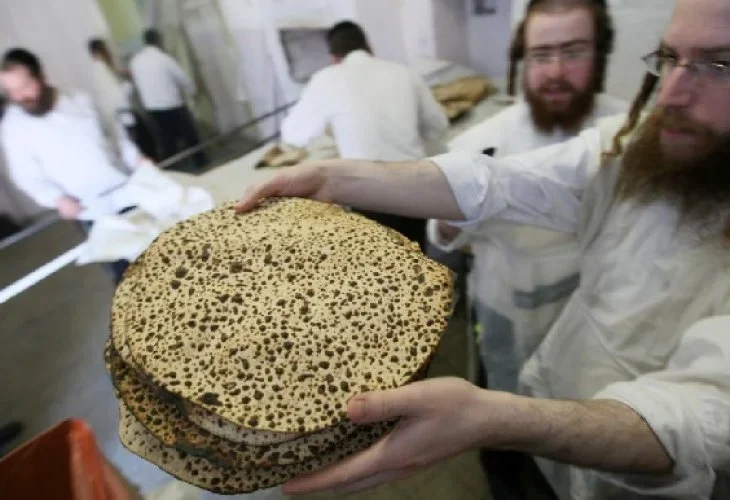
The mitzvah matzah eaten on the Seder night must be “shmurah matzah” (guarded matzah), as the Torah commands: “And you shall guard the matzot.” “Guarding” means protecting the dough from becoming chametz (leavened).
When must the matzah be guarded?
There is a halachic debate about when the guarding process must begin, and several opinions exist:
First opinion: Guarded from the time of harvest — the wheat is protected from chametz from the moment it is cut.
Second opinion: Guarded from the time of grinding — the flour is protected from chametz starting from milling.
Third opinion: Guarded from the time of kneading — the dough is protected beginning when it is mixed.
Today, all matzot sold are considered “shmurah,” but the stage at which they are guarded differs:
Guarded from harvest — mehadrin (higher standard)
Guarded from grinding — basic halachic requirement
Guarded from kneading — rare today
Obligation to Eat Shmurah Matzah on Seder Night
On the first night(s) of Pesach, during the Seder, there is a Torah obligation to eat shmurah matzah.
Ideally (lechatchilah / mehadrin): Guarded from harvest, and (as explained below) preferably handmade.
Post-facto (bedi’avad): Guarded from grinding is acceptable.
Handmade Matzah vs. Machine Matzah
Handmade matzah: Produced entirely by human hands from start to finish.
Machine matzah: Produced by automated machinery.
For the mitzvah matzah eaten at the Seder:
Ideally: Handmade matzah (and of course it must also be shmurah).
According to basic law: Machine matzah is also valid, as long as it is shmurah.
Eating Matzah During the Remainder of Pesach
During the remaining days of the holiday, there is no obligation to eat matzah; it is optional. However, one who eats matzah fulfills a mitzvah.
A person who wishes to eat matzah during Pesach does not need matzah guarded from harvest; ideally, matzah guarded from grinding — often called “regular matzah” — is sufficient.
Some people have the custom to eat matzah guarded from harvest throughout the entire holiday. If someone has followed this practice every year but wants to switch to regular matzah (guarded from grinding or kneading):
If they want to permanently cancel their custom, they should perform hatarat nedarim (annulment of vows/customs).
If they were unable to obtain harvest-guarded matzah due to illness, circumstances beyond their control, or lack of availability, and this change is only temporary, they may eat regular matzah without hatarat nedarim.
During the remainder of Pesach, it is permitted from the outset to eat machine-made matzah. Only on the Seder night is it preferable to enhance the mitzvah by eating handmade matzah.

