When the Nile Ran Red: The Miracles and Fallout of the First Plague

Why the Nile was struck first, what wonders unfolded, and how Egypt reeled—told vividly, step by step.

(Photo: Shutterstock)(Photo: Shutterstock)
AA

Why Was the Nile Struck First?<\/strong><\/u><\/p>

For more than two thousand years, the Nile—the Ye’or<\/i>—flowed through Egypt as the country’s economic lifeline. It hardly ever rained there, so the Nile supplied water for drinking, cooking, washing, bathing, and irrigating fields. It carried goods for trade and powered an entire fishing industry. Nile fish were a staple of the Egyptian diet. Their lives depended on the river, and so—in their mistaken belief—the Nile became their supreme god. They lived with that illusion for many years, until the Plague of Blood shattered it.<\/p>

 <\/p>

A Repeated Warning<\/strong><\/u><\/p>

One day, Moses and Aaron appeared before Pharaoh. They pushed into the palace without permission and stood before the king. Moses began: Send out the people of Israel. If you refuse, Egypt’s waters will turn to blood. Pharaoh wasn’t rattled. He replied: Your threats don’t worry me—I am the one who created the Nile, and it’s under my control. Moses answered: If you don’t send them out, you’ll soon see who truly owns the Nile. The next day Moses returned with the same warning. Pharaoh stubbornly refused. And so it went—day after day—for more than three weeks!<\/p>

Moses’s voice was low, yet—miraculously—every Egyptian heard his warnings!! Imagine what the average Egyptian thought in that moment. He likely couldn’t make sense of the strange threat. How could all the waters of the Nile turn to blood? The Nile is a powerful god—and Pharaoh is powerful too! No need to worry. We Egyptians are the wisest, most advanced people. In magic, we outdo the whole world. Nothing could possibly stop us from continuing to enslave the Israelites.<\/p>

 <\/p>

Their Water Turned to Blood!<\/strong><\/u><\/p>

Life went on peacefully... until that morning. That day, Hashem<\/i> told Moses to go to the Nile at the break of dawn and speak to Pharaoh. Like every morning—very early—Pharaoh went to the Nile to relieve himself in secret. Why in secret? Because he boasted that he was a god and didn’t need bodily functions. So he slipped out at daybreak so people wouldn’t see his shame. Moses and Aaron were sent specifically at that hour to expose him. Pharaoh suddenly saw them. Moses caught up to him to speak. Pharaoh said: Let me go now to take care of my needs and then I’ll talk to you (and don’t forget—Pharaoh had been holding it in for 24 hours!). Moses replied: Is there a god who needs to relieve himself?! Know that everything is revealed and known before Hashem<\/i>. He watches over everyone. Even if you deceive yourself and all of Egypt and make yourself into a god—you cannot deceive Hashem<\/i>!<\/p>

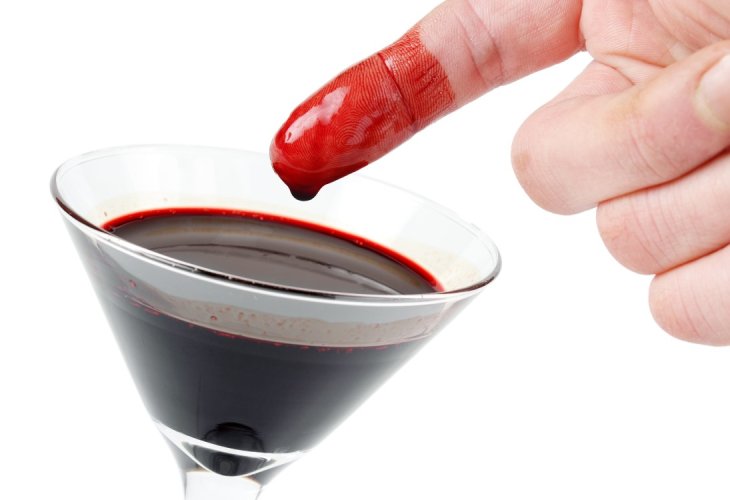
Moses continued: \"Thus says Hashem<\/i>: By this you will know that I am Hashem<\/i>. Behold, I am striking with the staff in my hand the waters in the Nile, and they will turn to blood.\" When Pharaoh still refused, Aaron struck the Nile (not Moses—out of gratitude to the water that had saved him when he was a three-month-old baby), and all the waters of Egypt turned to blood!!! Real blood! Not reddish water or sleight of hand like the magicians did later, but real blood—in sight, in taste, in smell, in touch. Their god, their source of life, died and stank like a carcass. It didn’t just die; it killed. All the fish and living creatures in it died.<\/p>

Pharaoh! Prove your ownership and divinity! If, as you claim, you created the Nile, then turn it back into water!<\/strong> Here, Hashem<\/i> proved that He created the world out of nothing; He created the waters and does with them as He wills—and no power on earth can oppose His will.<\/p>

Not only the waters before Moses and Aaron at the moment of the strike turned to blood—every drop of water across all Egypt did, even the water already inside vessels, becoming real blood. And more: every tree and stone in Egypt began to drip blood!<\/p>

 <\/p>

Egypt’s Magicians Flex<\/strong><\/u><\/p>

Pharaoh wasn’t convinced; his heart only hardened. He said: I’m not impressed; we can do that too. He summoned his boastful magicians to do the same. A \"small\" problem arose: there was no water available to turn into blood! The wise men assumed only the waters visible to Moses and Aaron had turned, so they dug new wells for drinking water. Their hopes were quickly dashed—those new wells, too, yielded blood. It was a true plague from Hashem<\/i>; there was no escape.<\/p>

Still, the magicians wanted to show off their ability. They went to Goshen, bought water from the Israelites, and then turned that water into blood. That was their big feat: turning water they bought from Israel into blood. Who needed that now? There was already blood everywhere—too much of it! If they truly controlled nature, they would have turned blood back into water. They couldn’t, because all their acts were mere illusion.<\/p>

There was a huge difference between Aaron’s act and the magicians’. Aaron turned all the Nile’s waters to blood—even those not before him, even water in containers not connected to the river. He turned flowing water—fresh water replacing what had just flowed away. And the plague lasted seven days. The magicians, by contrast, only turned a small amount of standing water in a vessel, and only for a short time—until Pharaoh went back home.<\/p>

 <\/p>

The Walls Cry Out<\/strong><\/u><\/p>

Pharaoh neither feared nor felt that this was a plague from Hashem<\/i>. He personally had water and didn’t have to buy it from Israel—granted to him as a merit for having raised Moses in his palace, and so he would be aggrandized in Egyptian eyes before being smitten. Yet even he didn’t escape the suffering entirely. Returning to his palace, he was unhinged by the sight of blood dripping down and staining the walls of his royal, magnificent home. The blood did not skip the king’s house. The blood running down the walls recalled the blood bled from the Israelites who were wounded while building, mixing into the mortar and bricks!<\/strong><\/p>

 <\/p>

Egypt in Panic<\/strong><\/u><\/p>

Picture it: In the morning, before heading out to force the Israelites into backbreaking labor, an Egyptian sits down to breakfast. As he sips his drink, he again hears Moses warning Pharaoh that if he doesn’t free the Israelites, Egypt’s waters will turn to blood. Three weeks he’s heard this; it became routine. But this time... he tastes blood in his mouth. He spits to clear the taste—but to his horror, he keeps spitting blood! Maybe, he thinks, a tooth is bleeding. Then he notices his cup is full of blood—and not from his tooth. Panicked, he runs to the water barrel to rinse his mouth—and to his shock, the barrel is full of blood. There isn’t a single drop of water in the house. What happened?? He’s stunned. His thoughts snap back to the urgent question: how will he wash out the nauseating taste of blood? In distress he runs to his Egyptian neighbor, hoping he has water. There he learns the neighbor’s barrel, too, is full of blood. The problem is dire and pressing. What are they going to do??<\/p>

One neighbor calls through the closed door that he was in the middle of a bath and suddenly found himself in a tub of blood. He jumped out immediately, filthier and smellier than when he went in. He tried opening another water cask, but that, too, yielded blood. He’s in a bind; he has no idea how to get clean. What should he do? Stay home?? For how long? Now everyone has the option of bathing their body in blood—just like King Pharaoh, who slaughtered 300 Israelite children every day and bathed in their blood!!<\/strong><\/p>

As he recounts his traumatic ordeal, his wife screams—the clothes she left soaking for laundry have changed color and turned red. Her cries grow as she looks at the soup simmering on the flame and the full bowl of dough—both have turned red! What is going on here?<\/p>

As if waking from a dream, they remember Moses’s warnings and realize his hand brought this. Oy vey—they clap their hands—he did say that if Pharaoh didn’t release the Israelites, all Egypt’s waters would turn to blood. Who thought his words would come true—and on such a scale! A horrific reality: blood instead of water. Blood coming from the walls—walls dripping blood! The sight is terrifying and sickening! It reminds the Egyptians of the Israelite children they buried alive in the walls!<\/strong><\/p>

He feels trapped in a nightmare, stares helplessly at blood seeping from his home’s walls, while his frightened children scream in the background. There’s no time to think—thirst pounds at them. The Egyptian tries to be clever: if there’s no water, he’ll drink fruit juice. But when the fruit is squeezed, blood comes out—not juice. Helplessness grows. What can they do? The human body needs fluids; you can’t survive long without water! Even the spit leaving their mouths turned to revolting blood. He feels frustration, anger—and most of all, fear and helplessness. What now??<\/p>

 <\/p>

Idols That Let Them Down<\/strong><\/u><\/p>

The children are crying for a drink, and his mouth is going dry. Under pressure, he turns to his idols. (They had many idols—if one was asleep or not feeling well, sick or dead, there were others in reserve.) He appeals to idols of wood and stone. Instead of answering, saving him, and giving him water, they ooze blood!! They, too, are dead. Instead of saving him, they pile new problems on him!! As a faithful Egyptian, he turns to idols of silver and gold—perhaps they can save him—but they don’t respond, and blood streams from the altars before them. What’s going to be?? What do they do??<\/p>

He mounts his horse and gallops toward his greatest and mightiest god of all—the Nile. Surely it can save him by giving him living water. He’s full of hope, but as he approaches, that hope begins to crack. He senses a faint but familiar smell... He musters what hope he has left and continues, heart pounding. The closer the horse gallops, the stronger and sharper the stench in his nose. And... no, it can’t be!!! The Nile is a mighty god; it can’t have turned to blood!! His heart refuses to accept the bitter truth—but truth will out: the Nile has indeed turned to blood, spewing out dead fish that add the stink of carrion to the reek of blood. It looks as if the Nile is red with the blood of the children thrown into it. You cast children to die in the river—so the fish in the river died!!<\/strong><\/p>

The phenomenon is astonishing, because the Nile keeps flowing, fresh water entering without pause. Yet whenever the water reaches Egypt’s border, it turns to blood! Even more amazing: once the blood leaves Egypt’s border, it immediately turns back into living water. Only at Egypt’s border does the Nile fail its faithful worshipers, giving them blood instead of water. A deadly threat hangs over the Egyptians—not a quick, easy death, but slow death by thirst. There’s no water to drink; the very thought is unbearable. There’s no one to rely on; all their gods have failed.<\/p>

 <\/p>

A Desperate Search for Water<\/strong><\/u><\/p>

He returns home empty-handed and trembling. The children beg for water—they’re thirsty. As time passes, their lives are at risk. Their thirst grows and grows. Egyptians tried to find water underground—digging new wells—but found only blood. With no choice, some Egyptians drank salty water, which did not turn to blood, but it made them even thirstier! There’s no water to drink. Not water and not juice. Even their spit turned into blood. They begin to dehydrate, and their heads ache.<\/p>

Then the Egyptian notices a cup in his Hebrew servant’s hand—and inside... water!! Where did you get the water?? he bellows. \"From the basin,\" the Jewish servant answers calmly. \"Don’t you see it’s full of water?\" The Egyptian looks—and indeed, as the Jew said, the basin is full of water. \"And where did you fill the basin from?\" he asks eagerly. \"From the well,\" the Jew replies simply. The Egyptian runs with his bucket to the well; the Jew lowers his own bucket—and behold: the Egyptian draws blood, while the Jew draws water! The Egyptian keeps his cool, brings a large jug from home, and rushes to take water from the Jew’s basin. But what happens?? His jug fills with blood! Meanwhile, the Jewish servant goes to fill himself another cup—and he has water!! The Egyptian snatches the Jew’s cup, and the moment the water reaches the Egyptian’s hands, it turns to blood!<\/p>

A brilliant idea occurs to him: he asks the Jew to pour water straight into his mouth. The servant does so—water pours from the cup, but the instant it reaches the Egyptian’s mouth, it turns to blood! The Egyptian says to the Jew: Let’s drink together from one vessel; that way water will reach my mouth. They drink from a single cup, but... for the Jew, water rises; for the Egyptian—blood! The waters divided: toward Israel—water; toward the Egyptian—blood! After so many attempts to drink, his mouth is filled with the foul taste of blood! \"No water?! Then drink blood! You spilled Israelite blood like water—drink blood like water!!!\"<\/strong><\/p>

Thirst intensifies, and fear even more. His mouth is dry, his head aches, the children scream and cry—they want to drink! Their eyes nearly pop from their sockets as they watch their Jewish neighbor drinking water in abundance, while his children splash happily in a pool of water!! The Egyptian must get water! Many souls in his home are crying out for a drop. And beyond that, he must water his many animals—his horses, donkeys, camels, cattle, and sheep—his \"holy\" flock, also an Egyptian idol. He turns to his flock, hoping it will save him—but the sheep look at him with a wretched gaze, their tormented eyes pleading for water. Instead of saving their worshipers, the idols need their worshipers to save them.<\/p>

 <\/p>

The Egyptians Grow Poor<\/strong><\/u><\/p>

With no choice and in despair, he tries another option: he decides to buy<\/strong> a cup of water from his Jewish servant at full price. And lo—at last he has real water, and it doesn’t turn to blood. He drinks and slakes his thirst. As a devoted father, he of course makes sure to provide for his wife and children begging for water. A quick calculation shows he must buy at least ten more cups. The price the Jew demands seems outrageous, but he has no choice; the lives of his household depend on him. Day by day the price rises and doubles, due to the high demand. What can he do? The Egyptian grows poorer by the day, while Israelite pockets grow fat. You turned them into water-drawers for free—now you’ll pay full price for every drop!!<\/strong><\/p>

And what about the donkeys, horses, camels, cattle, and sheep? They, too, need water. With no choice, he buys water for them as well—of course, in very limited amounts. Many animals die of thirst; the meager water didn’t suffice. He increases their water allotment—it costs a fortune!—and then, disaster! Many of the animals for which he spent huge sums so they wouldn’t die of thirst—died! That was due to the plague of pestilence that accompanied each and every plague.<\/p>

 <\/p>

Hungry for Bread<\/strong><\/u><\/p>

The Egyptian wants at least a decent meal—but even that proves no simple matter. His wife worked hard to prepare a dish, and it cost dearly, since she had to buy water both to wash the vegetables and to cook. She did everything she could, but when she went to put the pot on the fire, an unforeseen problem arose! She couldn’t get a flame going—the wood itself was dripping blood! Every attempt to light it failed, and then the Egyptians realized they couldn’t eat any baked or cooked food. There was no way to bake bread—the most basic staple!! What would they eat? Options were extremely limited, and indeed many Egyptians died of hunger.<\/p>

 <\/p>

Awash in Blood<\/strong><\/u><\/p>

The situation was beyond dire. Thirst became a constant companion; hunger, too, gave no rest. And that wasn’t all!! The entire environment reeked and felt sticky with blood. Blood oozed from trees and stones. Sit on a chair or even a rock—you’re smeared with blood. Lie in bed—you’re smeared with blood. How could anyone sleep? Clothes were soaked with blood, hands were filthy, and worst of all—there was no way to clean off the blood! Buying water for washing and bathing was out of the question—it would cost a fortune—and right after, they’d be dirty again anyway, so it wasn’t worth it. Filth and grime built up day by day. The situation was unbearable! You kept Israel from bathing—now you are kept from bathing!!<\/strong><\/p>

 <\/p>

The Plague’s Aftermath<\/strong><\/u><\/p>

Seven days this terrible nightmare dragged on! Seven days that felt like an eternity. Seven days of fear and dread of the unknown, of helplessness, of unbearable mental torment, of thirst and hunger, of crushing disappointment with the idols, of frustration and anger at the Israelites’ servants growing rich at their expense!<\/p>

And finally, the plague ended. The blood in the Nile turned back into water, and Egypt breathed a sigh of relief. Now there was abundant water, free of charge. But was that really the end of the story? Did everything go back to normal as if nothing had happened? Not at all!! Houses and vessels were filthy with blood. Clothes were ruined from absorbing blood. The air was foul. The budget ran a huge deficit. The ecological balance was completely wrecked. No one knew what the long-term consequences of the Nile’s death would be in the years ahead. Many years would pass before things returned to what they had been—if ever. The economy was devastated—the fishing industry was completely shut down. Who knew when it would recover?...<\/p>

Tags:Exodus Ten Plagues Plague of Blood Moses Aaron Pharaoh Nile Midrash Torah

Articles you might missed