

Magazine
The Blessing That Made His Voice Tremble: A Chazzan’s Journey Home
One letter stirred a deep longing in Menachem’s heart. That night he decided to leave exile behind and make aliyah to Eretz Yisrael, and that is exactly what he did.
- Yosef Yabeitz
- | Updated
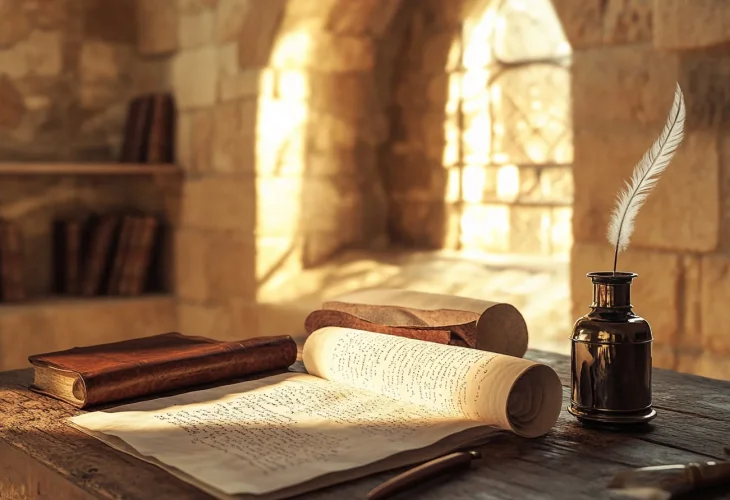
It was a weekday morning in Hebron. The first rays of sunlight slipped into the narrow stone alleys, and a soft glow spread across the ancient stones of the Cave of Machpelah. Gentle morning light rested on the hills of the city as Jews began making their way to the synagogue for Shacharit.
One by one they arrived. Farmers, Torah scholars, elders, and young men all gathered together. Some families had lived in the Land of Israel for generations, while others had arrived only recently. They came to stand before Hashem in prayer, to ask for mercy for the Land of Israel, and to pray that it would once again be restored to greatness.
The Chazzan From France
The chazzan stepped forward to lead the prayers. He was well loved by the community, one of the newer arrivals to Hebron. The children especially loved him, gathering around to hear his stories of distant lands and sea voyages. He spoke with a French accent and carried himself with quiet dignity.
His name was Menachem ben Peretz, though many already called him Menachem Hevroni.
He was tall and broad shouldered, with gentle features and determined eyes. When he prayed, his voice was clear and pleasant, and the congregation listened with emotion. Soon after his arrival, the people of Hebron had chosen him as their chazzan because of his beautiful singing and heartfelt prayers. Sometimes he would weave melodies and liturgical poems from the yeshivot of France into the service.
Yet there was one moment in the prayers that was always different.
Whenever he reached the blessing asking Hashem to gather the Jewish people from exile and return them to their land, his voice trembled. Each word sounded like a personal plea, a prayer for the family he had left behind in France: his parents, brothers, sisters, and beloved teacher.
He would close his eyes, and his thoughts would wander far away.
The Letter That Changed His Life
His mind returned to a night years earlier in France. Sitting alone in the synagogue attic by candlelight, he read a letter filled with longing and love for the Land of Israel.
The letter was signed by Shmuel of Sens, the son of Rabbi Shimshon of Sens, head of the yeshiva. Shmuel described his journey to the Land of Israel and the powerful moment when he first stepped onto its soil and felt that his soul had come home.
Reading those words awakened a deep yearning in Menachem’s heart.
“I envy him,” he thought. “I too want to merit coming to the Holy Land.”
That night a decision formed within him. He would leave exile and make his home in the Land of Israel.
Becoming Menachem Hevroni
In the month of Cheshvan, during the week of the Torah portion Chayei Sarah, Menachem arrived in Hebron with his wife and children. The portion of Chayei Sarah describes Abraham’s purchase of the Cave of Machpelah, and Menachem felt that settling in Hebron connected him directly to the roots of Jewish history.
He even changed his name from Menachem ben Peretz to Menachem Hevroni, expressing his deep bond with the city.
For him, this was not a symbolic gesture but a statement of identity and belonging.
Writing for Future Generations
One day his thoughts were interrupted when his friend Saadia approached him in the synagogue.
“Peace to you, Menachem ben Peretz,” Saadia said. “I brought you additional scrolls. Continue to write for the sake of future generations and for those who will come after us.”
Menachem had asked for parchment so that he could continue recording his experiences in the Land of Israel.
He accepted the scrolls with reverence, his eyes shining with gratitude.
A Traveler in the Holy Land
Whenever inspiration stirred within him, Menachem would set out to explore the Land of Israel with books in his bag and parchment in his hand.
He prayed for long hours at the Western Wall. He stood quietly among the ancient graves on the Mount of Olives. In the Valley of Jehoshaphat he studied verses describing the future redemption.
On Mount Arbel he gazed at the sweeping views of the land with emotion. In Kfar Hananya, once home to potters in the days of the Second Temple, he imagined the generations who had lived and worked there before him.
Each place deepened his love for the land.
A Voice That Still Speaks
When Menachem returned home to Hebron, he would write.
He wrote with love and devotion, describing a land that had stirred the hearts of Jews for generations. His words preserved the experience of traveling through the Land of Israel in the thirteenth century.
The writings of Rabbi Moshe the Hevroni have reached us, allowing us to glimpse the devotion and longing of a Jew who left exile behind and made his home in the Land of Israel.

