

Wonders of Creation
The Fascinating Rhythm of Tides: Why They Rise and Fall
Uncovering the mysteries behind tides: What causes them, and why do they matter?
- Hidabroot
- | Updated
 (Photo: shutterstock)
Most people have heard the terms high tide and low tide, but not everyone understands what they really mean. What exactly happens in the ocean during tides? Why does the sea level rise and fall? And where can this fascinating natural phenomenon be seen most clearly?
Tides are one of the most remarkable examples of how the forces of nature shape our world.
How Tides Work
Tides are the regular rise and fall of sea levels. When the water level rises, it is called high tide, and when it falls, it is called low tide.
This process happens mainly because of the gravitational pull of the moon, which draws the Earth's oceans toward it. The moon’s gravity causes the water to bulge outward on the side of the Earth facing the moon, creating a high tide. At the same time, another high tide forms on the opposite side of the Earth.
You can imagine the Earth like a clock. If the moon is positioned over the 12 o'clock point, high tide will occur at both 12 and 6. Low tide will occur at 3 and 9, which are the points farthest from the moon’s direct influence.
How Often Do Tides Occur
Tides usually occur twice each day in most coastal areas. More precisely, the tidal cycle takes about 25 hours, not exactly 24. This is because the moon moves in its orbit around the Earth while the Earth rotates on its axis.
As a result, the timing of high and low tide shifts slightly each day.
Where Tides Are Most Noticeable
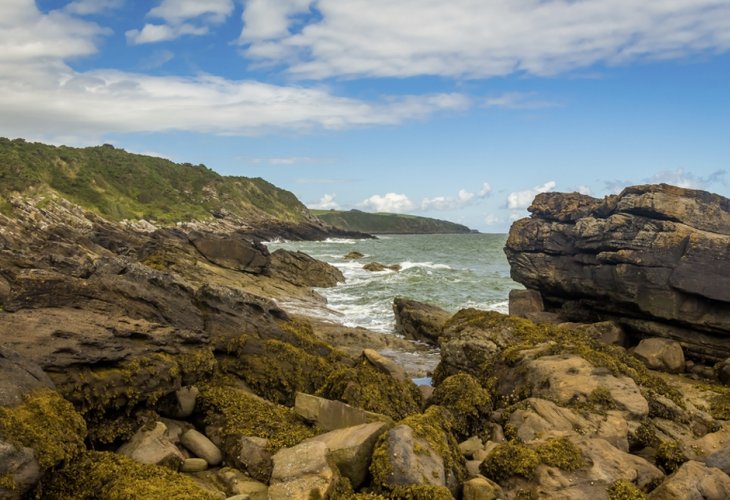
Tides occur in all seas and oceans, but they are most noticeable along coastlines. Rocky shores and wide beaches often reveal dramatic differences between high and low tide.
In many places, the difference in sea level between high and low tide is about three to six feet. In some areas the difference is much greater and can reach 20 to 25 feet, and in rare locations it can be even higher.
These large tidal ranges create striking coastal scenes, where land that is completely covered with water at high tide may be exposed during low tide.
Why Tides Change During the Year
The strength of the tides also varies during the year. Tides tend to be stronger in the spring and fall and weaker during the summer and winter.
Although the moon is the main cause of tides, the sun also plays an important role. When the sun, moon, and Earth align more closely, their gravitational forces combine and create stronger tides.
During certain times of the year, especially around the equinoxes, this alignment can make the difference between high and low tide more dramatic.
A Remarkable Rhythm of Nature
Tides remind us that even the vast oceans move in a steady and predictable rhythm. Day after day, the sea rises and falls, guided by the quiet pull of the moon and the sun.
The next time you stand by the ocean and watch the water slowly move in or out, you will know that you are witnessing one of nature’s most beautiful and timeless patterns.

