

Passover
When Does Chametz Become Forbidden Before Pesach?
Learn the halachic timeline for eating, benefiting from, and burning chametz, including seasonal hours and nullification laws
- Rabbi Zamir Cohen
- | Updated
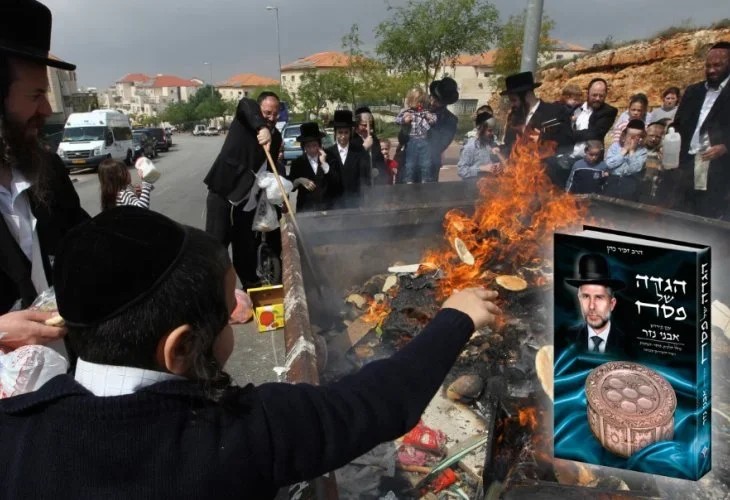
Although the festival of Pesach begins on the night of the 15th of Nissan, the prohibition against eating chametz begins earlier. Once four seasonal hours have passed from the start of the day, it becomes forbidden to eat chametz. (The exact time changes from year to year and is published annually in Jewish calendars.)
Why Does the Prohibition Begin Early?
In the times of the Beit HaMikdash, when the Korban Pesach (Passover offering) was brought, its offering began at midday. From that time, the Torah prohibited the Jewish people from eating chametz (see Shemot 23:18; Pesachim 5a).
Because the Sages instituted protective measures to prevent transgression of Torah law, and because chametz is common throughout the year and difficult to separate from immediately, they advanced the prohibition. As the Mishnah states: “Chametz may be eaten during the first four hours, suspended during the fifth hour, and burned at the beginning of the sixth hour” (Pesachim 1:4).
This means that during the first four hours of the day, chametz may be eaten.
During the fifth hour, chametz may no longer be eaten but may still be benefited from (for example, fed to animals or sold to a non-Jew).
From the beginning of the sixth hour, chametz becomes forbidden even for benefit, and any remaining chametz must be burned.
Seasonal Hours
These hours are not fixed 60-minute hours. They are proportional (seasonal) hours.
The daylight period is calculated from dawn (alot hashachar) until nightfall (tzeit hakochavim) and divided into twelve equal parts.
For example:
If daylight lasts 14 hours, each seasonal hour equals 72 minutes.
If daylight lasts 10 hours, each seasonal hour equals 50 minutes.
According to this calculation (known in calendars as “Magen Avraham time”), the four hours are counted from dawn.
Some Ashkenazic communities calculate from sunrise to sunset (known as “Vilna Gaon time”). According to this method, the four hours are counted from sunrise, and only then does the prohibition begin. One may rely on this calculation to permit children below bar/bat mitzvah age to eat chametz until four hours have passed from sunrise (Chazon Ovadia, Pesach).
Morning Preparations
A. Cleaning the Mouth
After finishing chametz on the morning of the 14th of Nissan, one should thoroughly clean and brush their teeth so that no crumbs remain lodged between them, which might later be swallowed after the prohibition begins (Chazon Ovadia, Pesach p. 63).
B. Dentures
Dentures should be washed and cleaned thoroughly of crumbs. They do not require koshering. One who wishes to be stringent may pour boiling water from a kli rishon (primary vessel) over them after cleaning, and this suffices (ibid. p. 64).
C. Selling Before the Prohibition of Benefit
If the time for eating chametz has arrived and one remembers they still possess chametz they do not wish to destroy and have not yet sold to a non-Jew, they should hasten to sell it before the time when benefit becomes prohibited. Once the prohibition of benefit has begun, the chametz must be destroyed.
Burning the Chametz (Biur Chametz)
A. Time and Method
On the morning of the 14th of Nissan, one destroys all chametz in their possession (Rema O.C. 445:1).
The mitzvah of destroying chametz may be fulfilled by:
Burning it,
Crumbling it and scattering it to the wind,
Or throwing it into the sea (Shulchan Aruch).
The custom, however, is specifically to burn it (Rema; Chazon Ovadia p. 64).
B. Timing
The burning and the nullification that follows must be completed before the beginning of the sixth hour, as published in Jewish calendars.
C. Ensuring Proper Burning
One should ensure the chametz is fully burned. Therefore, it is preferable not to throw a whole loaf into the fire but to cut it into pieces so the flames consume it properly.
One may pour kerosene on the chametz to render it inedible. However, to fulfill the mitzvah of burning specifically by fire, this should be done only after at least a kezayit (olive-sized portion) has already been burned.
D. Burning with the Lulav
Some have the custom to burn the chametz together with the lulav used on Sukkot — as one mitzvah was performed with it, another mitzvah is performed with it (Maharshal).
Nullification (Bittul Chametz)
After burning the chametz, one recites the nullification declaration: “Kol chamira de’ika birshuti, dechazitei ude’la chazitei, de’vi’artei ude’la vi’artei, livatil velehevei ke’afra de’ar’a.”
Translation: “All chametz that is in my possession, whether I have seen it or not, whether I have destroyed it or not, shall be nullified and considered like the dust of the earth.”
Night vs. Day Nullification
There is a difference between the text recited at night (after the search for chametz) and the one recited during the day.
At night, one nullifies only the chametz not found, since they still intend to eat chametz that evening and the next morning.
During the day, one nullifies all chametz in their possession — both that which was seen and that which was not.
Timing of the Nullification
The declaration must be recited before the sixth hour begins. Once chametz becomes forbidden for benefit, one can no longer nullify it (Shulchan Aruch 434:2).
Repeating Three Times
The nullification text is recited three times to demonstrate firm intent. Since some authorities view nullification as an act of declaring ownerless (hefker), it is preferable on the third repetition to add the word “hefker”: “Livatil velehevei hefker ke’afra de’ar’a.”
Language
The nullification must be said in a language one understands. If a person does not understand Aramaic, they should say it in a language they comprehend.
May we merit to remove not only physical chametz from our homes, but also spiritual chametz from our hearts, and enter Pesach with purity and joy.

