

Passover
Bedikat Chametz Guide: Cleaning and Nullification
A practical guide to destroying and nullifying chametz, cleaning the home, bedikat chametz, and key halachot before Pesach
- Rabbi Zamir Cohen
- | Updated
According to Torah law, it is sufficient to fulfill one of two actions in order to avoid violating the prohibitions of “No chametz shall be seen in your possession” (Shemot 13:7) and the mitzvah of “You shall remove leaven from your houses” (Shemot 12:15):
Destroying the chametz by eliminating it entirely.
Nullifying the chametz (bitul) by verbally declaring that all chametz in one’s possession is null and considered like the dust of the earth.
Some authorities explain that this nullification works through the mechanism of hefker — declaring the chametz ownerless, so that it no longer belongs to the person. Although normally hefker requires three witnesses, in matters of prohibition this is not necessary, because we assume a person sincerely intends not to transgress and relinquishes ownership wholeheartedly.
Others explain that the Torah granted a Jew the power to nullify the very status of chametz before Pesach and treat it as if it were dust.
Why We Do Both
Even though Torah law requires only destruction or nullification, the Sages instituted that we perform both (unless the chametz has been sold to a non-Jew and is no longer ours).
Why?
If one only destroys chametz, perhaps some chametz remains undiscovered in the home, leading to an unintentional violation.
If one only nullifies chametz, he may find an appealing cake during Pesach and come to eat it. Nullification prevents violation of ownership prohibitions but does not permit eating chametz.
For this reason, Jewish practice includes both bedikat chametz (searching) and bitul chametz (nullification).
Preparing the Home for Pesach
Cleaning Before Bedikat Chametz
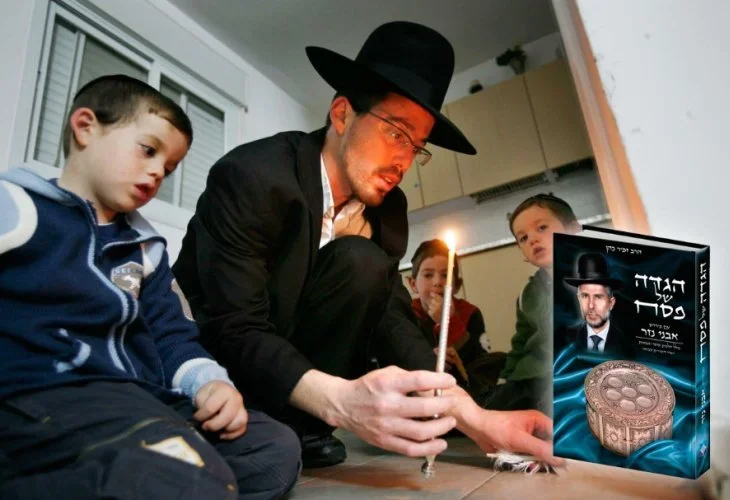
On the night of the 14th of Nissan, chametz is searched for by candlelight. In order for this search to be effective, the home is cleaned beforehand.
For generations, Jewish women have begun cleaning weeks before Pesach, to ensure that rooms, closets, drawers, clothing pockets, schoolbags, and any place where chametz might have entered, even occasionally is chametz free.
The purpose of this cleaning is not spring cleaning for its own sake, but to remove any possible chametz from places where it could realistically be found.
What About Books?
Books generally do not require cleaning for Pesach. Even if crumbs fell into them during the year, the act of nullification covers such minute particles.
However, if crumbs might still be present, those books should not be used at the Pesach dining table, lest crumbs fall into the food.
For this reason, benchers or booklets used throughout the year and intended for Pesach use should be cleaned carefully beforehand.
Bedikat Chametz: The Search
The Custom of the Ten Pieces
Before the search begins, it is customary to place ten small pieces of chametz throughout the home.
Each piece should:
Be less than a kezayit in size
Be carefully wrapped in paper or plastic
The purpose is to ensure that the blessing recited before the search applies to actual chametz found. The number ten has kabbalistic significance.
If a piece is lost and cannot be found despite careful searching, one may rely on the later nullification. This custom is not essential. If one forgot to place pieces, the search and blessing remain valid.
The Blessing and Beginning the Search
On the night of the 14th of Nissan, shortly after nightfall, one takes a candle and recites: “Blessed are You… Who sanctified us with His commandments and commanded us concerning the removal of chametz.”
Although actual burning will take place the next morning, the blessing refers to removal because the search is the first stage of destruction.
The search should begin immediately after the blessing.
Lighting During the Search
There is no need to turn off electric lights. Candlelight is effective for cracks and crevices, while electric lighting is superior in open spaces.
The candle used should:
Be wax or paraffin
Have only one wick
Candles that drip excessively, create fire hazards, or distract the searcher should not be used.
In places where fire poses a danger — such as inside a car, a flashlight may be used.
Where to Search
The search must include all places where chametz might reasonably have been brought during the year, including:
Rooms
Balconies
Storage areas
Cars
Suitcases
Schoolbags
Clothing pockets
Clothing washed with detergent before Pesach generally does not require checking, provided no wrapped food items remain inside.
Dividing the Work
The homeowner may include family members in the blessing. Afterward, they may disperse to search different areas.
Nevertheless, it is a mitzvah for the homeowner to personally participate.
If the task is overwhelming, it is preferable to divide responsibilities so that each person searches thoroughly.
Speaking During the Search
Between the blessing and the beginning of the search, one should not speak.
After beginning, conversation necessary for the search is permitted. Unrelated conversation should be minimized to maintain focus.
After the Search: Nullifying Chametz
At the conclusion of the search, one declares: “Any chametz in my possession that I did not see and did not remove shall be null and considered like the dust of the earth.”
This must be said in a language the person understands, so he genuinely intends to nullify the chametz.
The declaration is repeated three times to demonstrate firm intent. Some add the word hefker (ownerless) on the third repetition.
Afterward, any remaining chametz intended for morning consumption should be placed in a designated area to prevent it from being scattered — especially if there are small children in the home.
Additional Practical Guidelines
Selling Unused Areas
Rooms or vehicles not intended for Pesach use may be included in the sale of chametz and kept sealed throughout the holiday, exempting them from inspection.
Hotel Guests
Someone staying in a hotel over Pesach should check their room without a blessing. If arriving on Erev Pesach or during the festival, the room should be checked upon arrival.
Before the Time of the Search
From half an hour before the time of bedikat chametz, one should not begin work or eat significant amounts of bread or cake, lest he forget to search.
Once the time arrives, Torah study should not begin until the search is completed. However, public classes of a straightforward nature may proceed, since participants remind one another to check afterward.
Prayer and Bedikah
If the time for bedikah arrives and one has not yet prayed Ma’ariv, he should pray first. Prayer is a frequent obligation, while bedikah occurs once annually. The principle is: the more frequent mitzvah takes precedence.
A Mitzvah Worth the Effort
Even if the search requires significant effort, one should not grow discouraged. Our Sages taught: “According to the effort is the reward.”
Pesach preparation is not merely technical compliance. It is an act of spiritual renewal — removing chametz from our homes and, symbolically, from our hearts.

