

Passover
The Inner Journey of the Seder Night
A spiritual guide to the deeper meaning of each step of the Seder night journey
- Chaya Herzberg
- | Updated
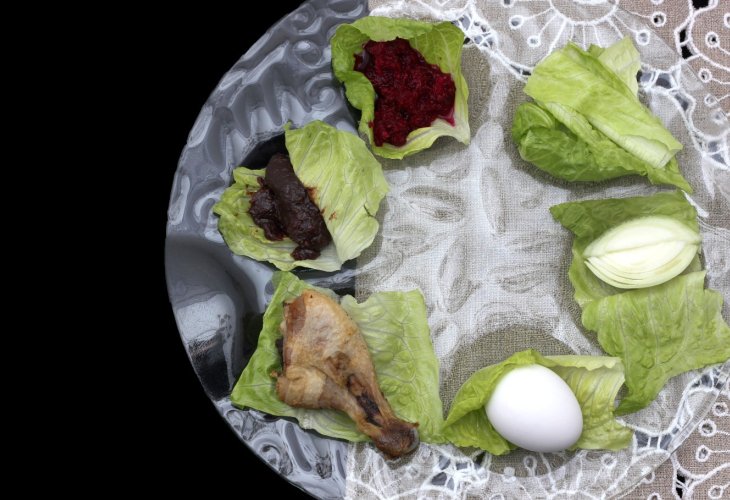 (Photo: Shutterstock)
The Seder night. The moment preceded by more preparation than any other time. All the cleaning, shopping, pressure and exhaustion is finally behind us, and the holiday begins.
How does it feel?
Festive. Anticipatory. Emotional.
Also tired. Drained. Maybe even a little tense for reasons no one can quite define.
The clothes are perfectly arranged — Mashiach could arrive right now and we’d be ready, from tights to bow ties. The table is set, the white coverings glow, candlelight reflects off shining silver. From the outside, everything looks magnificent.
And inside?
Inside there’s no insurance against inner turbulence — irritation, emotional strain, family tension, quiet disappointments.
We arrive at the Seder night fully prepared — and still very human.
Yet this night has a beautiful name: Seder — Order.
After all the chaos, it arrives from higher realms and brings with it structure. Fifteen simple, clear steps. Even we can follow them.
Let’s begin the journey.
Kadesh – A Cry of Longing
Kiddush opens the night.
You’re standing beautifully dressed, but your mind is still elsewhere. The holiday has arrived, but you haven’t fully arrived yet.
That is why we begin with Kadesh — sanctify.
It is a cry of yearning.
“Master of the world — sanctify me. Draw me close. I want to feel this.”
The words of Kiddush remind us who He is — how He chose us, redeemed us, loved us. But how does that greatness enter a tired, distracted heart?
So we ask Him: Connect me. Tighten the bond. Let me feel that something extraordinary is happening here.
Urchatz – Leaning Into Trust
We wash our hands without a blessing for the karpas.
The word rachatz means washing in Hebrew. In Aramaic, it also means trust — “In Him I rely.”
Our hands represent action, control, productivity.
In Urchatz we wash not only physically, but also spiritually. We release control. We move from “my strength and my power” to reliance on Hashem.
Even if our meal begins with nothing more than a simple vegetable — we trust that everything comes from Him.
Karpas – Facing the Truth
Karpas is a simple vegetable. It recalls slavery — “parech,” crushing labor.
The Seder is a journey upward, but it begins here, in honesty. We admit: We are still in exile. We are still small. We are still struggling.
In Aramaic, kisufa means shame. In Hebrew, kisufim means longing. We long deeply — but first we must face where we truly are.
Usually, when we notice something painful in ourselves, we rush to fix it:
Angry? No!
Small? I must grow!
Upset? Change it!
Karpas says: Pause. Sit with it. Be honest. Even the greatest tzaddikim begin with karpas. Everyone starts small.
Breathe. This is where I am right now. Only then can we move forward.
Yachatz – The Small and the Large
We break the middle matzah into two parts.
The smaller piece stays on the table. The larger piece becomes the afikoman, and is hidden for later.
Matzah is pure bread — uninflated, and unconfused. It represents clarity. But we are not yet ready to contain the full clarity of redemption. So we break it into pieces.
Our awareness is still “poor bread” — limited. But step by step, the Seder lifts us.
At the end of the meal, we will be ready for the larger piece.
Maggid – Telling My Story
The heart of the Seder is storytelling.
Redemption comes through narrative — through telling our story. Not preaching. Not judging. Just telling.
The greatest gift we can ask for is this: “Father, let me speak my story to You.”
Why not just ask for marriage, livelihood, children, health? Because we don’t want results without a relationship. We want the journey to heal the story.
Motzi – Elevating the Physical
When we make a blessing over food, we connect to the Divine energy within it.
An animal eats only the physical surface, while we can eat the inner light.
“Hamotzi lechem min ha’aretz” — we draw the bread out of its earthliness. The blessing reminds us that everything has Divine vitality.
Matzah – Bread of Faith
Matzah is called the bread of faith.
For seven days we feed the deepest core of ourselves. All year we live in confusion, and inflated like chametz. Pesach compresses us back to essence.
Matzah nourishes the place that knows:
Hashem exists.
He sees me.
He loves me.
My life is a story of love.
Just as He redeemed us from Egypt despite our spiritual impurity, He will redeem us again.
Maror – The Sweetness Within the Bitter
Maror is painfully bitter.
All year long we would never bless on bitterness, yet tonight we do. Why?
Because when we see the full journey, we understand that the places that hurt us shaped us.
Abandonment. Fear. Trauma. Every person carries something. And yet, through struggling with it, we became alive.
On Seder night we don’t ask for more bitterness. We ask that the bitter transform into revealed good.
Korech – Unity of Opposites
We wrap matzah and maror together.
Good and bitter. Light and struggle.
In the Temple, Hillel ate them together — because the Temple is the place where contradictions unite. Korech teaches us that everything belongs to one story.
Shulchan Orech – A Feast Awaits
At the end comes a meal.
On Pesach we taste it partially, but in redemption, we will taste it fully.
Tzafun – Hidden, Not Lost
The afikoman is hidden.
For a moment, we panic: “It’s gone!” But it isn’t gone; it is simply hidden.
Sometimes we feel lost, but we are never erased. Only hidden.
We will return.
Barech – Spiritual Nourishment
After eating, we bless.
We are physically satisfied, but what about the soul?
Birkat Hamazon feeds the spirit. It is an invitation to let the soul speak.
Hallel – The Great Unifier
Life feels fragmented, and too many areas need fixing.
Hallel unifies everything. When you praise Hashem, you remember His greatness, and suddenly the scattered pieces align.
One moment of remembering Him can be deeply healing.
Nirtzah – The Summit
The Seder culminates in one word: Nirtzah — which means accepted, desired.
Rabbi Nachman teaches that the highest level is to want again. After the entire journey — from smallness to abundance, the ultimate achievement is renewed desire.
To want again.
To believe again.
To choose again.
Every authentic journey ends in renewed will.
When desire awakens, it is proof that faith is alive, and that redemption is already unfolding.
May this Seder not only be beautifully prepared, but deeply lived.

