

Magazine
A Generous Dream: The School That Lost Its Jewish Soul
A wealthy Jewish philanthropist founded a free school to uplift poor children, but modern influences slowly pushed Torah aside.
- Yosef Yabeitz
- | Updated
On a chilly Berlin morning in the early nineteenth century, Daniel Itzig walked confidently into the imposing stone building of the bank that bore his name. The clerks stood to greet him, passersby tipped their hats, and members of high society whispered among themselves: "That is Daniel Itzig, the iron merchant and factory owner, the wealthiest Jew in Berlin."
His economic and social influence in the city was immense. Daniel Itzig became a symbol of success, entrepreneurship, and progress.
After finishing his banking business, Itzig climbed into his elegant carriage, drawn by fine horses with silver trimmed harnesses, and rode to inspect his factories. At the lead works he greeted the workers warmly, spoke with them respectfully, and made sure their conditions were fair. Wealth had not hardened him. He remained sensitive to the needs of his fellow Jews.
Later that day he visited his oil factory, where a simple Jewish woman in worn work clothes approached him and asked for help. With lowered eyes she explained that she could not afford her son's schooling.
Daniel sighed, opened his worn leather wallet, and gave her a generous donation. Yet as he walked away he continued thinking.
"Is charity enough?" he wondered. "Can occasional donations really solve the educational problems of my people?"
From that moment, a new idea began to take shape.
The Dream of a Free Jewish School
Daniel Itzig decided to establish a free school for poor Jewish children.
He sought advice from Rabbi Naftali Herz Wiesel, a wise and God fearing scholar, and from his son-in-law David Friedlander, an intelligent and ambitious man. At the time, Itzig viewed Friedlander as bold but not dangerous. He did not realize how far his son-in-law had moved away from traditional Judaism.
Friedlander pushed strongly for a modern curriculum. He proposed emphasizing German language, mathematics, and history, and replacing Gemara study with practical subjects that would teach children how to become productive citizens of the Kingdom of Prussia.
Daniel Itzig sensed the risks but was also attracted to the spirit of progress and enlightenment. He tried to find a middle path.
Rabbi Wiesel agreed in principle that practical training could help students earn a respectable living, but he insisted on one condition. Torah study and fear of Heaven had to remain the foundation.
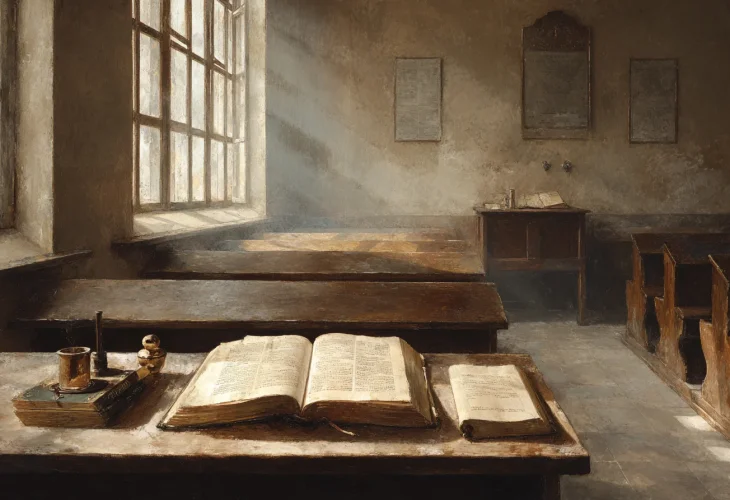
With this balance in mind, the school was founded. It was spacious, well organized, and completely free of charge. For many poor families it became a source of hope.
The institution was called Chevrat Hinukh Nearim.
A School That Changed Direction
The hope did not last long.
Friedlander’s influence steadily increased, and the original vision began to change. Gemara classes were reduced. Prayer was gradually removed. Teachers were chosen for their secular knowledge rather than their religious commitment.
What had begun as an effort to strengthen Jewish life and provide children with practical skills slowly turned into an institution where many students drifted away from their heritage.
The Rabbis Sound the Alarm
Rabbi Tzvi Hirsch Levin, the Av Beit Din of Berlin, recognized the danger and spoke out forcefully.
He appealed to the school’s trustees and eventually succeeded in having Friedlander removed. In his place he brought teachers who were committed to Torah and mitzvot.
Under Rabbi Levin’s guidance, Gemara and halacha once again became the central focus of the school day. Older students studied works such as the Kuzari and Chovot HaLevavot and deepened their understanding of prayer and Jewish belief.
For a time, it seemed that the school had been saved.
But the improvement did not last. Supporters of the Enlightenment regained influence, and many students who sought a strong Jewish education gradually left.
A Turning Point
Rabbi Levin and the city’s rabbi, Rabbi Yosef Teomim, eventually approached Daniel Itzig personally. They pleaded with him to intervene and restore the school’s original direction.
Daniel found himself torn between tradition and modern ideas, between loyalty to Torah and admiration for European culture. He hesitated and postponed making a final decision.
Nothing was resolved.
After Daniel Itzig’s passing, the school reached a turning point. Traditional Jewish families largely abandoned it, and in time the institution even opened its doors to Christian students.
The Jewish character of the school faded almost completely.
Friedlander’s influence extended beyond the school itself. Many members of the Itzig family drifted away from Judaism. Of Daniel Itzig’s thirteen children, several converted to Christianity and assimilated into Prussian society.
A Lesson for Generations
Daniel Itzig began with sincere intentions. He wanted to help Jewish children receive an education and build better lives.
Yet his reluctance to follow the guidance of the leading rabbis of his time allowed his vision to change direction. What began as an act of kindness eventually led to unintended consequences.
His story remains a powerful reminder of the importance of preserving Torah and yirat Shamayim while engaging with the wider world.
Good intentions alone are not always enough. Without a firm attachment to Torah and Jewish tradition, even noble efforts can lose their way.

