

Magazine
Turning Memories Into Books: The Project Preserving Jewish History
What happens to a lifetime of memories if no one writes them down? A moving initiative is preserving Jewish life stories before they are lost forever.
- Michal Arieli
- | Updated
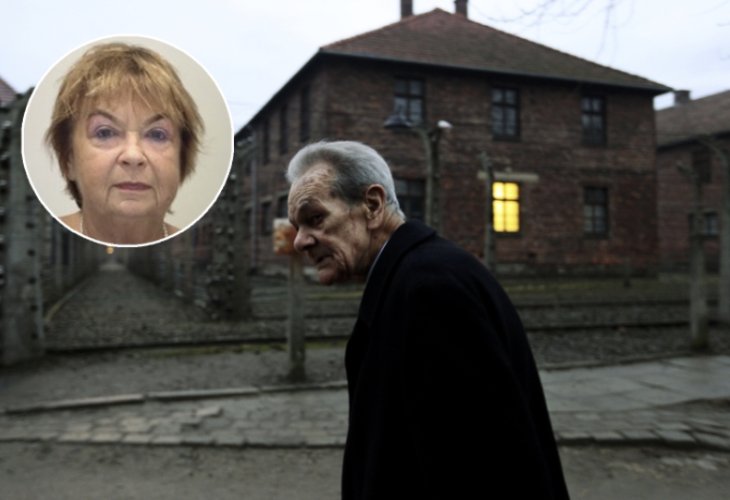 Inset: volunteer Varda Bar-On (illustrative photo: Shutterstock)
Who among us does not carry a life story?
Every person who grows up in this world gathers memories. Encounters. Challenges. Milestones. Some have survived wars. Others built families from nothing. Some made aliyah and helped build the State of Israel. Some quietly shaped their communities in ways no one fully realizes.
When the storyteller is elderly, those memories become even more precious. There is deep value in preserving them for children, grandchildren, and future generations.
And yet, although nearly everyone has a powerful story to tell, very few know how to write it down. Too often, only after a beloved grandfather or grandmother passes away do family members say with regret, “If only we had documented their story. If only we had written it down.”
Preserving Jewish Life Stories for Future Generations
About twenty years ago, the organization Yad Sarah stepped into that painful gap.
The life story project was originally launched under the leadership of Mrs. Lili Zohari, with the goal of helping Holocaust survivors document their full life journey. The focus was never limited to the years of the Holocaust alone. The intention was to capture the entire picture: the generations before the war, the experiences during those years, and the rebuilding that followed.
Later, Mrs. Rivka Avichayil led the project with great devotion and was even awarded the prestigious Yakirat Yerushalayim honor.
Today, the life story project operates in about thirty Yad Sarah branches across Israel. The Jerusalem branch, the largest of them all, is overseen by Varda Bar-On, who manages the initiative together with her volunteer partner Sarah Elbag.
From Midwife to Memory Keeper
Varda did not come from a literary background. She is a nurse and midwife by profession, with a master’s degree in administration. She was among those who helped establish Hadassah Mount Scopus Hospital and later served as deputy director of nursing and division head for several departments.
As a young nursing student, she remembers seeing a small trailer placed next to the hospital by Uri Lupolianski, the founder of Yad Sarah. The organization had just begun operating out of his home.
“Even then I thought it was a beautiful project,” she recalls. “I told myself that maybe when I retire, I will join.”
Decades later, she did exactly that.
After retiring, she was guided toward Yad Sarah’s Home and Community Services division. Although the life story project differs from her medical background, she feels deeply connected to it and describes her role as a true mission.
How a Life Story Becomes a Book
Over the past twenty years, the format of the project has remained consistent.
“There are many ways to document a life story,” Varda explains. “Some people work in groups. Some involve family members. Some record films. Others use question and answer formats. We chose a first person narrative.”
The storyteller is not interviewed in a formal way. The volunteer does not interrupt with questions or commentary. Instead, the person tells their story in their own voice, as a flowing narrative.
Here is how the process works.
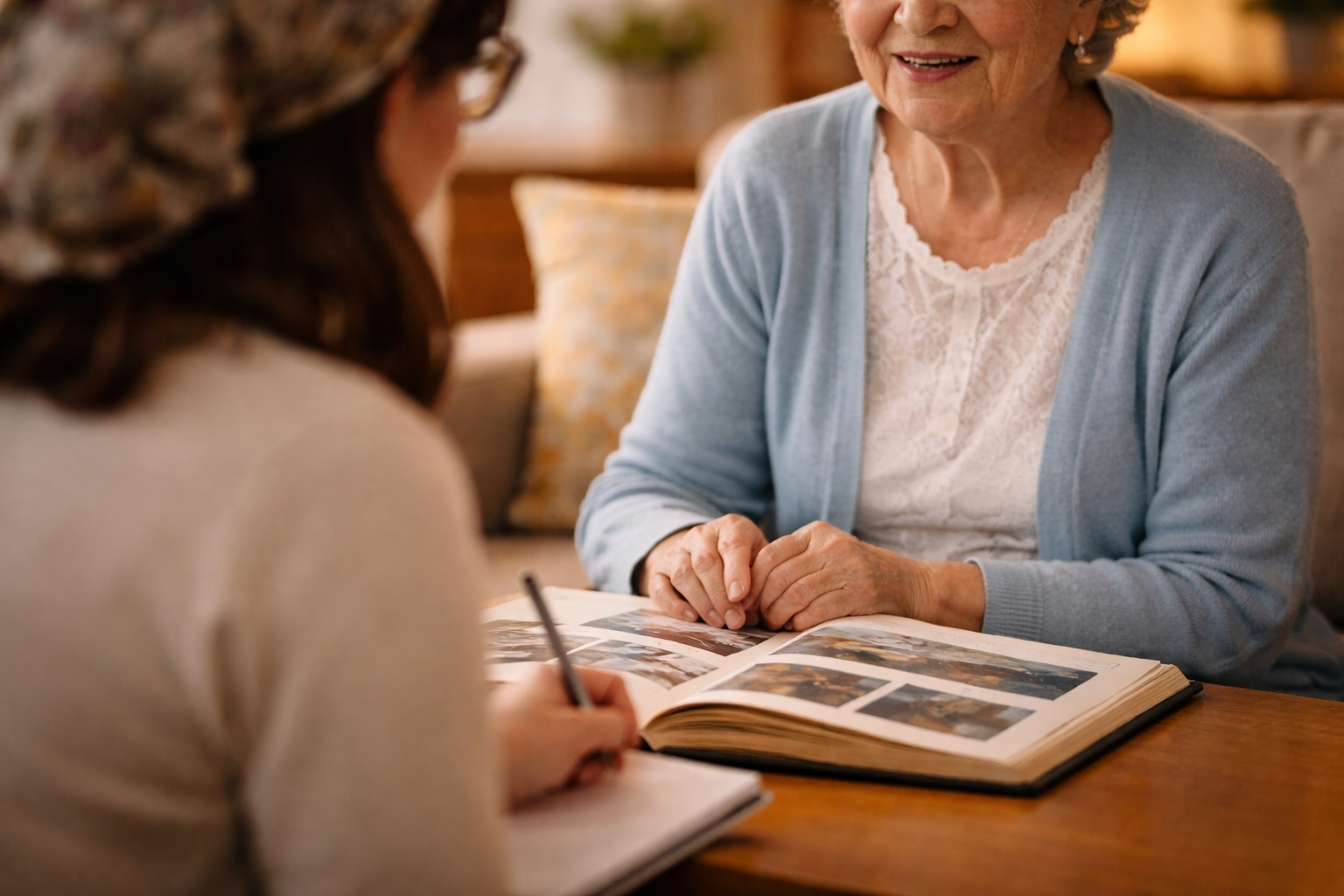
A volunteer meets with the storyteller and listens carefully as they share their memories. The story does not have to be told in order. Editing and proofreading later help organize the material. On average, there are about twelve meetings, followed by several additional months of editing and preparation.
Creating a finished book typically takes at least eight months.
In the end, the storyteller receives a beautifully bound printed copy, along with a digital file that allows the family to print additional copies.
Originally, the project focused mainly on Holocaust survivors. In recent years, as fewer survivors remain and not all wish to tell their stories, the project has expanded. Today, it is open to any older adult who wants to preserve their life story.
Who Wants to Tell Their Story?
“Who does not?” Varda says with a smile.
Almost everyone has something meaningful to share.
Most participants are older adults, some even in their nineties. Many say, “I have never told my story before. This is the first time I am opening my heart.”
People learn about the project through neighbors, friends, social workers, or family members. Sometimes a daughter contacts Yad Sarah on behalf of her mother. But the team always insists on speaking directly with the storyteller first.
If the elderly person is unable or unwilling to participate, the project will not move forward. The book must reflect the authentic voice of the storyteller.
An initial phone conversation of about twenty minutes helps clarify expectations and explain the process. The guiding principle is simple: allow as many people as possible to document their lives.
Documenting the Story of Israel
Each year, the Jerusalem branch alone publishes dozens of books.
Varda personally reviews every one.
“The stories are incredible,” she says. “Stories of aliyah, of building the country, of the War of Independence, of religious and secular families, of every community and background.”
In many ways, these books document not only individual lives, but the story of the Jewish people and the State of Israel.
She recalls recently editing a book written by a woman of Yemenite origin whose sister mysteriously disappeared decades ago. The details were deeply moving and historically significant.
“We are not just preserving private memories,” she says. “We are preserving the story of our nation.”
Every Book Is Unique
There is no single structure for these life stories.
Many begin chronologically, starting with childhood memories and family history. Others begin with the most defining moment of the storyteller’s life.
For some, that moment is the loss of a child. For others, it is arrival in Israel on a ship of maapilim. One woman began her book with stories about her father, who guarded a grave site for many years. Another chose to begin with his later years as a grandfather, and only afterward returned to childhood.
“It is their book,” Varda emphasizes. “We follow their wishes.”
Some books are long and require multiple volunteers. In Jerusalem alone, about seventy volunteers are involved in the life story project. Some focus on listening. Others on editing. Some guide the entire process from beginning to end, including arranging photographs.
Most volunteers are older themselves, which Varda sees as an advantage. They bring patience and understanding when listening to someone who speaks slowly or sometimes forgets details.
A Thousand Stories and Counting
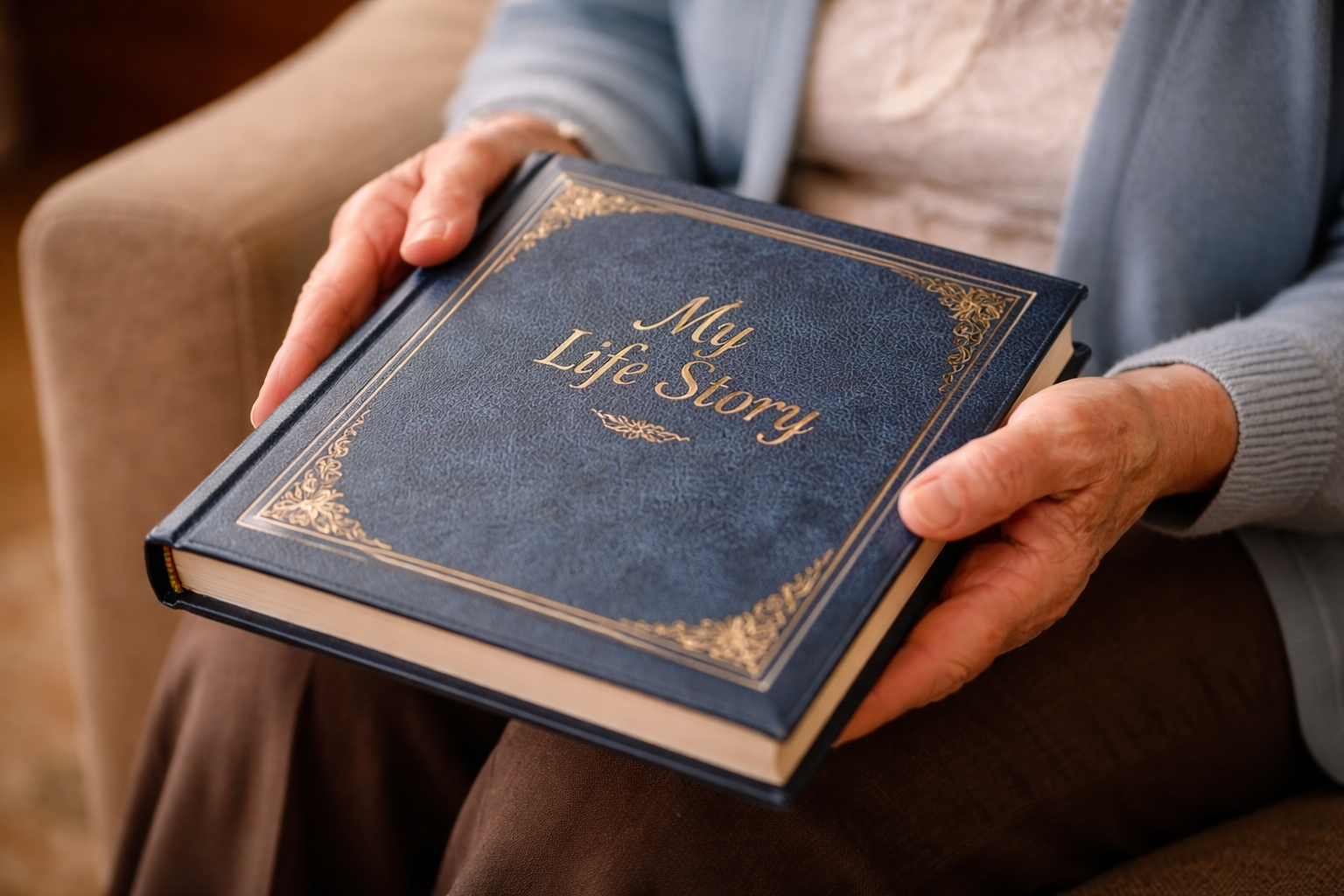
The most emotional moment comes when the finished book is placed in the hands of the storyteller.
“These are full fledged books,” Varda says with emotion. “Bound and printed, something tangible that families can treasure forever.”
In a world where memories can fade and stories can be lost, this project ensures that voices are not silenced. Instead, they are written, bound, and passed forward, reminding us that every life contains a story worth telling.

