

Behind the News
Why Iran’s Missile Launches Have Fallen as War Enters Day Five
Israel cites destroyed launchers and fleeing crews, but analysts warn shrinking barrages may be tactical
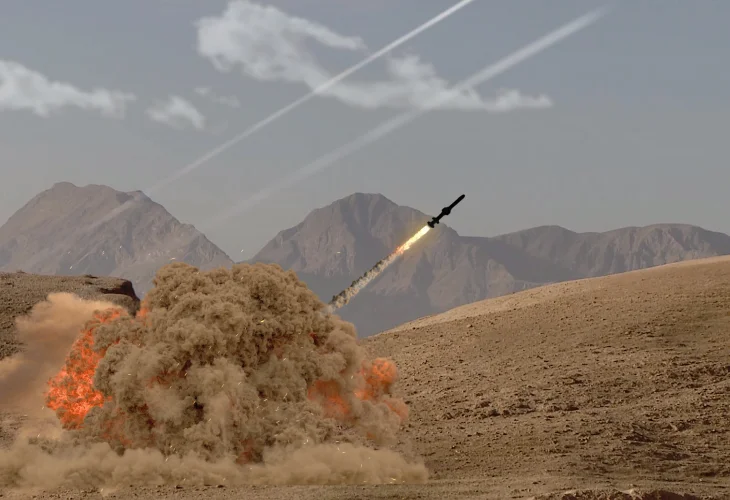 Iran Missile (Shutterstock)
As fighting between Israel and Iran entered its fifth day Wednesday, the number of Iranian missile launches toward Israel has dropped sharply compared to the opening days of Operation Roaring Lion.
Iran carried out roughly 90 launches toward Israel on the first day of the campaign, followed by about 65 the next day, 25 on the third day, and approximately 20 so far on Tuesday, with sporadic launches continuing into Wednesday.
The shrinking barrages have become one of the clearest operational signals emerging from the first week of fighting. The key question now facing Israeli planners is whether the decline reflects mounting degradation of Iran’s launch capabilities, or a deliberate tactical shift that could still allow for larger waves ahead.
Israeli security sources told Kan that the reduction stems in part from severe damage to missile launchers in western Iran, as well as reports that some Iranian crews have fled positions out of fear they would be targeted. One security official said, “We and the Americans are striking Iran’s ability to carry out wide-scale attacks.” He added, “This trend will intensify.”
Israeli military data reinforces that assessment. The IDF says the Air Force has flown approximately 1,600 strike missions over Iran since the start of the campaign, releasing around 4,000 munitions and taking roughly 300 missile launchers out of use, alongside strikes on missile stockpiles and launch infrastructure.
American strike data suggests a similar scale of pressure. U.S. Central Command reported striking close to 2,000 targets within roughly the first 100 hours of fighting. Officials said those strikes hit ballistic missile sites, air defenses and launch systems, and that hundreds of Iranian missile and drone launchers have been destroyed. That level of sustained attrition would make it significantly harder for Iran to assemble and coordinate the large, synchronized barrages seen in earlier rounds of fighting.
Before the current campaign, Israeli military intelligence assessed Iran’s ballistic missile stockpile at roughly 2,500 to 3,000 missiles and warned that Tehran had accelerated production in recent months. Israeli officials cited that expansion as a factor in launching the operation, arguing that degrading missile production was necessary to prevent future large-scale barrages.
That level of sustained pressure forms the basis of Israel’s explanation for the decline. Israeli officials attribute the reduction primarily to damage to launchers and sustained air operations over western Iran. Analysts say that destroying launchers directly affects Iran’s ability to fire large coordinated waves, even if missiles remain in storage.
U.S. President Donald Trump also publicly suggested that Iran’s launch capacity was deteriorating. In an interview with Politico, Trump said Iranian forces were “running out of launchers” and “running out of areas to shoot them from."
Tal Inbar, an Israeli expert on missile and aviation issues, said the ongoing campaign to hunt launchers constrains Iran’s launch tempo. “All the air activity over Iran designed to thwart missile launchers and hunt them, by both the US and Israel, makes it difficult for Iran to increase its launch rate,” he said. At the same time, he cautioned against drawing broader conclusions about stockpiles, adding, “It’s too early to call.”
Some analysts caution that the shrinking barrages may not reflect weakness at all. Instead, they suggest Iran could be deliberately pacing its fire, choosing to launch smaller waves while preserving a larger stockpile for later stages of the conflict. As Israeli and U.S. strikes expand beyond launchers to target missile production and support facilities, Tehran may be calculating that conserving inventory now will sustain its ability to strike over time. There have also been indications of shifting launch patterns, including attempts at large, coordinated waves of nine to 30 missiles at a time, followed by longer lulls between waves. These pauses could signal not that Iran is running out of missiles, but that it is regrouping by repositioning launchers and preparing for more coordinated waves.
For now, the downward trend in launches toward Israel appears consistent with intense, sustained pressure on Iran’s launch infrastructure. Whether the pattern reflects structural degradation, tactical recalibration, or a pause before larger coordinated waves will likely become clearer in the coming days, as the war moves deeper into its second week and both sides continue to test each other’s limits.

