

World News
Trump Pushes Back After Rubio Suggests Israel Triggered U.S. Iran Strikes
President says he “may have forced Israel’s hand,” after Rubio suggested Israeli action drove U.S. strikes
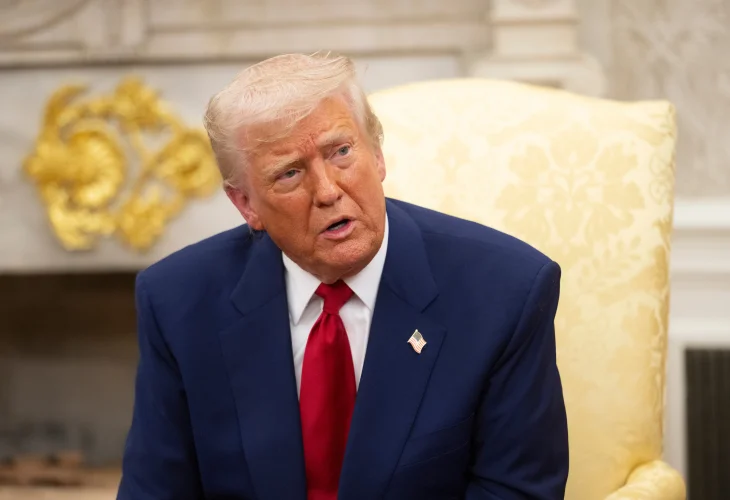 Donald Trump (Shutterstock)
U.S. President Donald Trump on Tuesday rejected claims that Israel pushed Washington into the war with Iran, saying he acted independently and may have even accelerated Israeli action. Speaking during a meeting with German Chancellor Friedrich Merz in the Oval Office, Trump dismissed the suggestion that Jerusalem forced his hand.
"No... Based on the way the negotiation was going, I think [Iran] was going to attack first, and I didn't want that to happen, so if anything, I might've forced Israel's hand," Trump said.
The president’s comments come after U.S. Secretary of State Marco Rubio acknowledged that Washington was aware Israel planned to strike Iran and that such action would likely trigger attacks on American forces. Rubio’s formulation ignited political backlash in the United States, with critics arguing it amounted to an admission that the war was influenced by Israel’s timeline rather than an immediate threat to U.S. territory. The controversy has intensified as the number of American service members killed in the conflict rose to six, according to U.S. officials.
“We knew that there was going to be an Israeli action, we knew that they would precipitate an attack against American forces, and we knew that if we didn’t preemptively go after them before they launched those attacks, we would suffer higher casualties,” Rubio told reporters in Washington.
After facing questions about whether Israel had effectively compelled U.S. involvement, Rubio clarified that the decision would have been made regardless of Israeli plans. “This operation needed to happen because Iran, in about a year or a year and a half, would cross the line of immunity, meaning they would have so many short-range missiles, so many drones, that no one could do anything about it because they could hold the whole world hostage,” he said. “Obviously, we were aware of Israeli intentions and understood what that would mean for us, and we had to be prepared to act as a result of it. But this had to happen no matter what.”
Iran’s Foreign Minister Abbas Araghchi seized on Rubio’s earlier remarks to accuse Washington of entering a conflict on Israel’s behalf. “Mr. Rubio admitted what we all knew: US has entered a war of choice on behalf of Israel. There was never any so-called Iranian 'threat,'” Araghchi wrote in a social media post. “Shedding of both American and Iranian blood is thus on Israel Firsters.”
The framing battle has quickly spread across the American political spectrum. Rep. Sara Jacobs (D-CA) said, “Secretary Rubio says the quiet part out loud: this is an unnecessary war of choice.” Conservative commentator Matt Walsh also criticized the remarks, writing, “So he’s flat out telling us that we’re in a war with Iran because Israel forced our hand. This is basically the worst possible thing he could have said.”
Israeli Prime Minister Benjamin Netanyahu rejected the notion that he pressured Washington into action. “Donald Trump is the strongest leader in the world,” Netanyahu said in a separate interview. “He does what he thinks is right for America. He does also what he thinks is right for future generations. … Iran is committed to your destruction. And whether people understand it or not, the leader has to understand it. Donald Trump understands it. You don’t have to drag him into anything. He does what he thinks is right, and this is right.”
The debate over whether the United States acted to prevent an imminent threat or entered a broader war of choice is now shaping the political landscape in Washington. Lawmakers from both parties have raised questions about congressional authorization, while the administration maintains that the strikes were necessary to prevent greater casualties and future escalation.

