

Jewish Law
Shiluach HaKen: The Ethics Of Sending Away The Mother Bird
Explore the ethical depths of Shiluach HaKen (Sending Away the Mother Bird) and how this Mitzvah prevents cruelty while refining human character and compassion.
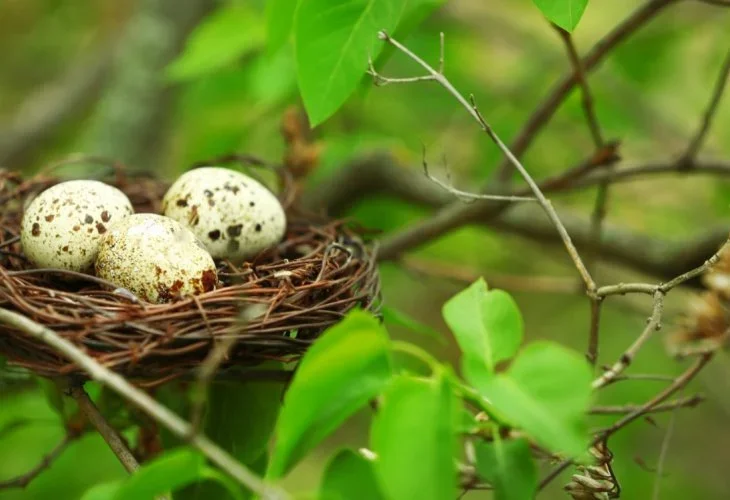
Sending away the mother bird (Shiluach HaKen) is one of the commandments that may seem puzzling at first glance. However, at the literal level (Pshat), it contains a profound educational message.
The Torah states: "If a bird's nest chances before you on the road, in any tree or on the ground, with fledglings or eggs, and the mother is sitting upon the fledglings or upon the eggs, you shall not take the mother with the young. You shall surely send away the mother, and the young you may take for yourself, so that it may go well with you and you may prolong your days."
Regarding these verses, the Zohar states: "...This is one of the hidden commandments of the Torah, and we have within it hidden secrets of the Torah—paths and ways known to the companions within those thirty-two paths of the Torah." See the full text of the Zohar there. However, we will focus here on one of the simpler aspects of this Mitzvah and its educational benefit for man in this world.
Consider a traveler walking on a long journey. He eats from what he brought with him and from the ownerless fruit trees he finds along the way, such as figs and pomegranates, or he nourishes himself from birds he hunts, like partridges and the like. Suddenly, he finds a mother bird sitting on her fledglings. Why should he not take her for food as he would any other meat?
The matter can be understood through a story in the Book of Kings. When the Aramean soldiers were struck with blindness and the prophet Elisha led them as captives to the King of Israel, the King asked him: "Shall I strike them down, shall I strike them down, my father?" Elisha replied: "Do not strike them.
Do you strike those whom you have taken captive with your sword and your bow? Set bread and water before them, that they may eat and drink and go to their master." Indeed, the King followed his advice: "And he prepared a great feast for them; and when they had eaten and drunk, he sent them away, and they went to their master."
This requires explanation. These were enemies who came to fight, and only by a miracle did their plot fail. Why not kill them? The answer lies in Elisha's words: "Do you strike those whom you have taken captive with your sword and your bow?"
In other words, if you had killed them in the heat of battle, that would have been perfectly acceptable. However, when you rise against captives and kill them, you are training yourself in cruelty.
The same applies to our subject. One who catches a bird is permitted to eat it after preparing it according to the law. However, one who exploits the devotion of a mother to her children—she is "sitting upon the fledglings or upon the eggs"
and does not flee even as a person approaches because of her dedication and responsibility to her offspring—if he takes her, he is exploiting the mother's goodness and devotion to slaughter her, thus training himself in cruelty. Therefore: "You shall surely send away the mother."
In light of this, we can understand what is brought in the Mishnah: "One who says [in prayer]: 'Your mercy extends to a bird's nest,' we silence him." One of the reasons given in the Talmud for this is: "Because he makes the attributes of the Holy One, Blessed be He, into mercy, when they are but decrees."
Even a decree has some level of understanding, but they must not be interpreted erroneously. The issue here is not mercy toward an animal intended for food (which is its spiritual elevation), but rather a warning against the corruption of human character traits.
Of course, this Mitzvah has many other aspects, and we have only touched upon one as a mere sampling. "It and its young you shall not slaughter on the same day," and all the laws regarding the prevention of cruelty to animals (Tza’ar Ba’alei Chayim).
The Mitzvah, Halachos, and Demonstration Of Shiluach Haken
Questions & Answers
+Is there a blessing recited for Shiluach HaKen?

