

Israel News
Years-Long Israeli Intelligence Operation Led to Strike on Khamenei
Years of hacked cameras, insider intelligence and data analysis paved the way for the strike in Tehran
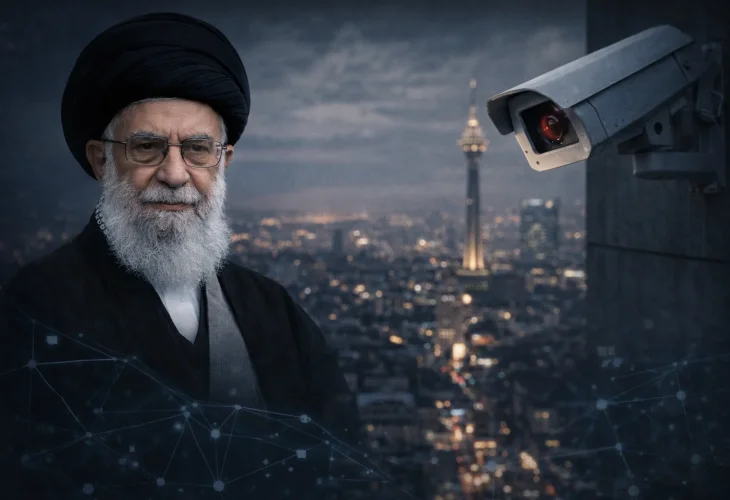 Ali Khamenei
Iran’s Supreme Leader Ali Khamenei was killed in a strike attributed to a coordinated U.S.–Israeli operation, but the assassination was only the final link in a years-long intelligence kill chain. That chain consisted of a layered system of hacked surveillance, algorithmic “pattern of life” mapping and embedded human assets built inside Tehran long before the decision to strike was made.
The Financial Times reported that “nearly all the traffic cameras in Tehran had been hacked for years,” giving Israeli intelligence steady, long-term visibility inside the capital. One camera near Pasteur Street, beside the leadership compound, reportedly offered “a window into the workings of a monotonous part of the closely guarded compound.”
The footage was not merely monitored. It was processed. According to the report, “sophisticated algorithms added details to dossiers on members of these security guards,” including their routines, residences and assignments, and “who they were usually assigned to protect and transport.” Intelligence officials refer to this type of mapping as building a “pattern of life.”
The broader intelligence picture emerged from years of systematic data collection, combining signals intelligence from Unit 8200, human assets recruited by Mossad and large volumes of information processed into daily intelligence briefs. Analysts reportedly used social network analysis to sift through billions of data points, mapping relationships and identifying key figures within Iran’s security structure.
Israeli officials have long described a strategy of crippling leadership structures before a wider confrontation unfolds. During last year’s 12-day conflict with Iran, more than a dozen nuclear scientists and senior military commanders were eliminated within minutes in coordinated strikes. “We took their eyes first,” one intelligence official said at the time, referring to the systematic targeting of key decision-makers.
On the morning of the strike on Khamenei, Israeli intelligence detected a meeting at the leadership compound and that “the strikes were moved forward” once confirmation was secured that senior figures would be present. U.S. intelligence was also aware of his location, according to the reporting. The Financial Times further reported that Israel disrupted components of roughly a dozen mobile phone towers near Pasteur Street, causing phones to appear busy when called and limiting the ability of security personnel to receive warnings.
The same reporting indicated that the strike exploited a narrow window when Khamenei was above ground, outside the fortified underground bunker system long believed to shield him. The timing reportedly prevented any opportunity to retreat to the reinforced subterranean compound.
Regarding the weapon itself, accounts differ. The Financial Times described the use of precision munitions capable of striking “a target as small as a dining table from more than 1,000km away.” Separate Hebrew-language reporting citing the Wall Street Journal described swarms of small, stealth drones launched from within Iranian territory. Both accounts emphasize precision and the ability to bypass advanced air defense systems.
According to the Wall Street Journal, the key to the operation was insider intelligence from within the leadership’s own security apparatus. Israeli and American intelligence reportedly recruited senior figures within Khamenei’s protection unit and the Quds Force, who provided his precise schedule and internal communications maps of the compound. That information reportedly allowed planners to identify the exact room he was in at the moment of the strike.
Iranian media outlets have offered varying explanations for the breach, including reports suggesting remote or automated mechanisms were used. Authorities have indicated investigations into the security failure are underway.
The Financial Times concluded that killing Khamenei “was a political decision, not simply a technological achievement.” The strike was not the beginning of something new. It was the execution of a plan long in motion.

