

World News
Did Kurdish Fighters Enter Iran to Fight the Regime? Conflicting Reports Emerge
Iranian Kurdish opposition groups in Iraq move forces toward the border as rumors of a U.S.-backed incursion rise
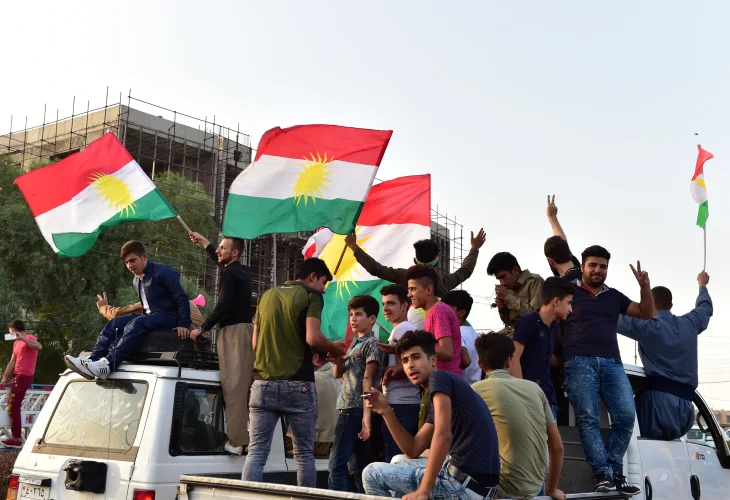 Kurds in Iraq (Shutterstock)
Conflicting reports about a possible Kurdish ground incursion into Iran have fueled confusion across regional media, with some outlets claiming fighters already crossed the border while Kurdish factions and officials quickly denied the reports.
The contradictory claims have emerged along intensifying airstrikes and drone attacks along Iran’s western frontier, where Kurdish Iranian dissident groups based in northern Iraq say they are preparing for a possible cross-border operation. The mountainous terrain along the Iran–Iraq border and the covert nature of small guerrilla movements can make such crossings difficult to verify in real time.
Iran’s Kurdish minority is part of a larger ethnic group of about 30 to 45 million people living across Turkey, Iraq, Syria and Iran. Kurdish opposition groups have long fought against the Iranian government. Several of these factions now operate from bases in Iraq’s Kurdistan region and maintain thousands of fighters.
Officials from several Kurdish Iranian factions say their forces have moved closer to the Iran–Iraq border and are standing by for possible operations. A representative of the Kurdistan Freedom Party (PAK) said some fighters had shifted to areas near the frontier in Iraq’s Sulaymaniyah province and were waiting for further developments. Another official from the Komala faction said forces could cross into Iran within “a week to 10 days” if conditions become favorable.
U.S. Defense Secretary Pete Hegseth signaled yesterday Washington is not publicly tying its objectives to Kurdish forces. “None of our objectives are premised on the support or the arming of any particular force. So, what other entities may be doing, we’re aware of, but our objectives aren’t centered on that.”
At the same time, several media outlets reported that Kurdish fighters had already begun crossing into Iran, a claim quickly disputed by Kurdish and Iraqi Kurdish officials. Aziz Ahmad, a senior Iraqi Kurdish official, rejected the reports outright. “Not a single Iraqi Kurd crossed the border. This is a lie.”
A source in the Kurdistan Free Life Party (PJAK), an Iranian Kurdish group, also denied that a ground assault had begun. “A source in the Kurdistan Free Life Party (PJAK) denies that a ground attack in Iran has begun and adds that they intend to seize the appropriate opportunity.”
Even as the claims remain disputed, fighting around the border region has intensified. Security sources cited by Reuters said a drone strike hit the headquarters of an Iranian Kurdish opposition group in Iraq’s Kurdistan region on Wednesday. Iran’s Islamic Revolutionary Guard Corps later announced that its missile units had targeted bases belonging to Komala and other opposition groups with three missiles.
Meanwhile, Iranian state media reported heavy bombing in the city of Bukan in northwestern Iran near the Iraqi border. A spokesperson for Israel’s military said the Israeli Air Force had been “heavily operating in western Iran to degrade Iranian capabilities there and to open up a way to Tehran and create freedom of operations there.”
Additionally, U.S. President Donald Trump spoke by phone with Iraqi Kurdish leaders Masoud Barzani and Bafel Talabani to discuss the conflict with Iran and possible next steps, Axios reported, citing officials familiar with the call.
White House press secretary Karoline Leavitt confirmed the conversation but denied that the administration had approved a specific plan involving Kurdish forces. “He did speak to Kurdish leaders with respect to our base that we have in northern Iraq,” she said.
In a closed-door congressional briefing Tuesday, Secretary of State Marco Rubio addressed speculation about U.S. involvement with Kurdish fighters as lawmakers questioned the administration’s strategy in the war with Iran. “We're not arming the Kurds. But you never know with the Israelis.”
Kurdish factions appear to be positioning fighters along the border and preparing for possible operations as airstrikes intensify across western Iran. But despite widespread speculation and conflicting reports, there is still no confirmed evidence that a large-scale Kurdish ground offensive has begun.
Questions & Answers
+Who are the Kurds and why are they involved in tensions with Iran?
+Has the United States historically worked with Kurdish forces in conflicts?

